
Dogecoin Faces Structural Supply Challenges and Weak Utility in 2026
 Aime Summary
- Dogecoin (DOGE) continues to face structural supply challenges and lacks real-world utility, according to recent market analysis.
- The cryptocurrency has an annual inflation rate of approximately 5 billion new tokens, which creates ongoing downward pressure on price due to dilution according to analysis.
- Unlike other blockchain platforms with clear economic value creation, DogecoinDOGE-- does not offer a compelling investment thesis or growth mechanisms as reported.
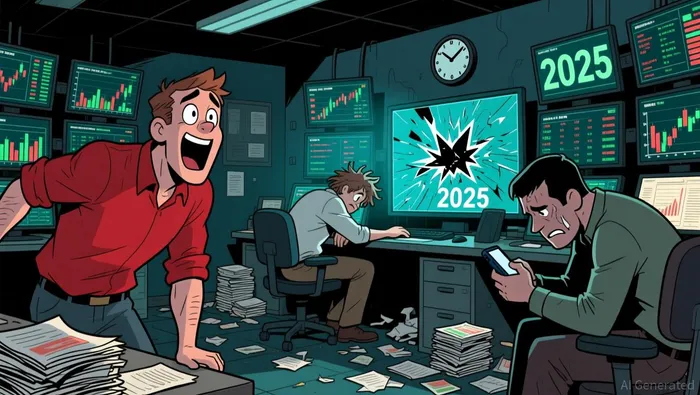
Dogecoin, the original meme coin, has seen significant price fluctuations over the past two years. In 2024, it experienced a relatively strong performance before plummeting by over 61% in 2025. This volatility has been attributed to its lack of real-world use cases, which makes it susceptible to speculative trading and market sentiment. With only 2,149 businesses accepting the token globally, its adoption remains limited.
The structural challenges of Dogecoin are further compounded by its unlimited supply model. Each year, 5 billion new tokens are mined and added to the circulating supply, reducing the value of existing holdings. This ongoing dilution creates continuous downward pressure on the price, as the supply increases faster than demand according to market analysis.
What Structural Challenges Impact Dogecoin's Price in 2026?
The primary challenge for Dogecoin lies in its supply structure. Unlike BitcoinBTC-- and EthereumETH--, which have fixed or predictable supply caps, Dogecoin has no maximum supply limit. This open-ended model creates uncertainty for long-term holders and investors, as the value of existing tokens can decrease over time due to inflation according to economic analysis. The growing supply also puts pressure on the price, as the market cap must remain stable for the token to retain value as noted.
In addition to supply issues, Dogecoin lacks clear utility. It is not used for smart contracts, decentralized finance (DeFi), or any broader economic infrastructure. While it has a strong brand and community, these factors alone are not enough to justify long-term investment as observed. Other platforms, such as SolanaSOL--, offer real-world applications and infrastructure that support growing on-chain activity, making them more credible for investors according to market research.
How Do Market Developments Affect Dogecoin's Viability as an Investment?
Recent developments in the cryptocurrency market highlight the challenges Dogecoin faces. For instance, the 21Shares Dogecoin ETFTDOG-- (TDOG) was launched to provide investors with exposure to Dogecoin without directly holding the token according to market reports. This move reflects growing interest in regulated investment vehicles for cryptocurrencies but also highlights the lack of confidence in the token's long-term viability as indicated.
Meanwhile, other crypto projects are gaining traction in 2026. Blazpay, for example, is an AI-powered DeFi platform that offers multi-chain capabilities, real-time trading, and NFT support according to press reports. The project has gained momentum in the presale stage, with strong demand for its tokens. In contrast, Dogecoin has not demonstrated similar innovation or growth potential as noted.
What Are the Implications of Dogecoin's Lack of Utility and Supply Cap for Investors?
The lack of real-world utility and an unlimited supply cap make Dogecoin a poor long-term investment compared to other cryptocurrencies. Investors looking for growth opportunities are increasingly turning to platforms like Solana, which offer clear economic value creation through infrastructure development according to analysis. Dogecoin's reliance on speculative trading and brand recognition is not a sustainable strategy for long-term value appreciation as observed.
Furthermore, the structural supply issues may lead to further price declines in 2026, as the market adjusts to the growing supply of tokens. This could result in a situation where the price must halve to maintain a stable market cap according to forecasts. For investors with exposure to Dogecoin, this could lead to significant losses if the market continues to trend downward.
Overall, Dogecoin's position in the crypto market is precarious in 2026. Without a clear use case or supply constraints, it remains vulnerable to price volatility and long-term devaluation. Investors are advised to carefully consider their exposure to the token and explore alternative cryptocurrencies with stronger fundamentals and growth potential.

Blending traditional trading wisdom with cutting-edge cryptocurrency insights.
Latest Articles
Stay ahead of the market.
Get curated U.S. market news, insights and key dates delivered to your inbox.


AInvest
PRO
AInvest
PRO



Comments
No comments yet