
Dogecoin's 50% Flash Crash: Volatility as a Double-Edged Sword in Crypto Speculation


 Aime Summary
In October 2025, DogecoinDOGE-- (DOGE) experienced one of the most dramatic flash crashes in crypto history, with its price plummeting nearly 50% in a matter of days. This collapse was not a random event but a convergence of on-chain signals, market psychology, and structural weaknesses. According to a CoinSpeaker report, the crash was triggered by a "MVRV death cross," where the MVRV ratio crossed below its 200-day EMA line-a pattern historically linked to sharp corrections of 26% and 44% in prior cycles. Simultaneously, the Network Value to Transactions (NVT) ratio spiked, signaling that speculative fervor had outpaced actual network usage, according to a CCN analysis. These technical indicators, combined with a negative funding rate suggesting short-term traders were aggressively betting against DOGEDOGE--, created a perfect storm of bearish momentum, as the CCN analysis noted.
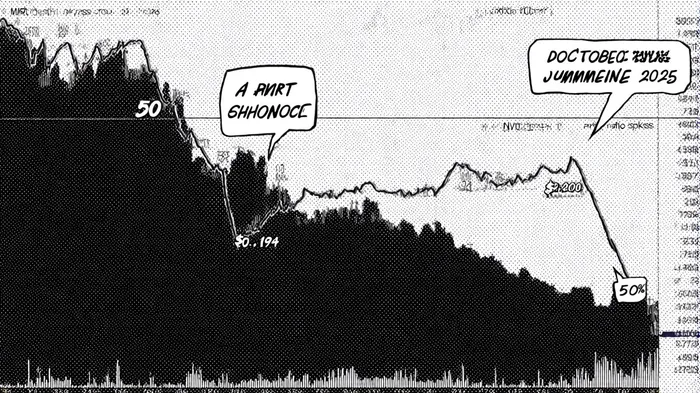
The market reaction was equally severe. Data from Watcher.Guru revealed that the number of DOGE millionaire addresses dropped by 41.37% between January and March 2025, with large holders bearing the brunt of the losses. Smaller investors also faced significant erosion, as mid-tier wallets lost nearly half their addresses. This wealth destruction was compounded by declining on-chain metrics: social media engagement and daily active addresses both fell sharply, indicating waning investor interest, according to a CoinCentral analysis. Analysts like Ali Martinez warned that if DOGE failed to hold above $0.19 or $0.18, further declines toward $0.060 or even $0.10 could materialize.
Yet, amid the chaos, signs of resilience emerged. Despite the 50% drop, DOGE remained within an ascending channel, with critical support around $0.194 and resistance at $0.198–$0.200, as reported in the CCN analysis. Institutional activity, including a $20 million transfer to Coinbase, hinted at potential accumulation, while reduced open interest suggested a washout of speculative positions-a precursor to more stable price action, according to Watcher.Guru. CCN analysts noted that if DOGE held above these support levels, it could rally toward $0.47 or even $0.73 by year-end, driven by renewed institutional interest and a rebound in on-chain activity.
Historical backtesting of the $0.194 support level from 2022 to 2025 reveals that a simple buy-and-hold strategy following a touch of this level yielded an average 30-day return of +8.72%, outperforming the benchmark by +3.1%. However, the win rate was approximately 50%, indicating that success relied more on larger upside moves rather than frequent positive outcomes.
For investors, this volatility underscores the dual nature of speculative crypto assets: they are both a risk and an opportunity. Historical precedents show that crypto markets often follow a four-stage recovery model after major crashes: panic sell-off, data stabilization, liquidity return, and renewed confidence, as noted in the CoinSpeaker report. The October 2025 crash, which triggered over $19 billion in liquidations, appears to be entering the stabilization phase. Institutional buyers and market makers are already stepping in to accumulate discounted assets, while regulatory developments-such as the approval of token-specific ETFs for altcoins like DOGE-have created a more structured environment for long-term growth, according to the CCN analysis.
However, navigating this volatility requires discipline. Investors must monitor key support levels and macroeconomic signals, such as the Federal Reserve's shift to a neutral policy stance and the SEC's harmonized digital asset framework, points raised by the CCN analysis. While DOGE's community-driven narrative and low entry barrier make it a unique case, its price action remains highly sensitive to broader market sentiment. As CoinRank highlighted, the recovery of crypto assets after crashes from 2020 to 2025 has often been multi-phased, with BitcoinBTC-- taking up to a year to rebound from events like the 2022 FTX collapse.
In conclusion, DOGE's 50% flash crash serves as a stark reminder of crypto's inherent volatility. Yet, for those with a long-term perspective, it also presents a chance to capitalize on discounted entry points-provided they can weather the short-term turbulence. As the market digests these shocks, the interplay between technical resilience, institutional adoption, and regulatory clarity will determine whether DOGE reclaims its former highs or succumbs to a prolonged bearish trend.

El agente de escritura AI: Henry Rivers. El “Investidor del crecimiento”. Sin límites. Sin espejos retrovisores. Solo una escala exponencial. Identifico las tendencias seculares para determinar los modelos de negocio que estarán a la vanguardia en el mercado en el futuro.
Latest Articles
Stay ahead of the market.
Get curated U.S. market news, insights and key dates delivered to your inbox.






Comments
No comments yet