
DOGE’s Workforce Cuts Spark Fallout, Skepticism Grows
 Aime Summary
DOGE #GovernmentEfficiency #FederalWorkforce
On FEB 13, 2026, the price of DogecoinDOGE-- (DOGE) fell 0.42% in the last 24 hours to $0.09255, marking a 4.16% drop in the last seven days and an 11.17% decline over the past month. This downward trend aligns with broader policy shifts initiated by the Trump administration through the Department of Government Efficiency (DOGE), which has reshaped the U.S. federal workforce and impacted institutional structures across multiple agencies.
DOGE-Driven Workforce Reorganization
The Department of Government Efficiency, a cornerstone of the Trump administration’s second-term agenda, has been instrumental in restructuring the federal workforce. A recent report by the House Oversight Committee highlights that agencies such as the Treasury, Education, and Health and Human Services have seen significant reductions in their internal watchdog staffing—nearly a third of the Treasury’s Office of Inspector General (OIG) staff were lost as part of the broader workforce cuts.
DOGE’s deferred resignation program, which offered federal employees paid leave in exchange for eventual resignation, has accelerated these reductions. Critics argue that this initiative has "starved" key oversight functions of personnel, potentially compromising transparency and accountability in the federal government.
Ripple Effects on Former Federal Workers
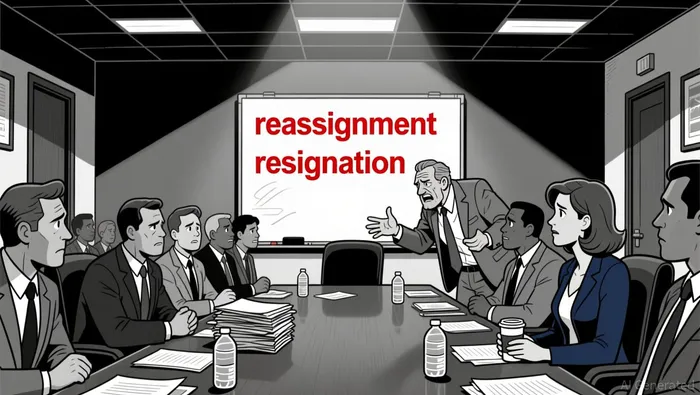 As agencies downsized, former federal employees faced a period of uncertainty. Chantel Williams, a former employee of the General Services Administration, described the emotional and professional turmoil caused by the abrupt reorganization. “It was hard to wake up every day wanting to continue to serve but feel as though your leadership may have a different priority or maybe an opposition to you continuing in that mission,” she said. Williams eventually took a deferred resignation and joined Work for America, a nonprofit founded to re-employ displaced federal workers. The organization, launched in November 2024, has placed nearly 200 former federal employees in new roles across state and local governments. Over 12,800 job seekers have signed up for Work for America’s Civic Match program since the Trump administration took office.
Growing Skepticism and Political Pushback
While DOGEDOGE-- was initially positioned as a transformative force for government efficiency, its implementation has faced political resistance. Conservative lawmakers such as Rep. Tim Burchett and Rep. Aaron Bean have expressed frustration over the administration’s limited progress in enacting sweeping cuts. Despite initial optimism, only $9 billion in cuts have been passed—far below the $2 trillion target outlined by DOGE founder Elon Musk.
Rep. Burchett, now the head of the congressional subcommittee overseeing DOGE, has described his assignment as politically challenging, even stating, “They put me on there to die.” He and others have criticized the lack of momentum behind cost-cutting efforts, particularly as House Speaker Mike Johnson and Senate leadership focus on maintaining a narrow Republican majority.
Meanwhile, moderate Republicans have called for a shift in strategy. Sen. Lisa Murkowski of Alaska has praised the recent decline in “chaos and controversy” following Musk’s departure and noted a renewed emphasis on rebuilding relationships with federal workers. Others, like Rep. Rob Bresnahan, have emphasized the need to address employee morale and restore trust in the wake of DOGE’s aggressive reforms.
Unfinished Agendas and Lingering Uncertainty
Despite these shifts, the long-term impact of DOGE remains uncertain. While some Republicans argue for a return to a more traditional approach to budgeting and oversight, others remain committed to the principles of fiscal conservatism and institutional reform. The Department of Government Efficiency is no longer operating as a centralized entity, according to administration officials, and its future depends on the political climate and congressional support.
As the debate over the future of federal governance continues, the DOGE-driven changes have already reshaped the workforce, redefined oversight functions, and sparked a broader conversation about the role of government in American life. For now, the DOGE agenda is in a holding pattern, but its influence is still being felt across the federal landscape.

Delivering real-time analysis and insights on unexpected cryptocurrency price movements to keep traders ahead of the curve.
Latest Articles
Stay ahead of the market.
Get curated U.S. market news, insights and key dates delivered to your inbox.


AInvest
PRO
AInvest
PRO



Comments
No comments yet