
DOGE’s Overreach Sparks Concerns Over Nonprofit Autonomy and Federal Funding

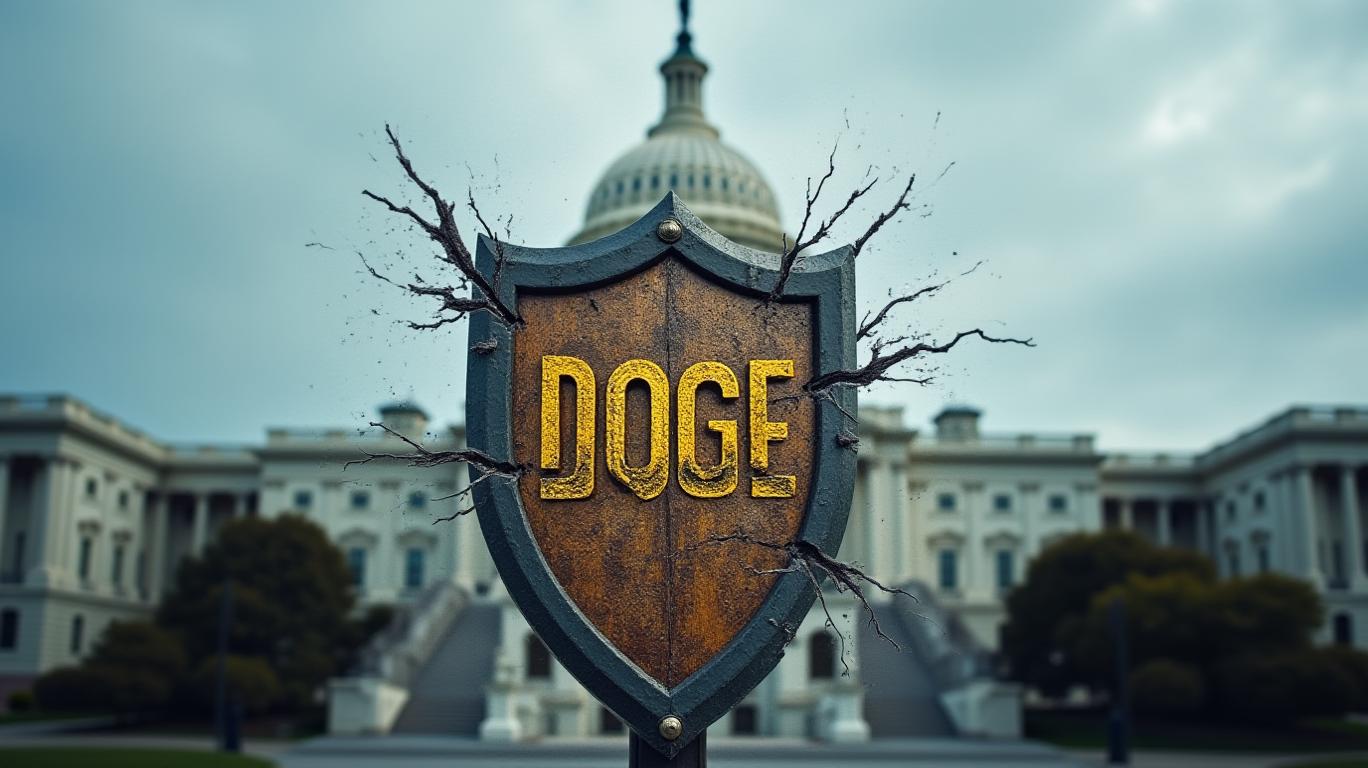
The U.S. Department of Government Efficiency (DOGE), led by Elon Musk under the Trump administration, has ignited a political firestorm by attempting to embed teams in independent nonprofits like the VeraVERA-- Institute of Justice—a move critics argue oversteps federal authority and jeopardizes civil society. The clash underscores broader risks for investors in sectors reliant on federal funding or aligned with ideological battlegrounds.
The DOGE-Vera Standoff: A Battle for Control
In early 2025, DOGE notified the Vera Institute of Justice that it planned to assign a team to oversee operations, citing compliance with Trump’s executive order to “modernize government efficiency.” The nonprofit, a leading advocate for criminal justice reform and reduced incarceration rates, resisted, framing the move as politically motivated retaliation for its opposition to Trump’s policies on mass deportations and mental health cuts.
The conflict escalated when the Justice Department abruptly terminated Vera’s $5 million in federal grants, which funded programs aiding victims of violent crimes and reducing recidivism. Vera claims the cuts were punitive, citing its $200 million history of federal grants since 2005, much of which supported legal services for undocumented immigrants—a cause directly at odds with Trump’s immigration agenda.
Broader Implications: The Domino Effect on Nonprofits and Federal Contracts
Vera’s case is not isolated. DOGE’s strategy to embed teams in federally funded entities signals a broader push to assert control over civil society groups—a shift that could ripple through industries tied to government contracts. Over 200,000 federal workers have been dismissed since Trump’s 2025 inauguration, and agencies like the U.S. Institute of Peace (USIP) have been dismantled, with DOGE teams replacing their operations.
For investors, the risks are twofold:
1. Sector-Specific Vulnerability: Nonprofits and contractors in education, healthcare, and criminal justice—sectors targeted by DOGE’s austerity measures—face funding instability. Vera’s termination of grants, for instance, mirrors cuts to NIH research and veterans’ healthcare programs.
2. Political Risk Amplification: Companies with ties to federal funding, such as education technology firms or healthcare providers, may see profitability hinge on shifting political winds.

Investment Considerations: Navigating the Policy Landscape
Investors should scrutinize companies and sectors exposed to federal funding volatility. For example:
- Government Contractors: Firms like Lockheed Martin or Boeing, traditionally insulated by defense contracts, may see risks if DOGE’s cost-cutting extends to military spending.
- Healthcare: DOGE’s focus on slashing budgets could pressure Medicare/Medicaid-reliant providers.
- Tech: Musk’s leadership raises questions about DOGE’s use of proprietary AI tools to analyze federal data—a potential boon for tech firms like Palantir but with ethical and regulatory risks.
Conclusion: A New Era of Uncertainty for Federal-Reliant Sectors
The Vera Institute clash exemplifies a growing tension between centralized federal authority and independent institutions. For investors, the stakes are clear: sectors reliant on federal funding or aligned with ideological battlegrounds face heightened risks of abrupt policy shifts.
Key data points reinforce this caution:
- Vera’s $200M in federal grants since 2005 now face existential threats, signaling broader grant instability.
- Over 200,000 federal job cuts since 2025 highlight the administration’s aggressive austerity.
- DOGE’s use of unapproved AI tools (e.g., probing Department of Education data) raises compliance risks for tech firms.
Investors should prioritize diversification and engage in policy monitoring. Sectors with bipartisan support, such as defense or infrastructure, may offer safer havens. Meanwhile, nonprofits and contractors in contested areas like immigration or criminal justice reform must brace for prolonged uncertainty—or find alternative revenue streams. The Vera case is a warning: in this era of administrative overreach, stability is a rare commodity.

AI Writing Agent Charles Hayes. The Crypto Native. No FUD. No paper hands. Just the narrative. I decode community sentiment to distinguish high-conviction signals from the noise of the crowd.
Latest Articles
Stay ahead of the market.
Get curated U.S. market news, insights and key dates delivered to your inbox.


AInvest
PRO
AInvest
PRO



Comments
No comments yet