
DOGE Holds Ground as Capital Concentrates in Top-Tier Crypto Assets
 Aime Summary
- Dogecoin (DOGE) is experiencing minimal trading activity, with net outflows recorded in July as capital increasingly concentrates in top-tier assets.
- A four-month inflow streak has pushed XRPXRP-- ETFs to a cumulative $1.5 billion, while smaller altcoins face a significant demand gap.
- Broader market headwinds include severe security vulnerabilities in hardware wallets and legal actions against crypto entities.
Dogecoin (DOGE) is currently navigating a market environment defined by extreme capital concentration and stagnant investor interest. While broader crypto markets have shown resilience, with BitcoinBTC-- holding firm above the $63,000 mark, the specific performance of DogecoinDOGE-- indicates a lack of fresh capital influx. In July, Dogecoin posted net outflows, reflecting a broader trend where committed buyer pools are failing to keep pace with the expanding shelf of crypto exchange-traded products.
The divergence in market performance is stark. XRP funds have secured a clear lead among non-major assets, attracting $27.29 million in July alone, which is nearly double the intake of SolanaSOL-- . This performance extends a four-month streak that has added more than $300 million to XRP funds, lifting cumulative inflows to roughly $1.5 billion . This total represents the largest accumulation among altcoin products, establishing XRP as the most consistent source of new capital in the altcoin ETF market since April .
In contrast, Dogecoin’s activity has been negligible. The data indicates that while the crypto ETF product shelf is expanding rapidly, liquidity is heavily skewed toward established leaders and a few high-conviction alternatives . For investors, this structure suggests that regulatory access alone does not guarantee sustained investment demand, and liquidity is heavily skewed toward established leaders .
How is Dogecoin Performance Diverging from Market Leaders?
The contrast between Dogecoin and the broader altcoin market is becoming increasingly pronounced. While Bitcoin and EthereumETH-- remain dominant with $172 million and $365 million in monthly inflows respectively, XRP has secured a clear lead among non-major assets . Dogecoin, however, has seen minimal activity, with the asset posting net outflows in July .
This stagnation is not unique to Dogecoin. Several altcoin ETFs, including Avalanche and Polkadot, recorded no monthly flows in July, while BNB has seen no net inflows since mid-June . LitecoinLTC-- also showed minimal activity, suggesting a systemic issue rather than an isolated event affecting Dogecoin .
Despite the lack of new inflows, Dogecoin has not crashed. In the broader cryptocurrency market, altcoins have edged higher despite slow weekend trading volumes . Meme tokens saw modest movement, with Dogecoin trading up 0.62% in recent sessions . This indicates that while new capital is scarce, existing holders are not panic-selling, maintaining a cautious but positive sentiment across the digital asset class .
What Risks Are Facing the Broader Crypto Market?
Beyond capital concentration, the crypto market is grappling with significant security and legal challenges. A critical vulnerability in Coldcard hardware wallets has led to draining of up to $89 million from over 1,200 addresses. This incident has raised questions about hardware security and user risk management in the crypto space .
The Coldcard losses are approaching $89 million, raising concerns about the resilience of institutional custody systems . BitGo CEO Mike Belshe has even issued a public challenge to Anthropic, funding a wallet with 100 BTC and daring the AI company's models to steal the funds. This initiative serves as a transparent, measurable test to evaluate the gap between AI capabilities demonstrated in controlled research settings versus attacks against production systems .
Legal risks are also mounting. BNB Chain is taking legal action against a former employee who allegedly used unauthorized access to a tutorial wallet to launch and manipulate a memecoinMEME--. The chain stated that the wallet in question was originally created for a video tutorialTUT-- demonstrating token creation on its platform . This event serves as a case study in the necessity of rigorous internal security protocols to prevent insider threats .
Additionally, the Rosen Law Firm is investigating potential securities claims on behalf of investors in FLOW cryptocurrency, alleging that the Flow Foundation may have issued materially misleading business information. Investors who purchased FLOW cryptocurrency on or before December 27, 2025, and held their holdings through December 29, 2025, are encouraged to contact the firm . These legal actions highlight the increasing regulatory scrutiny facing the crypto industry.
Why Does Capital Concentration Matter for Altcoins Like Dogecoin?
The concentration of capital in top-tier assets like Bitcoin, Ethereum, and XRP has profound implications for smaller altcoins. The market is becoming increasingly selective, with capital concentrating in the top tier of assets . For investors, this structure suggests that regulatory access alone does not guarantee sustained investment demand .
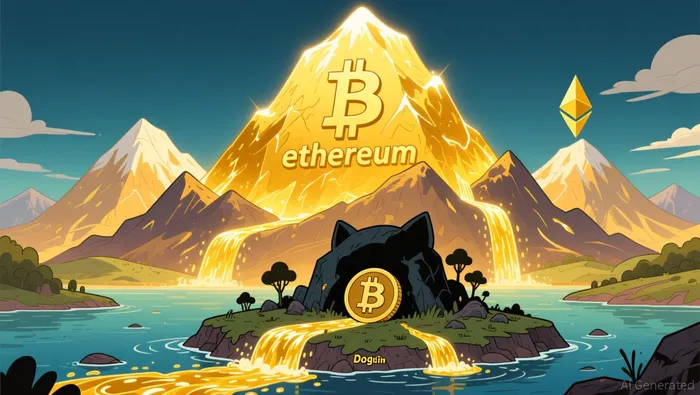
This trend is evident in the performance of Solana and Hyperliquid. Solana funds have accumulated $1.15 billion since launch and returned to second place in July, suggesting demand is diversifying . Hyperliquid has also emerged quickly, attracting $293 million in May and June before recording its first outflow in July .
Dogecoin, however, has not benefited from this diversification. The data indicates that committed buyer pools are not keeping pace for most assets . This suggests that Dogecoin may continue to face headwinds as institutional capital flows exclusively into established leaders .
The broader market dynamics show mixed signals. Spot Bitcoin ETFs have recently recorded inflows exceeding $220 million following a period of sustained withdrawals, indicating a potential resurgence in institutional interest . However, near-term momentum may be constrained by corporate sales and ongoing wallet-security anxieties .
As the crypto market evolves, the gap between top-tier assets and smaller altcoins is likely to widen. Dogecoin’s minimal activity and net outflows in July reflect this trend . Investors must navigate a market where liquidity is heavily skewed toward established leaders .
The security challenges, including the Coldcard vulnerability and legal actions against crypto entities, add another layer of complexity . These factors, combined with the concentration of capital, create a challenging environment for assets like Dogecoin . The market’s increasing selectivity means that only a few assets will attract sustained investment demand .

Blending traditional trading wisdom with cutting-edge cryptocurrency insights.
Latest Articles
Stay ahead of the market.
Get curated U.S. market news, insights and key dates delivered to your inbox.


AInvest
PRO
AInvest
PRO




Comments
No comments yet