
The DOGE ETF: Regulatory Shifts and Institutional Adoption Reshape Meme Coin Dynamics


 Aime Summary
The crypto market in 2025 is witnessing a seismic shift as institutional investors and regulators converge on DogecoinDOGE-- (DOGE), a once-meme-driven asset now poised to enter mainstream finance. The potential approval of a Dogecoin ETF, coupled with regulatory clarity and institutional infrastructure upgrades, is redefining the narrative around meme coins. This article examines the interplay between regulatory developments, institutional adoption, and retail sentiment, and what it means for investors navigating the evolving crypto-ETF landscape.
Regulatory Tailwinds: A New Era for Meme Coins
The U.S. Securities and Exchange Commission (SEC) has taken a pivotal step toward legitimizing meme coins like DOGEDOGE--. In February 2025, the SEC issued a landmark statement clarifying that transactions in Dogecoin and similar assets do not constitute securities, effectively removing a major legal barrier for ETF issuers. This guidance, championed by Commissioner Hester Peirce's Crypto Task Force, has created a regulatory framework that allows DOGE to be treated as a commodity—a critical distinction for institutional adoption.
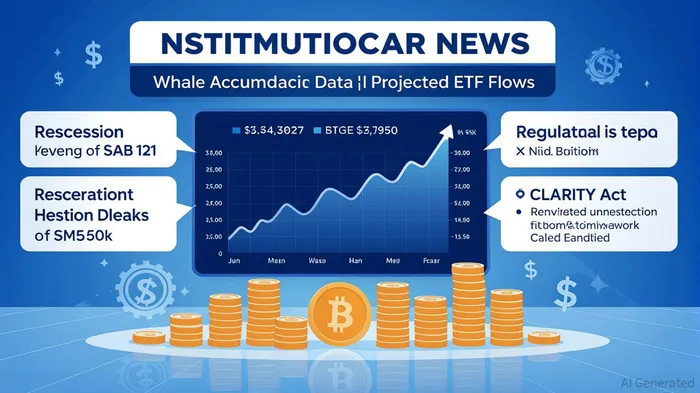
Further, the rescission of SEC Staff Accounting Bulletin 121 (SAB 121) in January 2025 has enabled banks to offer crypto custody services, addressing a long-standing institutional hurdle. Exchanges like Cboe BZX, Nasdaq, and NYSE Arca have proposed generic listing standards for crypto ETFs, streamlining the approval process and reducing the regulatory friction that once delayed crypto products for years. These changes position DOGE as a prime candidate for an ETF, with a 60–70% probability of approval within 12–18 months.
Institutional Adoption: From Meme to Mainstream
Institutional interest in DOGE has surged in 2025, driven by strategic allocations and infrastructure upgrades. Bit OriginBTOG--, a publicly traded firm, allocated $500 million to DOGE's treasury in July 2025, followed by an additional $100 million in follow-on investments. This move reflects a growing trend of institutional capital treating DOGE as a macroeconomic hedge rather than a speculative asset.
Whale activity has further solidified DOGE's institutional appeal. Over 2.1 billion DOGE tokens were accumulated in a single week in August 2025, with large holders now controlling 27.7% of the total supply. This concentration of ownership has stabilized key price levels, providing a floor for retail-driven volatility. Additionally, green energy-powered mining operations and advanced custody solutions, such as CoinbaseCOIN-- Custody's role in the 21Shares DOGE ETF, have enhanced the asset's infrastructure, making it more viable for institutional portfolios.
The proposed 21Shares DOGE ETF, with a 0.25% management fee and a 1:1 reserve structure, is expected to attract up to $1.2 billion in inflows if approved. This mirrors the success of BitcoinBTC-- ETFs, which saw $156 billion in assets under management by August 2025. Analysts project a 50–150% price increase for DOGE in the first year post-approval, particularly if it coincides with a broader altcoin season.
Retail Sentiment: Social Media and the Fear & Greed Paradox
While institutional adoption is reshaping DOGE's fundamentals, retail investor behavior remains a double-edged sword. Social media platforms like RedditRDDT--, Twitter, and Twitch continue to drive viral momentum, with the r/dogecoin subreddit experiencing a 280% surge in activity in July 2025. Celebrity endorsements, particularly from Elon Musk, have amplified this effect. A single tweet from Musk in August 2025 triggered a 13% price surge within 15 minutes, underscoring the asset's sensitivity to sentiment.
However, this retail-driven enthusiasm often clashes with technical indicators. The Fear & Greed Index recorded a “greed” score of 69 in August 2025, reflecting retail optimism, but institutional selling pressure has led to sharp corrections. For example, a 4.27 billion trading volume spike in a single hour in August highlighted the tension between retail speculation and institutional caution.
Market Implications: A Tipping Point for Meme Coins
The convergence of regulatory clarity, institutional adoption, and retail sentiment has positioned DOGE as a unique asset in the crypto-ETF landscape. If approved, a DOGE ETF would not only legitimize meme coins as investable assets but also catalyze a broader institutional shift into altcoins. The potential for $1.2 billion in inflows could mirror Bitcoin's 2024 ETF-driven rally, but risks remain.
DOGE's infinite supply model—issuing 25% new tokens annually—introduces structural risks, and its price history is marked by volatility. Competing altcoins like SolanaSOL-- (SOL) and NEAR ProtocolNEAR-- (NEAR) could siphon liquidity, challenging DOGE's dominance. Additionally, regulatory delays or reclassification as a security could disrupt the ETF timeline.
Investment Advice: Balancing Opportunity and Risk
For investors, the DOGE ETF represents a high-risk, high-reward opportunity. Those with a long-term horizon and risk tolerance for volatility may consider allocating to DOGE, particularly if the ETF is approved. However, it is crucial to monitor key price levels, regulatory updates, and whale activity. Diversification across altcoins and traditional assets can mitigate exposure to DOGE's inherent risks.
In conclusion, the DOGE ETF is a testament to the evolving crypto-ETF landscape, where regulatory innovation and institutional adoption are reshaping meme coins into mainstream assets. While the path forward is not without challenges, the alignment of retail enthusiasm and institutional strategies positions DOGE as a compelling case study in the future of digital asset investing. Investors must navigate this dynamic environment with discipline, balancing optimism with caution.

Blending traditional trading wisdom with cutting-edge cryptocurrency insights.
Latest Articles
Stay ahead of the market.
Get curated U.S. market news, insights and key dates delivered to your inbox.


AInvest
PRO
AInvest
PRO



Comments
No comments yet