
DOGE Declines 60% Year-on-Year as Large Holder Outflows Signal Price Vulnerability
 Aime Summary
- Dogecoin (DOGE) has experienced a 60.68% year-on-year decline, reaching $0.1041 as of February 5, 2026.
- The drop in price has coincided with a 10% reduction in wallets holding $1 million or more, indicating declining confidence among top holders.
- While some analysts project a 37.38% price recovery to $0.1393 by year-end, the path is expected to be slow and vulnerable to continued outflows.
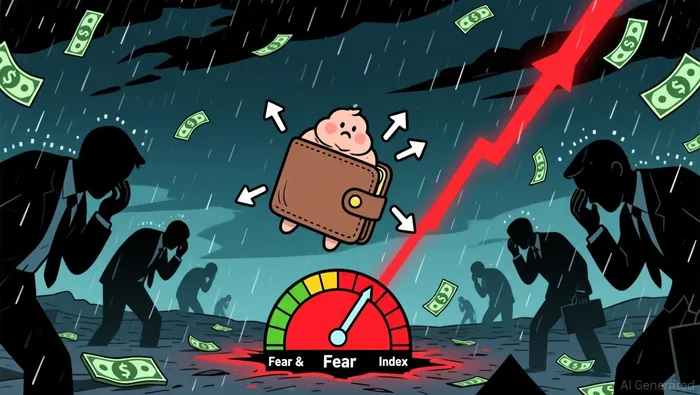
DOGE’s price remains below both the 50-day and 200-day moving averages, signaling a continued bearish trend. This trend is compounded by negative market sentiment, with the Fear & Greed Index at 12, one of the lowest levels in recent cycles.
On-chain metrics reflect a shift in sentiment. The decline in large wallets has historically correlated with price consolidation. A sustained break above the 50-day SMA could signal a potential reversal or consolidation phase, but this remains uncertain.
How Does the Current Market Environment Affect DOGEDOGE-- Price Prospects?
The current price of DOGE is $0.11, with a market capitalization ranking it ninth on CoinMarketCap. Recent price movements have been relatively stable, with fluctuations between $0.10 and $0.11. Analysts highlight investor sentiment—particularly social media buzz, institutional adoption, and community growth—as a key driver of demand.
Market analysts suggest potential short-term gains of 12.5–33% in the next 1–4 weeks. However, these optimistic forecasts hinge on broader macroeconomic conditions. The current BitcoinBTC-- bull cycle, while not at peak yet, is still shaping altcoin sentiment.
What Are the Key Risks to DOGE’s Price Recovery?
The inflationary tokenomics of DOGE remain a point of concern for skeptics. Unlike Bitcoin or EthereumETH--, DOGE has an unlimited supply, which can dilute value over time. While community support remains strong, the coin’s utility beyond social media hype is still limited.
Large holder outflows are a critical risk. A 10% decline in wallets holding $1 million or more within a month indicates a loss of conviction among top stakeholders. This erosion of on-chain wealth could cap near-term gains and delay any meaningful recovery.
Market participants should closely monitor Bitcoin dominance and regulatory updates, as both can have a cascading effect on altcoin prices. The broader crypto market is still navigating corrections, with some analysts suggesting that deep drawdowns are necessary for long-term maturation.
What Can Traders Do to Manage DOGE Risk?
Stop loss and take profit orders are essential tools for managing risk in DOGE trading. A stop loss can be placed below the 200-day moving average to protect against trend reversals, while a take profit can be set above the 50-day moving average to capture momentum.
Risk-reward ratios are also important. Traders should aim for a 2:1 ratio to ensure that potential gains outweigh risks. Position sizing and the use of trailing stops can further enhance risk control.
Automation tools, such as conditional orders on platforms like MEXC, can help traders enforce discipline and avoid emotional decisions. These strategies are particularly relevant in a market as volatile as DOGE.

La combinación de la sabiduría tradicional en el comercio con las perspectivas más avanzadas relacionadas con las criptomonedas.
Latest Articles
Stay ahead of the market.
Get curated U.S. market news, insights and key dates delivered to your inbox.


AInvest
PRO
AInvest
PRO



Comments
No comments yet