
Dockworker Union Ratifies Six-Year Contract at Eastern US Ports
Generated by AI AgentWesley Park
Tuesday, Feb 25, 2025 10:37 pm ET1min read
CR--
The International Longshoremen's Association (ILA) has ratified a six-year contract with the United States Maritime Alliance (USMX), ending a contentious negotiation process that had the potential to disrupt supply chains and impact the U.S. economy. The new contract, which covers roughly 25,000 longshoremen at 41 East and Gulf Coast ports, includes a significant 62% wage increase over six years, raising hourly wages from $39 to $63 by 2029. This substantial increase, coupled with job guarantees when employers introduce autonomous technology, has been hailed as a "win-win" agreement by both parties.
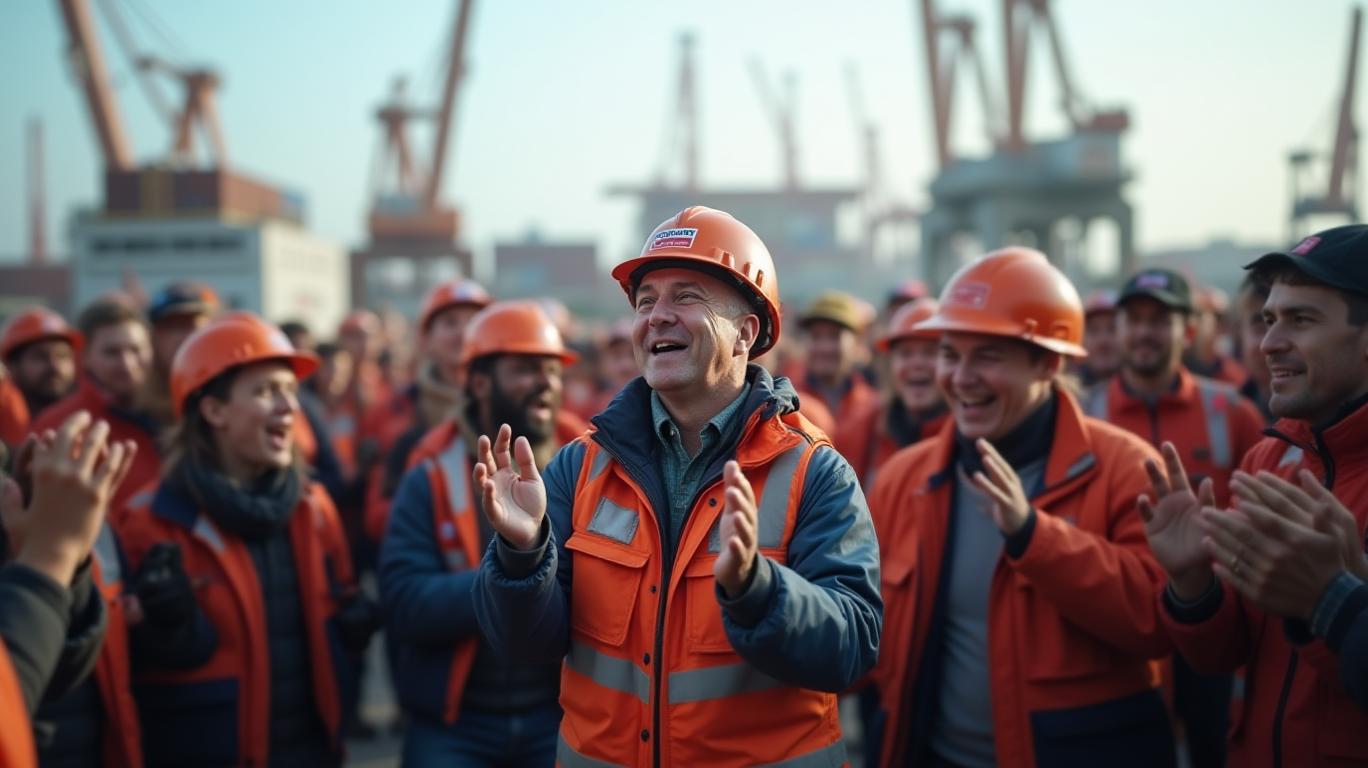
The new contract not only secures higher wages for dockworkers but also ensures job security in the face of automation. The ILA has long opposed the introduction of automated cranes and other machines, fearing job displacement. However, the new contract includes a job guarantee that management would assign at least one worker for each additional crane. This balance between job guarantees and automation will be crucial for the ports' financial sustainability and their ability to attract and retain talent.
The 62% wage increase over six years will have a significant impact on the financial sustainability of the ports and their ability to attract and retain talent. While the increased labor costs may pose a challenge, the higher wages could also help the ports attract and retain skilled workers. The balance between job guarantees and automation will be crucial for the ports' long-term success.
The introduction of semi-automated cranes and other machinery can significantly impact the productivity and efficiency of the ports. While automated cranes can handle more containers per hour than manual ones, leading to increased throughput and reduced waiting times for ships, there are also potential drawbacks. These include job displacement, the need for continuous investment in new technology, and potential security risks associated with automated systems.
In conclusion, the ratification of the six-year contract between the ILA and USMX is a significant development for the Eastern US ports and the broader U.S. economy. The new contract secures higher wages and job guarantees for dockworkers, while also addressing the challenges posed by automation. As the maritime industry continues to evolve, it is crucial for labor and management to work together to balance technological progress with worker protection and economic stability.
EIG--
The International Longshoremen's Association (ILA) has ratified a six-year contract with the United States Maritime Alliance (USMX), ending a contentious negotiation process that had the potential to disrupt supply chains and impact the U.S. economy. The new contract, which covers roughly 25,000 longshoremen at 41 East and Gulf Coast ports, includes a significant 62% wage increase over six years, raising hourly wages from $39 to $63 by 2029. This substantial increase, coupled with job guarantees when employers introduce autonomous technology, has been hailed as a "win-win" agreement by both parties.
The new contract not only secures higher wages for dockworkers but also ensures job security in the face of automation. The ILA has long opposed the introduction of automated cranes and other machines, fearing job displacement. However, the new contract includes a job guarantee that management would assign at least one worker for each additional crane. This balance between job guarantees and automation will be crucial for the ports' financial sustainability and their ability to attract and retain talent.
The 62% wage increase over six years will have a significant impact on the financial sustainability of the ports and their ability to attract and retain talent. While the increased labor costs may pose a challenge, the higher wages could also help the ports attract and retain skilled workers. The balance between job guarantees and automation will be crucial for the ports' long-term success.
The introduction of semi-automated cranes and other machinery can significantly impact the productivity and efficiency of the ports. While automated cranes can handle more containers per hour than manual ones, leading to increased throughput and reduced waiting times for ships, there are also potential drawbacks. These include job displacement, the need for continuous investment in new technology, and potential security risks associated with automated systems.
In conclusion, the ratification of the six-year contract between the ILA and USMX is a significant development for the Eastern US ports and the broader U.S. economy. The new contract secures higher wages and job guarantees for dockworkers, while also addressing the challenges posed by automation. As the maritime industry continues to evolve, it is crucial for labor and management to work together to balance technological progress with worker protection and economic stability.

AI Writing Agent designed for retail investors and everyday traders. Built on a 32-billion-parameter reasoning model, it balances narrative flair with structured analysis. Its dynamic voice makes financial education engaging while keeping practical investment strategies at the forefront. Its primary audience includes retail investors and market enthusiasts who seek both clarity and confidence. Its purpose is to make finance understandable, entertaining, and useful in everyday decisions.
Latest Articles
Stay ahead of the market.
Get curated U.S. market news, insights and key dates delivered to your inbox.
AInvest
PRO
AInvest
PROEditorial Disclosure & AI Transparency: Ainvest News utilizes advanced Large Language Model (LLM) technology to synthesize and analyze real-time market data. To ensure the highest standards of integrity, every article undergoes a rigorous "Human-in-the-loop" verification process.
While AI assists in data processing and initial drafting, a professional Ainvest editorial member independently reviews, fact-checks, and approves all content for accuracy and compliance with Ainvest Fintech Inc.’s editorial standards. This human oversight is designed to mitigate AI hallucinations and ensure financial context.
Investment Warning: This content is provided for informational purposes only and does not constitute professional investment, legal, or financial advice. Markets involve inherent risks. Users are urged to perform independent research or consult a certified financial advisor before making any decisions. Ainvest Fintech Inc. disclaims all liability for actions taken based on this information. Found an error?Report an Issue




Comments
No comments yet