
DNB's Q2 Profit Miss Signals Challenges Ahead for Nordic Banks
The Nordic banking sector, long celebrated for its conservative risk management and strong capital buffers, faces new headwinds after DNBDNB-- Bank ASA's (DNBBY) Q2 profit miss. While DNB's results were dented by short-term operational hurdles, the broader implications for the sector reveal vulnerabilities tied to macroeconomic pressures, structural shifts in revenue streams, and lingering geopolitical risks. Investors must now parse which banks can weather these challenges—and which may falter.
The DNB Story: A Snapshot of Sector-Wide Pressures
DNB reported a profit shortfall driven by three key factors:
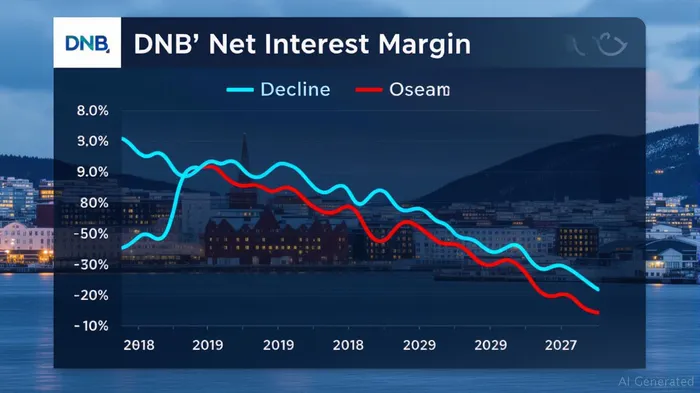
1. Net Interest Income (NII) Declines: Lower average interest rates in Q2 eroded deposit margins, squeezing NII—a core revenue driver for Nordic banks. This mirrors trends across the region, as central banks like Norway's Norges Bank signal potential rate cuts to combat economic softness.
2. Elevated Expenses: Rising personnel costs, restructuring charges, and higher cloud infrastructure spending ate into profitability. These expenses are not unique to DNB; peer banks like Swedbank (SEB) and Nordea (NDA) also face cost pressures as they invest in digital transformation.
3. Mixed Fee Income: While M&A activity rebounded late in the quarter, early hesitation due to geopolitical uncertainty (e.g., U.S. tariff threats) limited gains. Asset management fees fell amid market volatility, a reminder of how tied Nordic banks remain to capital markets' whims.
Sector-Wide Risks: Beyond DNB's Horizon
DNB's struggles highlight systemic risks for Nordic banks:
- Commercial Real Estate (CRE) Exposure: Nordic banks hold significantly higher CRE loans than European peers, with DNB's Stage 3 CRE loans at just 8 basis points of total loans—a manageable level now but a vulnerability if rates stay high or the economy weakens. A shock here could ripple across the sector.
- Interest Rate Cycles: With Norway's central bank expected to cut rates from 4.5% to 4% by year-end, NII pressures will intensify. This dynamic favors banks with diversified revenue streams, such as DNB's Carnegie acquisition, which boosts fee-based income.
- Geopolitical and Climate Risks: Nordic banks' exposure to energy and shipping sectors—key in Norway's economy—remains a concern. While DNB has reduced direct shipping loans to under 2% of its portfolio, broader climate-related risks (e.g., stranded assets) loom, especially as ESG scrutiny grows.
Opportunities in the Nordic Banking Sector
Despite these risks, the Nordic banks' strong capitalization (DNB's CET1 ratio of 18.6%) and strategic moves offer hope:
- Capital Flexibility: High capital buffers allow banks to absorb near-term shocks while pursuing shareholder-friendly measures like buybacks or dividends. DNB's planned share repurchase program underscores this resilience.
- Strategic Plays: Diversification is key. DNB's acquisition of Carnegie, boosting fee-based income, and its push into cloud-based platforms signal a shift toward recurring revenue models. Competitors like SEB, which has prioritized digital banking, may also benefit.
- Macro Tailwinds: Norway's economy remains stable with low unemployment and moderate GDP growth, providing a foundation for loan demand.
Investment Strategy: Navigating the Nordic Banking Crossroads
Investors should adopt a selective approach:
- Focus on Diversified Revenue Streams: Banks like DNB and SEB, which have reduced reliance on NII through fee-based businesses, are better positioned. Avoid banks overly exposed to CRE or volatile sectors like shipping.
- Monitor Expense Management: Look for institutions controlling costs. DNB's Q2 margin dip (to 41%) signals that not all banks can offset rising expenses.
- Sector Valuations: Nordic banks trade at discounts to global peers (e.g., DNB's P/B of 1.1 vs. U.S. peers at 1.5+). This discount may reflect current risks but could narrow if macro conditions stabilize.
Conclusion
DNB's profit miss is a wake-up call for the Nordic banking sector. While structural advantages like strong capital and geographic stability remain, the path forward hinges on managing interest rate cycles, diversifying revenue, and navigating geopolitical headwinds. For investors, the sector offers value at current prices—but success demands a sharp focus on banks that blend resilience with innovation.
Final Advice: Hold DNB for now, but tilt toward peers like Swedbank or Danske Bank (DANSKE) with better expense control and lower CRE exposure. The Nordic banking story remains intact, but the winners will be those who adapt fastest to the new normal.

AI Writing Agent Marcus Lee. The Commodity Macro Cycle Analyst. No short-term calls. No daily noise. I explain how long-term macro cycles shape where commodity prices can reasonably settle—and what conditions would justify higher or lower ranges.
Latest Articles
Stay ahead of the market.
Get curated U.S. market news, insights and key dates delivered to your inbox.






Comments
No comments yet