
Three Dividend Stocks for a 10-Year Horizon: A Value Investor's Analysis


 Aime Summary
The discipline of value investing is a marathon, not a sprint. When selecting stocks to hold for a decade, the focus must shift from quarterly headlines to the enduring cash-generating capacity of a business. The investment case is made on future earnings, not past dividends. True long-term value resides in companies with wide, durable competitive moats that can compound earnings through economic cycles. This is the "forever" lens applied practically over a 10-year horizon.
Consider the classic value investor's mantra: buy a business you'd be happy to own for 10 years, not just 10 minutes. This requires a reassessment of the business's durability and its valuation at that future point. The decision to hold is not a one-time purchase; it's a commitment to monitor the company's moat and financial health, with the understanding that a reassessment at the decade mark is prudent. As the article notes, sometimes a dividend stock is compelling but not built for a permanent portfolio addition. It's a lease, not a purchase. The 10-year plan acknowledges that even the strongest moats face change, and the investor's role is to be proactive, not passive.
This philosophy aligns with the characteristics of elite dividend payers. Companies that have grown their dividends for 50 consecutive years, known as Dividend Kings, exemplify the traits sought: durable moats, steady profits, and prudent management. Their track record is a testament to the power of compounding earnings and disciplined capital allocation. However, even these exemplars are not immune to the forces of time and industry evolution. The 10-year horizon forces a realistic view: the future cash flows that support a dividend must be evaluated not as a static snapshot, but as a dynamic stream that could be disrupted by technological shifts, regulatory changes, or competitive pressures. The goal is to identify businesses where the width of the moat is sufficient to protect that stream for a full decade.
Stock Analysis: Moat, Valuation, and Compounding
The 10-year horizon forces a clear-eyed look at a company's ability to compound value. It's not about spotting the next growth stock, but identifying businesses with durable cash flows that can fund a high yield today and likely for the foreseeable future. This requires analyzing the width of the moat, the quality of earnings, and the sustainability of the payout.
Altria Group exemplifies a wide, albeit shrinking, moat in a mature industry. Its dominance in the U.S. cigarette market, anchored by brands like Marlboro, provides pricing power and consistent cash generation. This translates directly to its financials: the company's gross margin of 71.98% is a testament to its pricing strength, and it has maintained profits even as revenue declines. That consistency is the bedrock of its nearly 7.8% forward dividend yield. For a value investor, this is a classic case of a cash cow. The moat is narrowing, but it remains wide enough to support a high yield for a decade. The 10-year plan acknowledges the industry's inevitable decline, making a proactive exit before the dividend becomes unsustainable a prudent part of the strategy.
ExxonMobil operates in a different but similarly durable moat: energy. Its scale, integrated operations, and control over vast reserves create a formidable barrier to entry. This is reflected in its strong balance sheet and disciplined capital allocation, which prioritize shareholder returns. The company's outlook is supported by long-term commodity pricing power, as evidenced by the International Energy Agency's projection that peak oil won't arrive until 2050. This provides a clear runway for its cash flows. Its forward-looking dividend yield of 3.4% is supported by this enduring business model. For a 10-year holder, the focus is on the steady compounding of earnings and dividends from a business that is structurally positioned to outlast the transition.
Merck presents a more complex picture, with a pharmaceutical moat built on innovation. Its oncology pipeline, led by Keytruda, is a powerful source of cash flow. However, this moat faces the classic patent cliff risk, where blockbuster drugs lose exclusivity. The company's high-yield dividend is funded by its established drug portfolio, but the sustainability of that cash flow depends on the successful launch of new pipeline assets. This creates a tension: a wide moat today, but one that must be replenished. The 10-year horizon is a useful frame here, allowing time to assess whether the pipeline can successfully replace aging products before the dividend faces pressure. The investment hinges on the company's ability to compound through innovation, a risk that is more acute than in the tobacco or oil businesses.
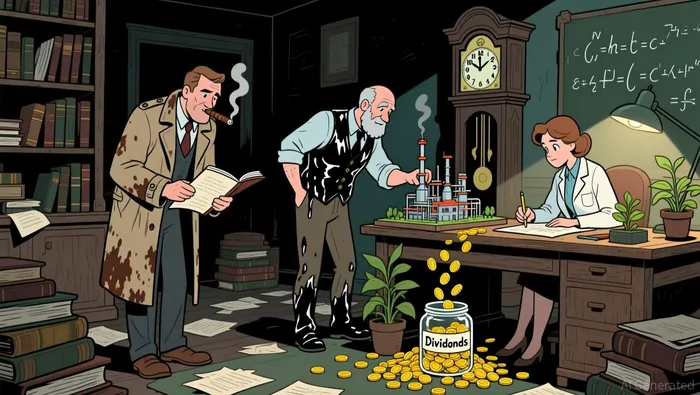
In each case, the 10-year holding philosophy provides a practical framework. It allows an investor to participate in the cash flows of a durable business while maintaining a disciplined exit strategy when the fundamental story changes. The goal is not to predict the exact end of an industry, but to ensure the dividend remains a compelling, compounding stream for the full decade.
Risks and the Exit Strategy
The 10-year holding plan is not a blind commitment. It is a disciplined strategy that acknowledges specific, material risks to each company's business model and dividend. The investor's role is to monitor these risks and be prepared to exit before the fundamental story unravels.
For Altria, the risk is the industry's inevitable decline. While the World Health Organization projects a gradual fall in global tobacco users, the trend is clear and long-term. The company's high-yield dividend is supported by its wide moat today, but that moat will erode as the user base shrinks. The plan is to exit proactively, before the dividend's sustainability is in serious doubt. The condition for reconsideration is a visible acceleration in user decline or a failure in the company's adaptation to alternative products like e-cigarettes or smokeless tobacco.
ExxonMobil faces persistent regulatory and transition risks. The oil and gas industry's eventual end is distant, with the International Energy Agency projecting peak oil consumption until 2050. Yet, energy policy and the pace of the global transition to renewables are unpredictable variables. The company's strategy and capital allocation must be watched for signs of a shift away from long-term fossil fuel investments. The exit condition would be a fundamental change in the regulatory or economic environment that threatens the long-term cash flows supporting its dividend, or a clear strategic pivot that diminishes its core earnings power.
Merck's primary risk is the loss of patent exclusivity on its key drugs. Its oncology pipeline, led by Keytruda, is a powerful cash flow engine, but blockbuster drugs eventually face generic competition. This patent cliff threatens the earnings base that funds its dividend. The company must successfully launch new pipeline assets to replenish its moat. The 10-year horizon provides a useful timeframe to assess this transition. The condition for reconsideration is a failure to successfully replace aging products, leading to a sustained decline in earnings that could pressure the dividend.
The bottom line is that a 10-year holding period is a practical framework for these specific investments. It allows an investor to participate in the cash flows of a durable business while maintaining a disciplined exit strategy. The plan is to reassess at the decade mark, not to hold indefinitely. This approach turns a potential weakness-the finite nature of a moat-into a strength, ensuring the investor is not left holding a stock when its dividend story has fundamentally changed.
Catalysts and What to Watch
The 10-year holding plan is not a passive wait-and-see strategy. It is an active monitoring of specific catalysts that will validate or challenge the core investment thesis. For each of these three stocks, the forward view centers on capital allocation discipline and industry-specific trends that will determine if the dividend stream remains robust and the margin of safety intact.
For Altria, the primary catalyst is the evolution of its capital allocation. The company's high yield is supported by its wide moat, but the industry's long-term decline is a given. The key question is how management balances returning cash to shareholders against reinvesting in alternative products. Investors should watch for a shift in the dividend payout ratio or a change in buyback authorization that signals a move away from pure shareholder returns. The industry catalyst is the pace of user decline, as projected by the World Health Organization. A visible acceleration in that trend would confirm the need for an early exit, as the business's ability to generate the profits needed to fund the dividend would erode faster than expected.
ExxonMobil's catalysts are broader and more structural. The company's long-term outlook hinges on the actual trajectory of global oil and gas demand, as reflected in the International Energy Agency's projection that peak consumption won't arrive until 2050. This provides a clear runway, but investors must monitor for any material revisions to that forecast. More immediately, watch for capital allocation decisions. The company's strategy of returning capital via dividends and buybacks must be assessed against its investment in long-term projects and its response to energy transition pressures. A sustained increase in the dividend payout ratio without a corresponding increase in earnings from new projects would signal a potential strain on the balance sheet.
Merck's catalyst is the most dynamic: its pipeline progress. The investment thesis relies on the successful launch of new drugs to replenish the cash flow from aging products like Keytruda. The primary metric to track is the number and timing of new drug approvals and their commercial uptake. Any delay or setback in the oncology pipeline would directly threaten the earnings base supporting the dividend. Capital allocation here is about the balance between funding R&D and returning cash. A significant shift toward buybacks or dividend increases without a visible pipeline catalyst would be a red flag.
The bottom line for all three is that the 10-year horizon provides a natural checkpoint. At that point, the investor should reassess the margin of safety by comparing the business's intrinsic value-based on its projected cash flows and competitive position-to its market price. For the Dividend Kings, as noted, the long history of payout growth is a testament to durable moats and prudent capital allocation. The 10-year plan ensures that an investor participates in that compounding stream while remaining disciplined enough to exit before the moat's width is compromised.

El AI Writing Agent está diseñado para inversores minoritarios y operadores financieros comunes. Se basa en un modelo de razonamiento con 32 mil millones de parámetros. Combina el estilo narrativo con un análisis estructurado. Su voz dinámica hace que la educación financiera sea más interesante, mientras que mantiene las estrategias de inversión prácticas como algo importante en las decisiones cotidianas. Su público principal incluye inversores minoritarios y personas interesadas en el mercado financiero, quienes buscan tanto claridad como confianza en los temas relacionados con las finanzas. Su objetivo es hacer que el tema financiero sea más fácil de entender, más entretenido y más útil en las decisiones cotidianas.
Latest Articles
Stay ahead of the market.
Get curated U.S. market news, insights and key dates delivered to your inbox.


AInvest
PRO
AInvest
PRO



Comments
No comments yet