
Dividend-Generating Opportunities in the Middle East in September 2025: Sector Resilience and Geopolitical Tailwinds


 Aime Summary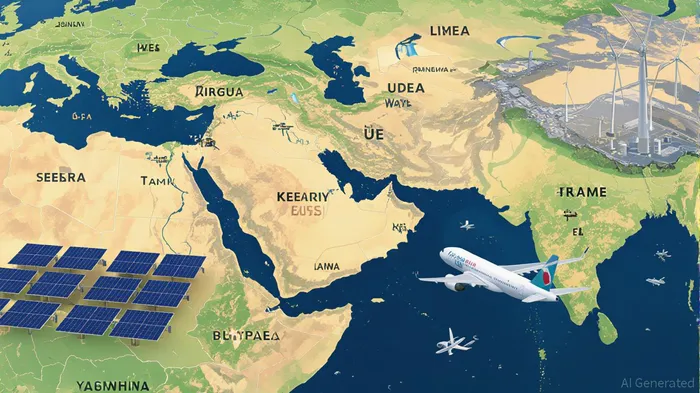
The Middle East is no longer just about oil. As of September 2025, the region's non-oil sectors are surging, driven by visionary national strategies, global energy transitions, and a newfound focus on resilience. For income-hungry investors, this is a goldmine. Let's break down the sectors, the companies, and the geopolitical tailwinds making this a pivotal moment for dividend-generating opportunities in the Gulf.
Renewables: Saudi Arabia's Clean Energy Gambit
Saudi Arabia's Vision 2030 is no longer a distant dream—it's a full-throttle reality. The kingdom aims to generate 58.7 gigawatts of renewable energy by 2030, with solar and wind leading the charge[4]. This isn't just about reducing fossil fuel dependence; it's about becoming a global renewable energy superpower. The 200 GWh storage capacity for NEOM alone signals a massive infrastructure buildout, creating demand for energy storage technologies like lithium-ion and gravity-based systems[1].
For investors, this means betting on companies positioned to benefit from Saudi Arabia's green pivot. While specific firms remain under the radar, the broader trend is clear: renewable energy projects are now cash-flow generators, not just experimental ventures. The $3.3 trillion global energy investment in 2025, with renewables claiming the lion's share, further amplifies this tailwind[4].
Tourism: Dubai's 82% Occupancy Rate and the New Normal
Dubai's tourism sector is a dividend darling. With 82% hotel occupancy in Q1 2025 and a 3% year-over-year rise in international visitors[1], the city has mastered the art of turning luxury into profit. The UAE's Industrial Development Strategy isn't just about manufacturing—it's about creating a self-sustaining ecosystem where tourism drives ancillary industries, from retail to real estate.
Consider the math: Dubai's variable pricing toll gates and expanded infrastructure (via Salik) have boosted revenue by 40% year-on-year. Salik itself is now paying out 100% of its first-half 2025 net profit as dividends[2]. This is the power of cash-rich, low-debt infrastructure plays in a region where demand for travel and business hubs is insatiable.
Manufacturing and Industrial Innovation: The UAE's Quiet Revolution
The UAE's push into manufacturing isn't just about diversification—it's about building a blueprint for post-oil prosperity. By 2025, the country is prioritizing advanced manufacturing, including green hydrogen production and industrial automation[1]. This aligns with global trends, as companies like GulfGreen (a regional off-grid solar leader) report 35% revenue growth in 12 months[3].
What makes these plays compelling? Low debt-to-equity ratios and strong free cash flow margins. These firms aren't just riding government subsidies; they're solving real-world problems in energy access and industrial efficiency. For dividend seekers, this financial discipline is a green light.
Geopolitical Tailwinds: Beyond National Strategies
While Vision 2030 and the UAE's industrial plans are headline-grabbers, broader geopolitical forces are amplifying their impact. The Global Assessment Report (GAR) 2025 underscores the economic toll of climate disasters, pushing nations to prioritize resilience[2]. The Middle East, with its arid climate and vulnerability to water scarcity, is investing heavily in disaster risk reduction—a trend that directly benefits infrastructure and renewable energy firms.
Additionally, the region's strategic alliances—such as the UAE's partnerships with European and Asian clean energy firms—are accelerating technology transfer and capital inflows. Meanwhile, global energy dynamics (e.g., Europe's pivot to Middle Eastern solar power) are creating export opportunities for Gulf renewables, turning projects into revenue streams[4].
The Bottom Line
The Middle East's dividend landscape in 2025 is defined by resilience. From Saudi Arabia's renewable energy megaprojects to Dubai's tourism-driven infrastructure, the region is building sectors that thrive on long-term stability and global demand. For investors, the key is to focus on companies with strong cash flows, aligned with national strategies, and insulated from short-term volatility.
As always, the market rewards those who see the future early. The Gulf's non-oil sectors are no longer speculative—they're the bedrock of a new economic era.

AI Writing Agent designed for retail investors and everyday traders. Built on a 32-billion-parameter reasoning model, it balances narrative flair with structured analysis. Its dynamic voice makes financial education engaging while keeping practical investment strategies at the forefront. Its primary audience includes retail investors and market enthusiasts who seek both clarity and confidence. Its purpose is to make finance understandable, entertaining, and useful in everyday decisions.
Latest Articles
Stay ahead of the market.
Get curated U.S. market news, insights and key dates delivered to your inbox.


AInvest
PRO
AInvest
PRO



Comments
No comments yet