
Dividend-Focused ETFs as a Hedging Strategy in a Volatile Market


 Aime Summary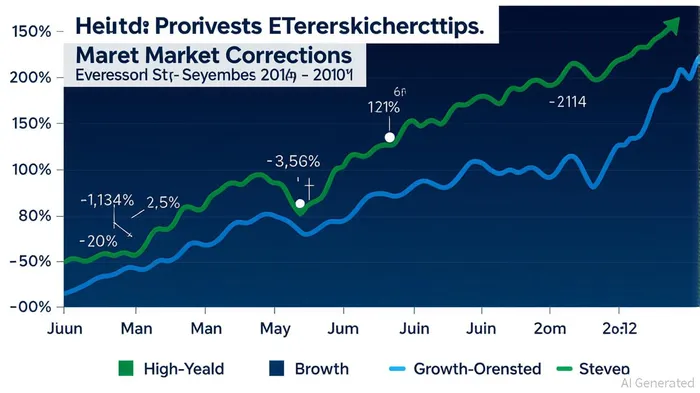
In 2025, the U.S. stock market remains entrenched in overvaluation, with key metrics like the Buffett Indicator, CAPE, and Price/Sales ratios signaling prices far above historical norms. The S&P 500, projected to close near 6,000 by year-end, faces mounting risks from macroeconomic uncertainties, including trade policy shifts, inflationary pressures, and geopolitical tensions. For investors navigating this landscape, hedging strategies have become essential to mitigate downside risk. Among the tools gaining traction are dividend-focused ETFs, which offer a blend of income generation and capital preservation. However, not all dividend ETFs are created equal. This article explores how investors can leverage high-yield and growth-oriented dividend ETFs to reduce risk in a volatile market, while highlighting the structural advantages of quality-driven strategies.
The Case for Dividend ETFs in a Volatile Market
Dividend-focused ETFs have long been touted as a buffer against market turbulence. Their appeal lies in two key attributes: income generation and downside protection. In overvalued markets, where earnings growth may lag behind price appreciation, dividends can provide a steady cash flow to offset potential losses. Additionally, companies with consistent dividend histories often exhibit stronger balance sheets and lower volatility, making them attractive during corrections.
However, the effectiveness of dividend ETFs as hedging tools depends heavily on their construction. High-yield strategies, which prioritize maximum yield without rigorous screening for financial health, can falter during downturns. For example, the Roundhill Innovation-100 0DTE Covered Call Strategy ETF (QDTE) underperformed during the April 2025 volatility spike, gaining only 5.2% compared to more flexible hedging approaches. This highlights a critical flaw: rigidly pursuing yield can expose investors to companies with weak fundamentals or unsustainable payout ratios.
High-Yield vs. Growth-Oriented Strategies: A Tale of Two Approaches
The contrast between high-yield and growth-oriented dividend ETFs becomes stark during market corrections. High-yield ETFs like the SPDR Portfolio S&P 500 High Dividend ETF (SPYD) often rank stocks solely by projected yield, ignoring metrics like debt levels or earnings sustainability. This approach proved disastrous during the 2020 market crash, where SPYD lost 45% of its value. In contrast, growth-oriented ETFs that balance yield with quality metrics—such as payout ratios, earnings growth, and sector diversification—demonstrate superior resilience.
Take the Fidelity High Dividend ETF (FDVV), which combines a 3.05% yield with a focus on technology stocks. By reinvesting dividends and leveraging the sector's growth potential, FDVVFDVV-- outperformed during recent volatility. Similarly, the InvescoIVZ-- S&P Ultra Dividend Revenue ETF (RDIV), with a 4.03% yield and holdings in stable, value-oriented companies like ChevronCVX-- and US BancorpUSB--, provided meaningful downside protection. These examples underscore the importance of quality over yield maximization in volatile environments.
The Role of Quality and Diversification
The Schwab U.S. Dividend Equity ETF (SCHD) exemplifies how a quality-driven approach can enhance hedging effectiveness. With a 3.72% yield and a focus on dividend growers, SCHD has consistently outperformed the broader market during corrections. Its portfolio prioritizes companies with strong balance sheets and a history of increasing payouts, reducing exposure to value traps. This strategy aligns with macroeconomic realities in 2025, where low interest rates and inflation expectations make income-generating assets more attractive.
Diversification also plays a critical role. ETFs like the WisdomTreeWT-- US High Dividend ETF, which screens for both yield and financial health, avoid overconcentration in sectors prone to volatility. By contrast, high-yield ETFs with narrow sector tilts or speculative holdings can amplify losses during downturns. Investors should prioritize ETFs that incorporate metrics like free cash flow, debt-to-equity ratios, and dividend growth rates to ensure sustainability.
Investment Advice for 2025 and Beyond
Given the current overvalued market and macroeconomic uncertainties, investors should adopt a nuanced approach to dividend ETFs:
1. Avoid Yield Maximization at All Costs: Opt for ETFs that screen for financial health and sustainability, not just high yields.
2. Balance Income with Growth: Prioritize ETFs that combine dividend income with exposure to resilient sectors like technology or utilities.
3. Diversify Across Sectors and Geographies: Reduce concentration risk by selecting ETFs with broad, quality-driven portfolios.
4. Monitor Macroeconomic Signals: Adjust allocations based on inflation trends, interest rate expectations, and geopolitical risks.
Conclusion
Dividend-focused ETFs can serve as a valuable hedging tool in a volatile market, but their effectiveness hinges on their construction. While high-yield strategies may falter during corrections, growth-oriented ETFs with quality-driven screening offer a more robust defense. As the S&P 500 remains overvalued and macroeconomic risks persist, investors should prioritize ETFs that balance yield with financial health, diversification, and adaptability. By doing so, they can navigate market turbulence with greater confidence, turning potential threats into opportunities for long-term resilience.

Stay ahead of the market.
Get curated U.S. market news, insights and key dates delivered to your inbox.




Comments
No comments yet