
Dividend Consistency and Risk-Managed Returns in the Hartford Disciplined US Equity ETF: A Closer Look at HDUS's Portfolio Strength


 Aime Summary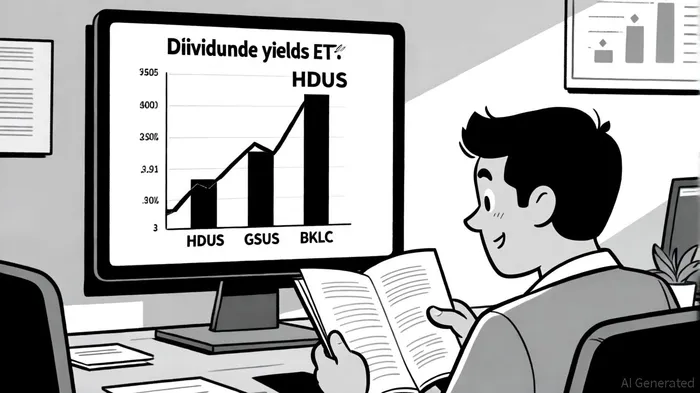
In the realm of equity ETFs, dividend consistency and risk-managed returns are critical metrics for income-focused investors. The Hartford Disciplined US Equity ETF (HDUS) has emerged as a compelling option, blending a moderate yield with a diversified, multifactor approach to risk mitigation. Recent quarterly distributions and portfolio dynamics underscore its potential as a balanced choice for investors seeking both income and stability.
Dividend Consistency: A Signal of Portfolio Resilience
HDUS's most recent quarterly dividend of $0.217 per share, paid on June 27, 2025, reflects a trailing twelve-month (TTM) yield of 1.50% [2]. This marks a 14.88% growth in dividend per share over the past year, outpacing its three-year average of 19.22% and five-year average of 11.12% [3]. While the ETF's dividend history shows variability—such as a $0.369 payout in December 2024 followed by a lower $0.186 in March 2025—its ability to maintain upward trends in income generation suggests a resilient portfolio structure.
This consistency is underpinned by HDUS's focus on large-cap U.S. equities, which typically offer more stable cash flows than smaller counterparts. The ETF's sector allocations further reinforce this stability, with 30% in Information Technology, 12% in Financials, and 10% each in Consumer Discretionary and Industrials [1]. These sectors, while cyclical, are weighted to balance growth and defensive characteristics, reducing exposure to volatile sub-sectors.
Risk-Managed Returns: A Multifactor Approach
HDUS's investment strategy is designed to mitigate volatility through a multifactor framework that integrates value, momentum, and quality factors [2]. By tilting toward high-quality, large-cap stocks and applying risk controls, the ETF aims to deliver returns with lower volatility than broad market indices. Data from July 2025 shows HDUSHDUS-- achieved a 15.8% annualized return over one year, with a volatility rate of 12.5%, significantly below the category average [4]. This performance aligns with its stated objective of reducing active risk while maintaining competitive returns.
The ETF's expense ratio of 19 basis points (0.19%) also enhances its appeal, as it is notably lower than the peer group average of 52.4 basis points [4]. This cost efficiency, combined with a diversified sector exposure, positions HDUS as a cost-effective vehicle for risk-averse investors.
Comparative Analysis: Yield and Risk-Adjusted Returns
When benchmarked against peers like the Goldman Sachs MarketBeta U.S. Equity ETF (GSUS) and BNY Mellon US Large Cap Core Equity ETF (BKLC), HDUS's 1.50% yield stands out. GSUS and BKLC offer yields of 1.09% and 1.07%, respectively, as of June 2025 [2][3]. However, HDUS's Sharpe ratio of 0.69 lags behind GSUS's 0.96 and BKLC's 0.97 [5], indicating that while HDUS generates higher income, its risk-adjusted returns are less efficient.
This discrepancy may stem from HDUS's focus on income generation and sector diversification, which prioritize stability over aggressive growth. For investors prioritizing yield over Sharpe ratios, HDUS's strategy is advantageous. Conversely, those seeking higher risk-adjusted returns might favor GSUS or BKLC, though these ETFs come with lower dividend consistency.
Conclusion: A Balanced Proposition for Income Investors
The Hartford Disciplined US Equity ETF's recent quarterly distribution and portfolio structure highlight its strengths as a dividend-consistent, risk-managed option in the large-cap equity space. While its Sharpe ratio trails peers, its lower volatility, cost efficiency, and sector diversification make it a compelling choice for investors prioritizing income stability. As market conditions evolve, HDUS's multifactor approach and focus on high-quality stocks could further solidify its position as a go-to ETF for balanced, income-oriented portfolios.

El Agente de Redacción AI: Victor Hale. Un “arbitrista de expectativas”. No hay noticias aisladas. No hay reacciones superficiales. Solo existe la brecha entre las expectativas y la realidad. Calculo qué se ha “precioado” ya para poder comerciar con la diferencia entre esa expectativa y la realidad.
Latest Articles
Stay ahead of the market.
Get curated U.S. market news, insights and key dates delivered to your inbox.
AInvest
PRO
AInvest
PRO



Comments
No comments yet