
Divided Consumption: Sector Rotation Opportunities in Consumer Finance Amid Food Products' Decline
 Aime Summary
The U.S. economy in 2025 is marked by a stark divergence in real personal consumption trends. While the Consumer Finance sector has shown surprising resilience amid high interest rates and inflation, the Food Products sector faces mounting headwinds from tariffs, wage stagnation, and shifting consumer priorities. This divergence creates a compelling case for sector rotation strategies, where investors can capitalize on the growing strength of credit-driven industries while avoiding the vulnerabilities of a struggling food retail landscape.
The Resilience of Consumer Finance: A Tale of Digital Transformation and Credit Expansion
Real personal consumption expenditures (PCE) in the Consumer Finance sector grew by 1.6% annualized in Q2 2025, outpacing the 0.5% growth in Q1. This resilience stems from two key drivers: digital innovation and credit accessibility.
- Digital Banking and AI-Driven Services: Fintechs and traditional banks alike are leveraging artificial intelligence to enhance customer engagement. AI-powered chatbots, personalized budgeting tools, and real-time fraud detection have become table stakes in a competitive market. Challenger banks like Chime and SoFiSOFI-- have captured 10% of new primary bank accounts in the last two years, reflecting a shift toward digital-first relationships.
- Alternative Data and Credit Inclusion: The use of cash-flow data and transactional analytics has expanded credit access for "credit invisible" borrowers. This innovation, supported by regulatory frameworks like the 2019 Interagency Statement, has enabled lenders to underwrite small-dollar loans more efficiently, addressing a $1.5 trillion credit gap in the U.S.
Investors should consider high-growth fintechs and banks with robust digital ecosystems. For example, companies like AffirmAFRM-- (AFRM) and UpstartUPST-- (UPST) are redefining credit scoring, while JPMorgan Chase (JPM) and Mastercard (MA) are integrating AI to enhance customer retention. The sector's ability to adapt to economic volatility—through flexible loan structures and value-driven loyalty programs—positions it as a long-term winner.
The Food Products Sector: A Struggle for Relevance
In contrast, the Food Products sector has seen a 1.0% projected growth in 2026, down from 2.3% in 2025. This slowdown is driven by:
- Tariff-Driven Inflation: Tariffs on imported goods have increased the cost of staples like dairy and seafood, reducing disposable income.
- Wage Growth Stagnation: Slower employment growth and declining immigration have suppressed demand for non-essential food items.
- Consumer Shifts: Households are prioritizing private-label products and plant-based alternatives, eroding margins for traditional food manufacturers.
The sector's challenges are compounded by supply chain fragility and labor shortages. For instance, Tyson Foods (TSN) and General Mills (GIS) have faced production delays due to climate-related disruptions and rising transportation costs. Meanwhile, consumers are increasingly turning to online grocery services like Instacart (CART) and Amazon Fresh, which offer convenience but compress margins for traditional retailers.
Historical Context: Sector Rotation During Downturns
History provides a roadmap for current opportunities. During the Great Recession (2008–2009), the Food Products sector remained relatively stable, while Consumer Finance—particularly credit card and auto loan sectors—suffered. However, the 2020 pandemic reversed this pattern: food retail sales surged as consumers stocked up on essentials, while digital banking adoption accelerated.
The current environment mirrors the 2020 scenario, with Consumer Finance outperforming due to:
- AI and automation reducing operational costs.
- Interest rate declines in 2025 spurring refinancing activity and flexible borrowing.
- Loyalty program innovation (e.g., gamified rewards, cashback on debit cards) attracting younger demographics.
Strategic Entry Points for Investors
- Consumer Finance:
- Fintechs with AI-driven platforms (e.g., Affirm, Upstart).
- Banks with strong digital transformation pipelines (e.g., JPMorgan, Capital One).
- Credit card companies leveraging alternative data (e.g., Discover Financial Services).
- Food Products (Caution Advised):
- Private-label brands (e.g., Costco's Kirkland Signature).
- Plant-based innovators (e.g., Beyond Meat, though valuations remain volatile).
- Supply chain-optimized retailers (e.g., Walmart, which dominates online grocery).
Conclusion: A Divergent Path Forward
The U.S. consumer landscape is fracturing into two distinct narratives: Consumer Finance as a growth engine and Food Products as a defensive sector under pressure. Investors should prioritize sectors that align with digital transformation, credit expansion, and demographic shifts. While the Food Products sector may offer short-term value in niche areas like private-label goods, its structural challenges—tariffs, inflation, and labor shortages—make it a less attractive long-term bet.
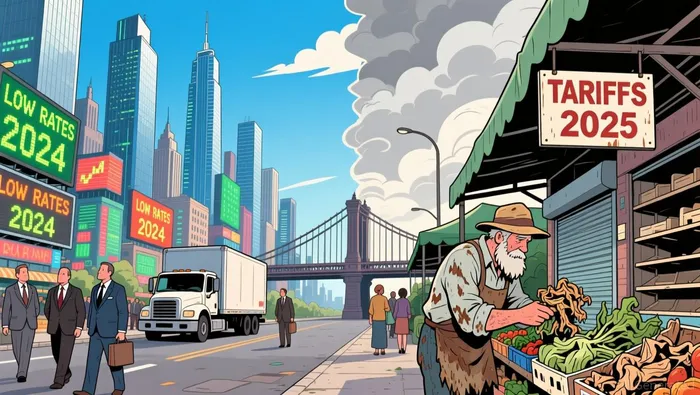
In a world of divergent consumption patterns, the winners will be those who embrace innovation, agility, and customer-centricity—qualities that define the modern Consumer Finance sector.

Stay ahead of the market.
Get curated U.S. market news, insights and key dates delivered to your inbox.
AInvest
PRO
AInvest
PRO



Comments
No comments yet