
Diversified Bets Outshine U.S. Stocks Amid Market Uncertainty
For a long time, betting exclusively on U.S. stocks (ALL IN) was the most rewarding strategy, as U.S. markets outperformed global peers. Any attempt to diversify meant reducing exposure to U.S. equities, often resulting in lower-than-expected returns. As a result, diversification strategies were largely overshadowed.
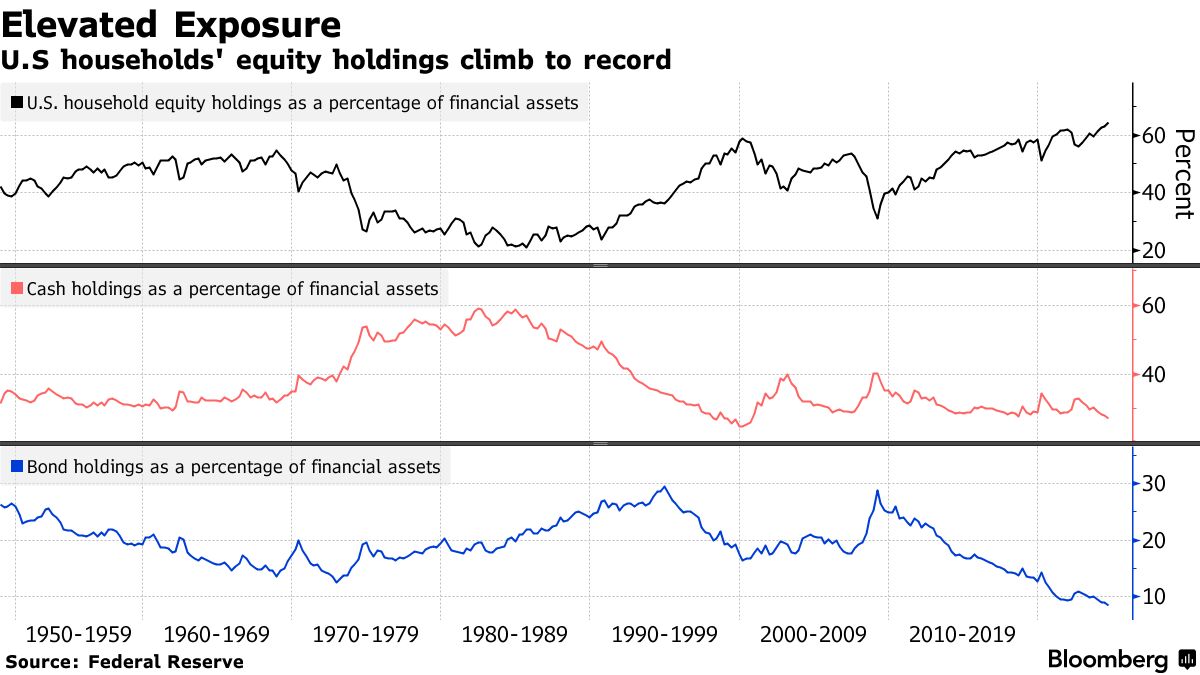
However, things have changed this year. With Trump reigniting trade wars, uncertainty looms over U.S. markets, making them one of the worst-performing global indices. In this environment, long-ignored diversification strategies are making a comeback.
One example is the RPAR ETF, which allocates across various asset classes, including commodities and bonds. It has gained over 5% this year, outperforming the S&P 500 by roughly 9 percentage points.
Diversification Finally Pays Off
The resurgence of diversified strategies is a long-awaited moment for advocates like Meb Faber, who has long promoted the classic investment wisdom dating back to King Solomon: Diversify or suffer when trouble strikes.
"It feels like a long time coming," said Faber, founder of Cambria Funds. "Does three months make a trend? We'll see. But these secular trends don't necessarily last just a quarter."
Prior to 2025, one of Faber's models—a portfolio spreading money across major asset classes—underperformed U.S. large-cap stocks in 14 of the last 16 years, an unprecedented stretch. He even dubbed it the 'bear market in diversification.' However, this year, his Global Asset Allocation ETF (GAA) has risen 3%, on track for its best relative return against the S&P 500 since inception.
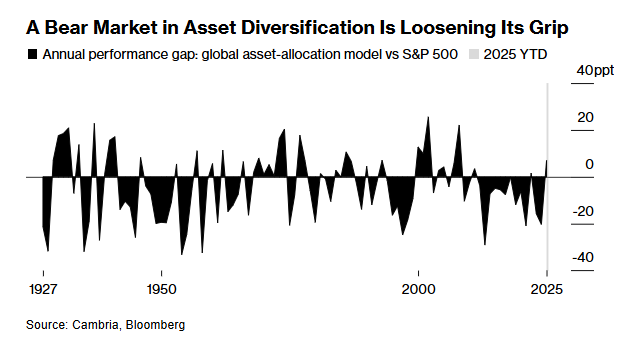
While it's unclear if this trend will persist, history suggests caution. U.S. stocks lagged Faber's global portfolio model in 2011 and 2022, only to stage a strong rebound.
Forgotten Assets Are Rebounding
Recent price movements reflect a shift, with once-overlooked assets making a comeback. After four years of losses, long-term U.S. Treasuries are rallying, driven by safe-haven demand and signs of slowing U.S. economic growth. The iShares 20+ Year Treasury Bond ETF (TLT) has outperformed equities for seven of the last eight weeks—something not seen since 2014.
A 60/40 stock-bond portfolio—long dismissed by critics—is also proving resilient. Bloomberg's model tracking this strategy has outperformed the S&P 500 this year. Meanwhile, gold—historically the ultimate safe haven—has reached a record high.
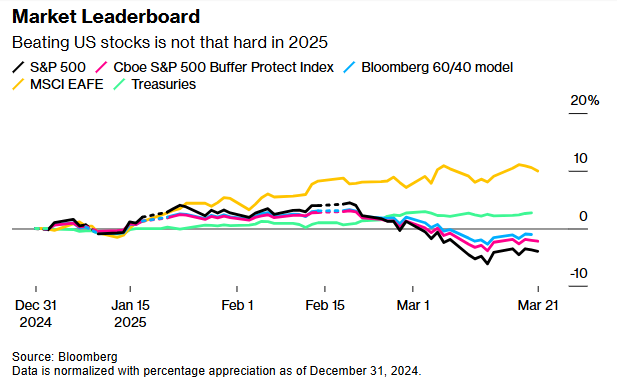
Beyond traditional diversification, quant strategies that focus on stock factors like value and momentum are thriving. Options-based strategies—which generate income or hedge against downside risks—are also outperforming a simple buy-and-hold S&P 500 approach.
Capital Is Flowing Out of U.S. Stocks
Signs suggest that massive capital is exiting U.S. equities in search of better returns elsewhere. According to a Bank of AmericaBAC-- survey, fund managers are cutting U.S. stock allocations at a record pace, reallocating to Europe and emerging markets.
With elevated U.S. equity valuations, heavy tech concentration, and murky growth prospects, investors should lean into diversification more than ever, said Pete Hecht, head of North America portfolio solutions at AQR Capital Management.
"I wish I had a crystal ball," Hecht said. "If I did, I wouldn't hold a diversified portfolio—I'd just hold the best-performing market. But in reality, it's really hard to time markets."

Stay ahead of the market.
Get curated U.S. market news, insights and key dates delivered to your inbox.


AInvest
PRO
AInvest
PRO



Comments
No comments yet