
The Divergent Paths of Metals & Mining and Chemical Products in the Wake of EIA Distillates Surprises
 Aime Summary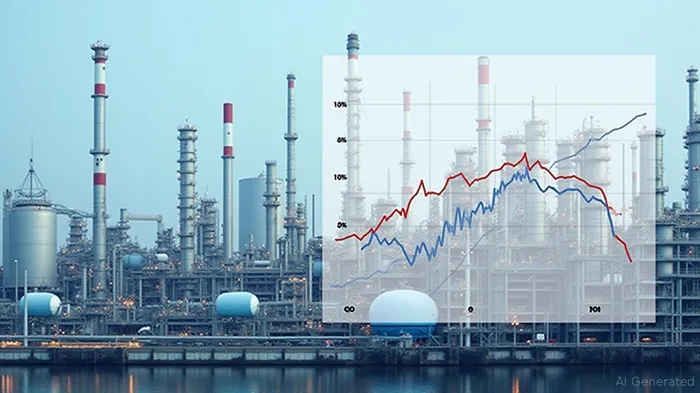
The U.S. Energy Information Administration's (EIA) weekly distillates report has long been a bellwether for energy-linked sectors. Recent data, however, reveals a stark divergence in how these shifts ripple through industries like Metals & Mining and Chemical Products. With distillate stocks at 109.9 million barrels as of July 18, 2025—a 11.4% decline from last year's 125.3 million barrels—the market is signaling tighter supply conditions. This dynamic, coupled with regional price disparities (West Coast diesel at $4.963 per gallon vs. Gulf Coast's $3.476), creates a fertile ground for sector rotation. Investors must now navigate these diverging trends with precision.
The Metals & Mining Tailwind: Infrastructure and Energy Synergies
When the EIA reports a surprise drawdown in distillate inventories—such as the 3.859 million barrel decline on July 11—oil prices typically rise, triggering a chain reaction in energy-dependent sectors. Historical data shows a compelling pattern: the S&P Metals & Mining Index has historically outperformed by 6.3% over 25 days following such drawdowns. Why? Higher crude prices stimulate capital expenditures on energy infrastructure, directly boosting demand for industrial metals like copper and steel.
The recent EIA report underscores this trend. With distillate production down 2.3% year-over-year and exports surging to 1.370 million barrels per day, refining margins are expanding. This environment favors integrated oil and gas firms and midstream players, who are reinvesting in renewable diesel and low-carbon fuels—sectors that require significant metal inputs. For example, copper demand is surging in battery production for electric vehicles, a trend accelerated by energy transition policies.
The Chemical Products Headwind: Cost Pressures and Demand Compression
While Metals & Mining thrives on higher oil prices, the Chemical Products sector faces a double whammy. Feedstock costs for plastics, fertilizers, and lubricants rise with crude prices, while consumers cut spending on fuel-intensive chemical products during price spikes. Historical data reveals a -4.1% average underperformance in the S&P Chemicals Index over 25 days following a 2 million barrel inventory decline.
The recent 30.4-day distillate supply (down from 34.3 days in 2024) exacerbates this pressure. With refining margins already stretched, chemical manufacturers are likely to see margin compression. For instance, companies producing ethylene and polyethylene—key components in packaging and construction—face higher costs for naphtha, a petrochemical feedstock. Meanwhile, downstream demand for fuel-dependent products like fertilizers and agrochemicals could wane as agricultural margins shrink.
Strategic Positioning: Capitalizing on the Divergence
The EIA's latest report—highlighting a 21% distillate inventory deficit relative to the five-year average—presents a clear playbook for investors.
Overweight Metals & Mining: Focus on firms with exposure to industrial metals and energy infrastructure. Producers of copper (e.g., Codelco, BHP), steel (e.g., NucorNUE--, ArcelorMittal), and rare earths (e.g., Lynas Rare Earths) stand to benefit from energy transition spending. Midstream energy players like Enterprise Products PartnersEPD-- (EPD) and Kinder MorganKMI-- (KMI), which are refining and transporting distillates, also offer compelling upside.
Underweight Chemical Products: Avoid sectors reliant on volatile feedstock prices. Firms in petrochemicals (e.g., Dow, LyondellBasell) and agrochemicals (e.g., Bayer, Syngenta) face near-term headwinds. Defensive plays in specialty chemicals (e.g., 3MMMM--, PPG Industries) may offer some respite but are unlikely to outperform.
Hedge Against Volatility: Given the EIA's role as a leading indicator, consider hedging with energy-linked commodities (e.g., crude oil futures) or short-term volatility ETFs to mitigate exposure during inventory-driven price swings.
The Road Ahead
The EIA's distillates report is more than a data point—it's a strategic compass. As the U.S. distillate market tightens, with production declines and export surges reshaping refining economics, the divergent fortunes of Metals & Mining and Chemical Products will only widen. Investors who align their portfolios with these trends—leveraging historical correlations and current structural shifts—will be well-positioned to capitalize on the energy transition's next phase.
In a market where every barrel counts, the key is to read the inventory signals—and act before the next surprise.

Stay ahead of the market.
Get curated U.S. market news, insights and key dates delivered to your inbox.
AInvest
PRO
AInvest
PRO



Comments
No comments yet