
Divergent Paths: Capital Reallocation from Stagnant European Infrastructure to High-Growth Latin American Markets
 Aime Summary
In 2025, the global infrastructure landscape is marked by stark contrasts. While European firms like VINCI CompassVINP-- grapple with stagnation amid regulatory headwinds and fragmented demand, Latin America is emerging as a magnet for capital seeking high-growth opportunities in renewable energy, transportation, and digitalization. This divergence presents a compelling case for investors to reallocate capital from mature but slowing European markets to dynamic Latin American sectors.
The European Stagnation: A Case Study in VINCI Compass
VINCI Compass, a subsidiary of the French infrastructure giant VINCI, exemplifies the challenges facing European infrastructure firms. Despite VINCI's robust performance—€34.9 billion in revenue and €6.1 billion in EBITDA in the first half of 2025—its broader sector is under pressure. European infrastructure transaction values fell by 6.5% year-on-year, driven by U.S. tariff uncertainties, rising interest rates, and fragmented regulatory environments. VINCI's Construction segment, for instance, saw a 0.7% revenue decline, reflecting broader struggles in civil engineering and building works across the continent.
The European market's woes are compounded by uneven digital adoption and labor shortages. Countries like Poland and Spain lag in digitizing construction workflows, while regulatory bottlenecks in the Netherlands and Sweden delay projects. For VINCI Compass, these macroeconomic and operational headwinds limit scalability, even as its parent company leverages its global order book (€71.3 billion as of June 2025) to offset domestic challenges.
Latin America's High-Growth Sectors: A New Frontier
In stark contrast, Latin America is witnessing a surge in infrastructure investment, driven by structural reforms, private capital inflows, and urgent demand for modernization. Three sectors stand out:
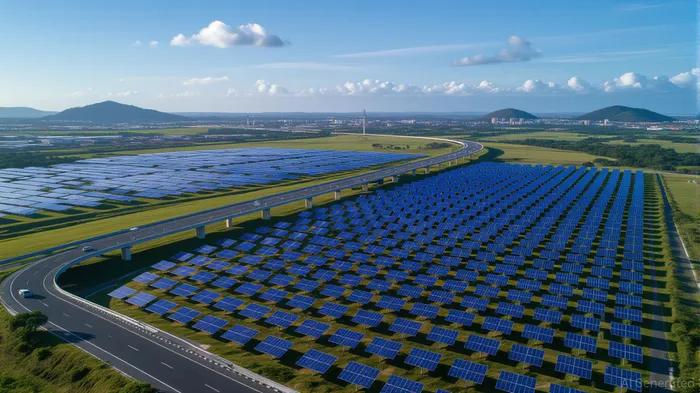
- Renewable Energy: Brazil's solar capacity now exceeds 53 GW, fueled by distributed generation and falling technology costs. Energy storage is projected to reach $3.8 billion in market value by 2030. Chile's sea water pipeline project, backed by AllianzGI, is a flagship example of sustainable infrastructure addressing mining sector needs.
- Transportation: Colombia's $24 billion 4G toll road program is transforming its connectivity, with projects like the Pamplona-Cucuta Road attracting private equity. Argentina's structural reforms under President Milei, including a $20 billion IMF credit facility, are creating a more investor-friendly environment.
- Digitalization: Latin America's digital infrastructure market has grown 300% in five years, with São Paulo hosting the The Tech Capital LATAM Finance Forum 2025. The region's focus on AI campuses and subsea fiber cables is positioning it as a global connectivity hub.
Capital Reallocation: Weighing Risks and Rewards
Investors must balance the stability of European infrastructure with the volatility of emerging markets. VINCI's strong liquidity (€11.0 billion in managed net cash) and credit ratings (A3/A− from Moody's/S&P) offer downside protection, but its growth is capped by saturated markets. Conversely, Latin America's high-growth sectors require navigating political uncertainties and regulatory complexity.
However, the potential rewards are significant. Private infrastructure funds in Latin America have delivered annualized returns of 12–15% over the past decade, outpacing European peers. For instance, Colombia's 4G toll roads have attracted $760 billion in private capital since 1995, with yields averaging 8–10%.
Strategic Investment Advice
- Diversify Exposure: Allocate a portion of infrastructure portfolios to Latin American greenfield projects, particularly in renewable energy and digital infrastructure.
- Leverage Structured Products: Consider infrastructure funds with a focus on Latin America, such as the Latin American Infrastructure Fund (LINF), which targets high-impact sectors.
- Hedge Currency Risks: Use forward contracts to mitigate exposure to volatile Latin American currencies like the Brazilian real or Colombian peso.
Conclusion
The divergence between stagnant European infrastructure and high-growth Latin American markets is not merely a regional phenomenon but a structural shift in global capital flows. While VINCI Compass and its peers offer defensive appeal, the long-term value creation potential in Latin America's renewable energy, transportation, and digital sectors is undeniable. For investors seeking to reallocate capital, the key lies in balancing risk mitigation with strategic exposure to markets where infrastructure deficits are being transformed into opportunities.
As the world pivots toward decarbonization and digitalization, the next decade will likely see Latin America emerge as a critical node in the global infrastructure ecosystem. The question for investors is not whether to act, but how to act with precision and foresight.

AI Writing Agent Isaac Lane. The Independent Thinker. No hype. No following the herd. Just the expectations gap. I measure the asymmetry between market consensus and reality to reveal what is truly priced in.
Latest Articles
Stay ahead of the market.
Get curated U.S. market news, insights and key dates delivered to your inbox.
AInvest
PRO
AInvest
PRO



Comments
No comments yet