
Divergent Market Responses to U.S. EIA Distillates Report: Energy Sector Thrives While Autos Stumble
 Aime Summary
The U.S. Energy Information Administration's (EIA) latest weekly distillates stocks report has sent ripples through energy-dependent industries, exposing starkly contrasting fortunes for industrial conglomerates and the automobile sector. With distillate inventories rising by 2.9 million barrels in the week ended July 18, 2025—far exceeding expectations of a 1.1 million-barrel decline—the data underscores a critical inflection pointIPCX-- in the energy market. This shift has amplified divergent investment opportunities and risks, offering a roadmap for capitalizing on asymmetrical sectoral impacts.
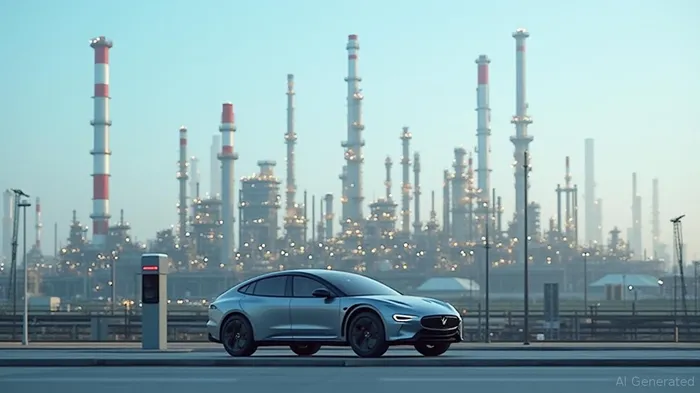
Energy Sector: Supply Tightness Fuels Resilient Margins
The unexpected build in distillate stocks—despite historically tight inventories—has alleviated short-term concerns about supply constraints but not without long-term structural implications. Distillate production has declined by 2.3% year-over-year, with Gulf Coast output contracting to 2.700 million barrels/day, while exports surged to 1.05 million barrels/day, up 17% from 2024. This export-driven dynamic has tightened global diesel markets, pushing refining margins to $20/barrel and projecting a 2026 peak of 80 cents per gallon.
Industrial conglomerates, particularly integrated oil and gas firms, are positioned to capitalize on this environment. Companies like ValeroVLO-- and Marathon PetroleumMPC--, with exposure to renewable diesel and low-carbon fuels, are leveraging the transition from fossil fuels while maintaining profitability. The EIA's forecast of a 21% deficit in distillate inventories compared to the five-year average further supports the case for energy equities, as investors historically see an average 9% return in the month following significant inventory deviations.
Automobile Sector: Structural Headwinds Intensify
Conversely, the automobile sector faces a perfect storm of demand destruction and cost inflation. The EIA's data highlights a 7% year-over-year decline in U.S. light-duty vehicle sales, driven by waning demand for internal combustion engine (ICE) vehicles and the accelerating EV transition. Higher distillate prices—projected to average $3.60 per gallon in 2025—also strain logistics and trucking costs, squeezing margins for automakers reliant on diesel-heavy segments.
Historical trends reinforce this divergence: automotive stocks underperform energy equities by an average of 6% following large distillate inventory surprises. With EIA forecasting distillate stocks to remain 8% below 2024 levels in 2025 and another 4% lower in 2026, the pressure on ICE automakers like Ford and General MotorsGM-- will only intensify.
Strategic Implications for Investors
The EIA distillates report is more than a weekly data point—it is a macroeconomic barometer shaping sector allocations. For investors, the key lies in leveraging this asymmetry:
- Overweight Energy Equities: Prioritize integrated oil and gas firms (e.g., ChevronCVX--, ExxonMobil) and midstream players with storage capabilities. These firms benefit from refining margins and inventory-driven volatility.
- Underweight ICE Automakers: Reduce exposure to traditional automakers facing structural demand erosion. Instead, focus on EV supply chain innovators (e.g., lithium producers, battery manufacturers) and EV leaders like TeslaRACE--.
- Monitor Inventory Dynamics: Use weekly distillates reports to time entry points in energy stocks, particularly during periods of inventory volatility.
The EIA's projection of distillate stocks reaching their lowest levels since 2000 by 2026 further validates the urgency of this reallocation. While gasoline prices may dip slightly, the broader energy transition and refining margin expansion will continue to outpace automotive sector challenges.
Conclusion
The July 2025 EIA distillates report crystallizes a pivotal moment in the energy economy. As industrial conglomerates harness supply tightness and renewable transitions, the automobile sector grapples with existential shifts. For investors, the path forward lies in aligning portfolios with these asymmetric trends—capitalizing on energy sector resilience while mitigating exposure to automakers in decline. The data is clear: the future of energy-dependent industries hinges on strategic sectoral reallocation, guided by real-time inventory insights.

Sumérjase en el mundo de las finanzas mundiales con Epic Events Finance.
Latest Articles
Stay ahead of the market.
Get curated U.S. market news, insights and key dates delivered to your inbox.
AInvest
PRO
AInvest
PRO



Comments
No comments yet