
Distillate Surplus Sparks Strategic Opportunities in Energy Logistics and Transportation
 Aime Summary
The U.S. Energy Information Administration's (EIA) latest report on distillate inventories has sent ripples through the energy sector. For the week ending August 8, 2025, distillate stocks rose by 0.7 million barrels to 113.7 million barrels—15% below the five-year average for this time of year. While this may seem like a modest increase, it signals a critical inflection point in the energy logistics and transportation landscape. With production at 5.1 million barrels per day and imports averaging 107,000 barrels per day, the market is navigating a delicate balance between surplus and structural tightness.
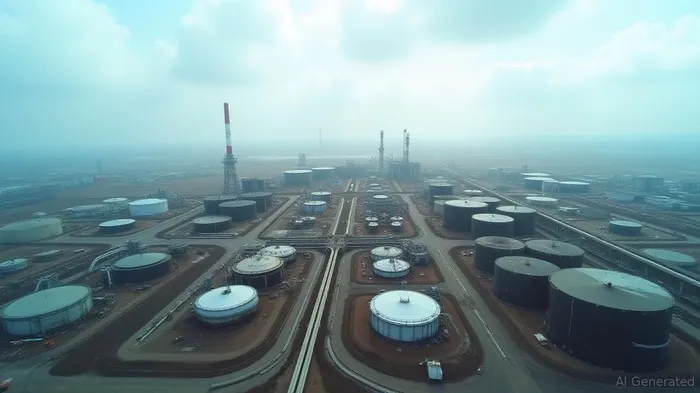
Air Freight: Fueling E-Commerce, Squeezing Margins
The air freight861017-- sector is grappling with a surge in jet fuel demand, driven by e-commerce growth and just-in-time delivery expectations. U.S. airlines consumed 1.609 billion gallons of fuel in March 2025—a 18.4% increase from February—despite a 0.5% dip in per-gallon costs. While lower prices are a silver lining, higher consumption volumes are eroding profit margins.
Investors should prioritize companies with robust hedging strategies to mitigate fuel price volatility. For example, FedEx (FDX) and DHL (DHLG) have historically used futures contracts to lock in costs, while Rivian (RIVN) and Wisk Aero are pioneering electrification and hybrid logistics solutions. The green transition is not just a regulatory imperative but a competitive one.
Marine Transportation: Navigating Geopolitical and Regulatory Storms
Marine logistics faces a dual threat: geopolitical disruptions and regulatory pressures. The Red Sea crisis has extended trans-Pacific transit times, while the EU's FuelEU Maritime initiative mandates a 2% renewable energy content in marine fuels by 2025. These factors are driving up bunker fuel costs and compliance expenses.
The EIA projects distillate refining margins to climb to 80 cents per gallon by 2026, compounding challenges for carriers. However, this volatility creates opportunities for shipbuilders integrating LNG or hydrogen-powered vessels. Fincantieri (FCN) and Huntington Ingalls (HII) are leading the charge in fuel-efficient shipbuilding. Investors should also favor companies with diversified shipping networks to avoid route-related bottlenecks.
Storage and Pipelines: The Unsung Heroes of Inventory Management
The distillate surplus has spotlighted the critical role of storage and pipeline infrastructure. With inventories at 113.7 million barrels, midstream operators are seeing increased demand for secure storage solutions. The EIA forecasts a 14% decline in distillate inventories by year-end, driven by refinery closures and export-driven demand. This scarcity is already boosting refining margins for companies like Valero (VLO) and Marathon Petroleum (MPC).
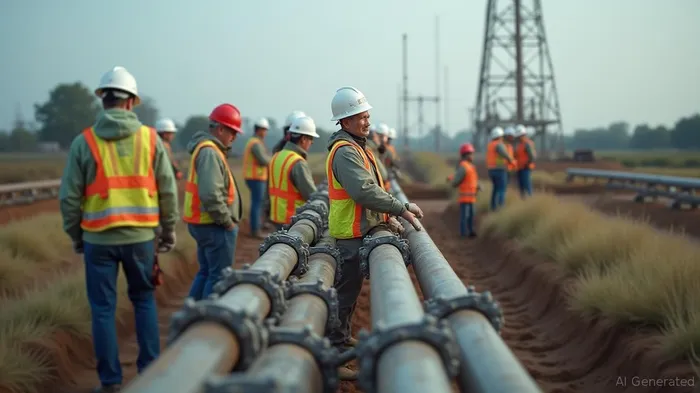
Pipeline operators such as Enterprise Products Partners (EPD) and Magellan Midstream Partners (MMP) are benefiting from the need to transport excess distillates from production hubs to consumption centers. The Gulf Coast, which accounts for 58% of U.S. distillate production, is a focal point for infrastructure investment.
Strategic Investment Playbook
- Hedge Against Fuel Costs: Prioritize air freight and marine logistics companies with strong hedging practices.
- Embrace the Green Transition: Invest in electrification and LNG-powered vessel builders to align with regulatory trends.
- Capitalize on Storage Demand: Position in midstream operators with exposure to renewable diesel and low-carbon fuels.
- Monitor Refining Margins: Track refining margin expansions for refiners like Phillips 66 (PSX) and PBF Energy (PBF).
- Diversify Geographically: Favor companies with diversified shipping networks to mitigate geopolitical risks.
The EIA's data underscores a market in flux. While the distillate surplus offers short-term tailwinds for storage and pipeline operators, long-term success will hinge on adaptability to regulatory shifts and technological transitions. Investors who act with foresight—leveraging policy tailwinds and infrastructure demand—will be well-positioned to navigate this evolving energy landscape.
In conclusion, the distillate surplus is not just a supply-side story—it's a catalyst for strategic reallocation across energy logistics and transportation. The winners will be those who see the surplus as an opportunity to innovate, hedge, and scale.

Stay ahead of the market.
Get curated U.S. market news, insights and key dates delivered to your inbox.
AInvest
PRO
AInvest
PRO



Comments
No comments yet