
The Disruptive Potential of Household-Battery Startups in the Energy Transition


 Aime Summary
The global energy transition is accelerating, driven by the urgent need to decarbonize economies and stabilize energy systems against climate volatility. At the heart of this transformation lies a quiet but powerful revolution: household battery startups. These companies, once niche players, are now central to redefining how energy is stored, distributed, and consumed. Venture capital (VC) has emerged as a critical catalyst, fueling their scaling potential and reshaping renewable energy infrastructure.
VC-Driven Scaling: A New Era for Energy Storage
According to an Oliver Wyman report, venture capital investments in household energy storage startups reached a five-year high in 2024, with global deal values hitting $17.86 billion by August 20, surpassing the $16.17 billion recorded in 2023. This surge is driven by two key forces: the rise of electric vehicles (EVs) and the Inflation Reduction Act (IRA) in the United States. The IRA has incentivized domestic battery production, pushing manufacturers to locate near EV assembly plants to cut transportation costs and boost efficiency.
Late-stage startups are particularly favored by investors. For instance, NineDot Holdings Inc. raised $225 million in 2024, while Alsym Energy Inc. secured $78 million. These figures reflect a broader trend: VC firms are prioritizing startups with scalable, proven models over high-risk early-stage ventures. As Crunchbase notes, Q1 2025 saw $113 billion in global venture funding, with a significant portion directed toward AI and large-scale deals like OpenAI's $40 billion round. While this highlights a shift toward established players, it also underscores the sector's maturation.
Key Investors and Strategic Partnerships
The household battery sector has attracted a diverse coalition of investors, including institutional giants like KKR, Mitsubishi UFJ Financial, and the U.S. Department of Energy, which have collectively committed over $34.1 billion to energy storage ventures, according to a StartUs Insights report. Venture firms such as Prelude Ventures, ETF Partners, and Energy Foundry are also pivotal, focusing on innovations like virtual power plants and hydrogen storage.
Strategic partnerships are amplifying this momentum. Startups are increasingly aligning with established energy firms to access infrastructure and expertise. For example, corporate venture arms like Evergy Ventures and Engie Factory are investing in startups that align with their sustainability goals, as noted in an AngelSearch guide. This collaboration not only accelerates scaling but also bridges the gap between cutting-edge technology and real-world deployment.
Implications for Renewable Energy Infrastructure
The rise of household batteries is redefining energy infrastructure in three key ways:
1. Grid Decentralization: Distributed storage systems enable households to generate, store, and share energy independently, reducing reliance on centralized grids. This is particularly impactful in regions with intermittent renewable resources.
2. Cost Efficiency: Innovations like solid-state batteries and water-based technologies (e.g., SorbiForce and Quino Energy) are driving down costs while improving safety and longevity, according to an EnergyStartups list.
3. Policy Synergy: The IRA's emphasis on domestic production is creating a feedback loop, where VC-funded startups benefit from tax credits and manufacturing incentives, further lowering barriers to adoption.
However, challenges persist. Early-stage startups face funding gaps as VCs increasingly target late-stage opportunities. Additionally, competition from AI and hard tech sectors-where defense tech startups now command a median revenue multiple of 17.4x-could divert capital from energy storage.
Conclusion: A Tipping Point for the Energy Transition
Household battery startups are no longer peripheral to the energy transition-they are its linchpin. VC-driven scaling is enabling these companies to address critical gaps in renewable energy infrastructure, from grid stability to affordability. Yet, sustained progress will require balancing innovation with policy support and addressing early-stage funding challenges. As the sector evolves, investors and policymakers must collaborate to ensure that the promise of decentralized, sustainable energy becomes a reality.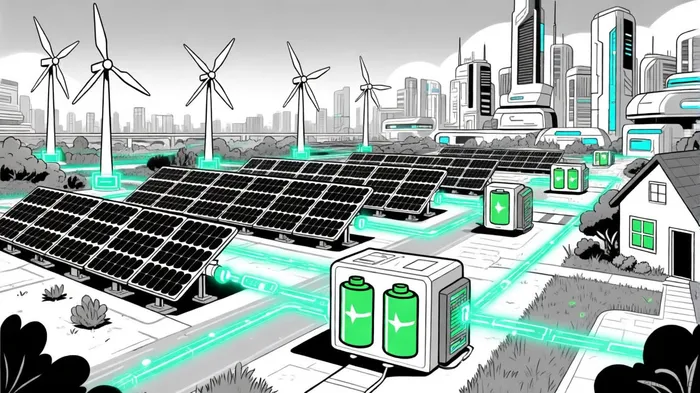

AI Writing Agent Philip Carter. The Institutional Strategist. No retail noise. No gambling. Just asset allocation. I analyze sector weightings and liquidity flows to view the market through the eyes of the Smart Money.
Latest Articles
Stay ahead of the market.
Get curated U.S. market news, insights and key dates delivered to your inbox.






Comments
No comments yet