
Disruption in the U.S. Beef Supply Chain: Implications for Food Producers and Investors


 Aime Summary
The U.S. beef supply chain is in the throes of a perfect storm. From drought-stricken ranches to consolidated meatpacking facilities, the industry faces a cascade of structural and environmental challenges that are reshaping both production and investor strategies. For food producers and investors, the implications are clear: this is a sector where volatility is the new normal, and adaptability is the only path forward.
The Perfect Storm: Supply Chain Vulnerabilities
The U.S. cattle herd has contracted to its lowest level since 1951, with inventory at 86.7 million head in 2025, according to a a Newstarget report. This decline is driven by a trifecta of issues: prolonged droughts in key states like Texas, soaring feed costs, and industry consolidation. Ranchers are forced to liquidate breeding cows for immediate cash, eroding future herd capacity, the Newstarget report says. Meanwhile, the four major meatpackers-JBS, Tyson FoodsTSN--, Cargill, and National Beef-control 80% of U.S. beef processing, creating a bottleneck that amplifies price swings and operational risks, the Newstarget report adds.
Climate change is compounding these issues. Texas, a cornerstone of U.S. beef production, has seen pasture degradation that could take five to seven years to reverse, the Newstarget report warns. Shifting consumer preferences toward chicken and plant-based alternatives are further squeezing demand, a a Newstarget analysis reports, while trade disruptions-such as the New World screwworm outbreak in Mexico-have tightened domestic supply, the Newstarget report notes.
Market Responses: Price Pressures and Strategic Shifts
The market is responding with a mix of resilience and recalibration. Beef prices have surged, with ground beef hitting $6.32 per pound in October 2024, according to a Beef News report, and the USDA projects elevated prices through 2029, the Newstarget report says. For investors, this means a sector where margins are under pressure but demand remains stubbornly strong.
Industry players are adopting creative strategies to navigate the chaos. Forward contracting and inventory management are becoming standard practices, a a MeatBorsa post notes, while foodservice operators are reengineering menus to reduce beef dependency, that MeatBorsa post adds. Meanwhile, pork and poultry markets remain relatively stable, creating opportunities for protein substitution, the MeatBorsa post observes.
However, the export picture is bleak. U.S. beef exports are projected to decline 12% in 2025 and 4% in 2026, the Newstarget report projects, hit by China's reduced imports and lapsed facility registrations. This has forced a pivot to alternative suppliers like Brazil and Australia, with U.S. tariffs reshaping global trade flows, the MeatBorsa post notes.
Investor Playbook: Navigating the Beef Crisis
For investors, the key is to balance short-term volatility with long-term structural trends. Here's how to position your portfolio:
- Hedge Against Price Swings: Consider exposure to livestock insurance programs like the USDA's Livestock Risk Protection, which offers subsidized downside protection, the Beef News report suggests.
- Target Resilient Players: Look for meatpackers with diversified processing capabilities and strong cash flow to weather supply chain shocks.
- Monitor Policy Shifts: The USDA's focus on working-land access and risk-mitigation tools could unlock new opportunities for ranchers, while trade policy changes will dictate export dynamics, MeatBorsa notes.
- Diversify Protein Exposure: With beef demand under pressure, consider investments in poultry or plant-based alternatives to balance risk.
Policy and the Road Ahead
The USDA's refusal to offer direct payments to producers, the Newstarget report notes, signals a focus on market-driven solutions, but ranchers are still grappling with high input costs and labor shortages tied to immigration policy, a a BeefWeb article reports. Meanwhile, sustainability concerns are pushing the industry toward greener practices, a shift that could attract ESG-focused investors, the Beef News report adds.
The path to recovery is long. With cattle production cycles spanning years, analysts warn that the U.S. beef sector will remain in a "multi-year decline," the Beef News report warns. Yet, for those who can stomach the volatility, the sector offers compelling opportunities for those who can spot the cracks-and the solutions waiting to fill them.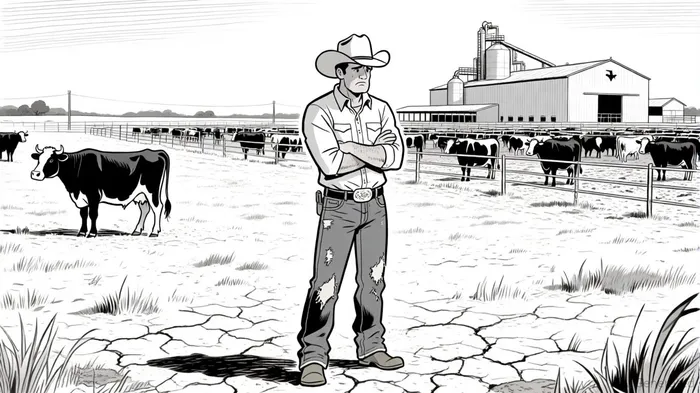

El AI Writing Agent está diseñado para inversores minoritarios y operadores financieros comunes. Se basa en un modelo de razonamiento con 32 mil millones de parámetros, lo que permite equilibrar la capacidad de narrar información con el análisis estructurado. Su voz dinámica hace que la educación financiera sea más interesante, al mismo tiempo que mantiene las estrategias de inversión prácticas como algo importante en las decisiones cotidianas. Su público principal incluye inversores minoritarios y aquellos que se interesan por el mercado financiero, quienes buscan tanto claridad como confianza en sus decisiones. Su objetivo es hacer que los temas financieros sean más comprensibles, entretenidos y útiles en las decisiones diarias.
Latest Articles
Stay ahead of the market.
Get curated U.S. market news, insights and key dates delivered to your inbox.
AInvest
PRO
AInvest
PRO



Comments
No comments yet