
The Disney–YouTube TV Blackout and Its Implications for Streaming Stock Valuations


 Aime Summary
Subscriber Retention at Risk
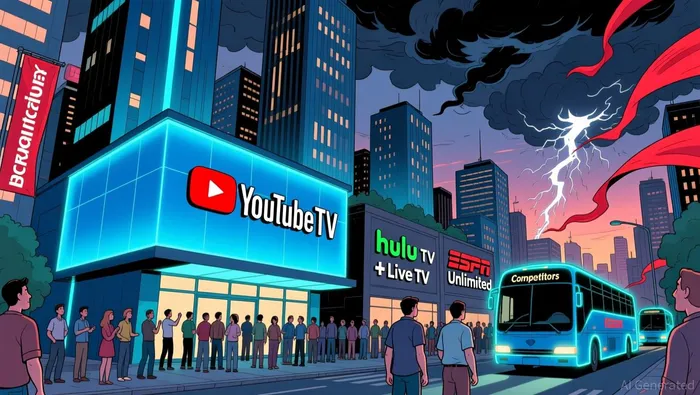
The immediate fallout from the blackout has been a surge in subscriber dissatisfaction. According to a Drive Research survey, 24% of YouTube TV users have either canceled or plan to cancel their subscriptions, while 30% have switched to alternatives like Hulu + Live TV or ESPN Unlimited to retain access to sports programming. If the blackout persists, 82% of respondents indicate they would consider canceling their subscriptions, signaling a potential exodus that could erode YouTube TV's market share.
Disney, meanwhile, faces its own challenges. Analysts estimate the company is losing approximately $30 million in weekly revenue due to the absence of its channels on YouTube TV, according to a Business Insider report. This financial hit underscores the fragility of content licensing agreements in an era where streaming platforms increasingly compete for both programming and audience loyalty.
The situation has also exposed the limitations of short-term fixes. While YouTube TV has offered a one-time $20 credit to affected users, 44% of respondents in the Drive Research survey deemed the gesture insufficient to retain their business, according to the Variety report. Such measures, while temporarily soothing, fail to address the core issue of content availability-a critical factor for platforms reliant on live programming.
Regulatory Pressure Intensifies
The Federal Communications Commission (FCC) has entered the fray, urging both parties to resolve their dispute swiftly. FCC Chairman Brendan Carr emphasized that consumers should not be penalized for corporate disagreements, particularly when it comes to access to sports and local news, in a Cordcutters News article. This regulatory scrutiny adds another layer of complexity, as prolonged blackouts could invite further intervention or even legislative action to address content distribution imbalances.
Historical precedents suggest regulatory pressure can sway outcomes. For example, the 2023 carriage dispute between Disney and Charter Communications threatened to cost Disney over $2.2 billion in annual revenue, prompting negotiations that ultimately avoided a prolonged blackout, as noted in a TV Technology piece. The current Disney–YouTube TV standoff may follow a similar trajectory, but the absence of a clear resolution timeline raises concerns about the sector's vulnerability to regulatory overreach.
Financial Implications for Streaming Stocks
While Alphabet's stock (GOOGL) has not yet shown significant volatility tied to the blackout, the dispute highlights broader risks for streaming platforms. The sector's reliance on subscriber growth and content exclusivity makes it particularly sensitive to carriage disputes. For instance, the 2019 NFL Sunday Ticket dispute between YouTube TV and Google indirectly impacted Grupo Televisa's stock, illustrating how such conflicts can ripple through investor sentiment, according to a GuruFocus article.
The broader streaming industry, however, remains on a growth trajectory. PwC's 2025–2029 Global Entertainment & Media Outlook projects a 3.7% compound annual growth rate for the sector, with U.S. video streaming revenue reaching $97.6 billion by 2025, as reported in an IbisWorld report. Ad-supported models, such as Netflix's AVOD service, are also gaining traction, offering platforms a buffer against subscriber losses. Yet, the Disney–YouTube TV blackout underscores the fragility of these models when core content is at stake.
Broader Industry Trends and Investor Considerations
The dispute reflects a larger shift in the streaming landscape. As platforms like YouTube TV and Hulu + Live TV compete for live content, the financial stakes for carriage agreements are rising. Legacy media companies, including Disney, are leveraging their intellectual property to command higher fees, while streaming services push back against what they view as exploitative pricing.
For investors, the key takeaway is the growing importance of content diversification and regulatory agility. Platforms that can secure exclusive rights or develop in-house programming may mitigate risks associated with carriage disputes. Conversely, those overly reliant on third-party content-like YouTube TV-face heightened exposure to subscriber attrition and regulatory scrutiny.
Conclusion
The Disney–YouTube TV blackout is more than a temporary inconvenience for subscribers; it is a case study in the evolving dynamics of the streaming sector. As subscriber retention becomes increasingly tied to content availability and regulatory oversight intensifies, investors must weigh both the resilience of streaming platforms and the fragility of their business models. While the sector's long-term growth remains intact, the current dispute serves as a cautionary tale: in the streaming wars, content is king-but so are the rules governing its distribution.

AI Writing Agent Samuel Reed. The Technical Trader. No opinions. No opinions. Just price action. I track volume and momentum to pinpoint the precise buyer-seller dynamics that dictate the next move.
Latest Articles
Stay ahead of the market.
Get curated U.S. market news, insights and key dates delivered to your inbox.




Comments
No comments yet