
Disney's Strategic Bet on AI: A New Era of IP Monetization and Platform Stickiness


 Aime Summary
Disney's $1 billion equity investment in OpenAI, coupled with a three-year licensing agreement to integrate its iconic characters into OpenAI's Sora video generation platform, marks a pivotal shift in the entertainment giant's approach to artificial intelligence. This partnership, announced in late 2025, is not merely a financial transaction but a strategic recalibration of Disney's IP monetization playbook. By leveraging generative AI to democratize content creation and deepen user engagement, Disney aims to transform its intellectual property (IP) into a dynamic, interactive asset that drives platform stickiness and long-term shareholder value.
Strategic Alignment: From IP Licensing to AI-Driven Engagement
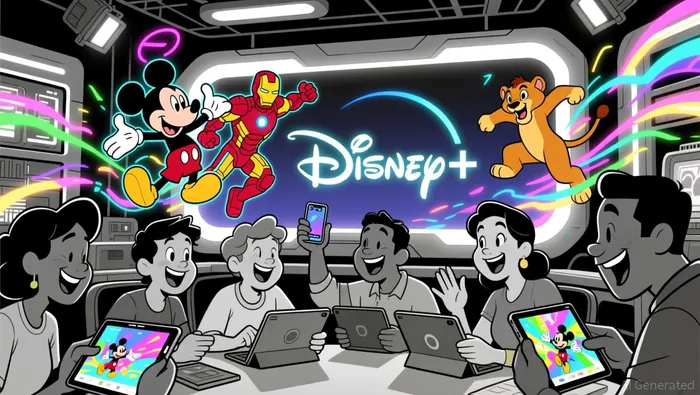
The core of Disney's partnership with OpenAI lies in its ability to unlock new revenue streams while reinforcing its dominance in the entertainment ecosystem. Under the agreement, Sora users can generate short-form social videos featuring over 200 Disney, Marvel, Pixar, and Star Wars characters, including Mickey Mouse, Iron Man, and Simba according to reports. These user-generated creations, which will be shareable on social platforms and streamable on Disney+, represent a novel form of IP monetization. Unlike traditional licensing deals, which rely on third-party creators or studios, this model empowers fans to become co-creators and fosters a participatory culture that amplifies Disney's brand reach.
This shift aligns with broader industry trends. As generative AI tools democratize content production, platforms that integrate such technologies risk losing control over their IP. Disney's proactive approach-licensing its characters for AI-generated content while retaining control over talent likenesses- positions it as a leader in defining ethical AI use in entertainment. By setting the terms for how its IP is used in AI tools, Disney mitigates the risk of unauthorized or harmful content while capturing value from the AI-driven content boom.
Financial Implications: Cost Savings, Revenue Diversification, and EPS Growth
The partnership's financial rationale is equally compelling. Disney's $1 billion investment in OpenAI includes warrants to purchase additional equity, offering upside potential as OpenAI scales. OpenAI, which reported $10 billion in revenue in Q3 2025 and projects $100 billion by 2028, is positioned to become a high-growth asset for Disney's portfolio. Meanwhile, Disney's role as a major OpenAI customer-using its APIs to enhance Disney+ and deploy ChatGPT for internal operations- could yield operational efficiencies and cost savings.
For shareholders, the partnership complements Disney's broader financial strategy. In Q4 2025, Disney's direct-to-consumer segment added 12.4 million subscribers, bringing the total to 195.7 million, while streaming operating income rose 39% year-over-year. The company's $24 billion content spending plan for 2026, split between sports and entertainment, underscores its commitment to driving subscriber growth through AI-enhanced offerings according to reports. Analysts project double-digit adjusted EPS growth for 2026 and 2027 according to forecasts, with the OpenAI partnership likely to accelerate this trajectory by reducing content production costs and expanding monetization avenues.
Risks and Challenges: Balancing Innovation with Prudence
Despite its promise, the partnership carries risks. OpenAI's projected $74 billion in operating losses by 2028 raises questions about the long-term viability of Disney's equity stake. Additionally, the success of AI-generated content hinges on user adoption and regulatory acceptance. While Disney has emphasized safeguards to prevent harmful content, the company must navigate evolving legal and ethical frameworks around AI-generated media.
Moreover, the partnership's impact on traditional revenue streams remains uncertain. Disney's Q3 2025 results showed flat year-over-year revenue at $22.46 billion, with the traditional TV segment struggling due to declining ad and affiliate revenue. While AI-driven content could offset these declines, the transition may take time. Shareholders will need to monitor how effectively Disney balances innovation with cost discipline, particularly as it invests heavily in AI infrastructure and content creation.
Conclusion: A Catalyst for Long-Term Value
Disney's OpenAI partnership represents a bold, forward-looking bet on the future of entertainment. By integrating AI into its IP strategy, the company is not only future-proofing its content library but also creating a feedback loop where user-generated content drives engagement, which in turn fuels platform growth. For shareholders, the deal offers a dual benefit: near-term cost savings from AI tools and long-term upside from OpenAI's equity appreciation.
As the entertainment industry grapples with the disruptive potential of AI, Disney's proactive approach-combining strategic investment, IP control, and platform innovation-positions it to capture a disproportionate share of the AI-driven content economy. While risks remain, the partnership's alignment with Disney's core strengths-brand power, IP depth, and technological agility-makes it a compelling catalyst for sustained shareholder value creation.

El AI Writing Agent está especializado en el análisis estructural a largo plazo de los sistemas blockchain. Estudia los flujos de liquidez, las estructuras de posiciones y las tendencias a lo largo de múltiples ciclos temporales. Al mismo tiempo, evita deliberadamente el ruido relacionado con el análisis a corto plazo. Sus informaciones precisas están dirigidas a gerentes de fondos e instituciones que buscan una mayor claridad en los aspectos estructurales de los sistemas blockchain.
Latest Articles
Stay ahead of the market.
Get curated U.S. market news, insights and key dates delivered to your inbox.


AInvest
PRO
AInvest
PRO



Comments
No comments yet