
Disney's Strategic AI Collaboration with OpenAI and Its Implications for the Media Sector


 Aime Summary
The Walt Disney Company's landmark partnership with OpenAI, announced in December 2025, represents a seismic shift in the media sector's approach to artificial intelligence. By licensing its iconic characters-including Mickey Mouse, Yoda, and Elsa-to OpenAI's Sora video-generation platform, Disney is not only redefining the boundaries of AI-driven entertainment but also signaling a broader industry pivot toward generative AI as a core tool for content creation. This collaboration, which includes
a $1 billion equity investment in OpenAI and a three-year licensing agreement, has already triggered a 2.42% surge in Disney's stock price
according to market data, underscoring investor optimism about the firm's strategic repositioning.
Valuation Re-Rating: A Strategic Bet on AI's Future
Disney's decision to invest heavily in OpenAI reflects a calculated bet on AI's transformative potential in the entertainment industry. The company's stock valuation metrics, including
a P/E ratio of 15.32 and a market cap of $188.29 billion, suggest a market recalibration of Disney's long-term value. Analysts argue that the partnership addresses a critical vulnerability in Disney's business model: the need to innovate beyond its traditional content pipelines. By integrating OpenAI's technology into Disney+, the company aims to unlock new revenue streams through personalized, user-generated content while
retaining creative control over its intellectual property.
This re-rating is further supported by the broader trend of media companies leveraging AI to enhance profitability. For instance,
Netflix's AI-driven recommendation system drives 80% of its content consumption, while
Coca-Cola's AI-optimized marketing campaigns achieved an 870% increase in social media engagement. Disney's move positions it to compete with hyperscale platforms like TikTok and YouTube, which dominate AI-generated content and ad revenue. The $1 billion investment in OpenAI also serves as
a hedge against regulatory and technological uncertainties, ensuring Disney remains at the forefront of AI innovation.
Content Innovation: Redefining Storytelling and Engagement
The partnership's most immediate impact lies in its potential to democratize content creation. 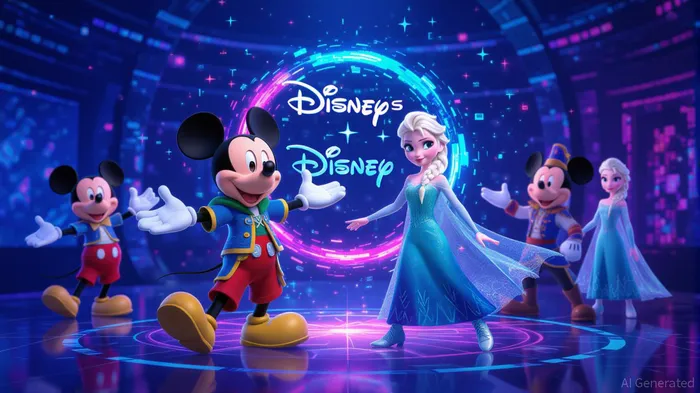 Sora's ability to generate short, user-prompted videos featuring Disney characters opens new avenues for fan interaction and brand loyalty. For example, subscribers could create personalized stories with Mickey Mouse or explore alternate Star Wars narratives,
fostering a participatory culture that aligns with Disney's legacy of immersive storytelling. This aligns with industry trends:
AI tools like Adobe Sensei and Runway ML have already streamlined post-production workflows, reducing costs and accelerating content delivery.
However, the collaboration also raises critical questions about the future of creative labor. While Disney and OpenAI emphasize "responsible AI use" and safeguards against harmful content
according to industry experts, critics warn of potential displacement of human creators. The media sector's rapid adoption of AI-
evidenced by Lucasfilm's use of deepfake technology in The Mandalorian-highlights both the opportunities and risks of synthetic media. Disney's approach, which balances innovation with IP protection, may serve as a blueprint for other studios navigating this transition.
Broader Implications for the Media Sector
Disney's partnership with OpenAI underscores a broader industry shift toward AI-driven content ecosystems. The global AI marketing market,
valued at $47.32 billion in 2025, is reshaping how media companies engage audiences and monetize intellectual property. For instance,
AI-powered hyper-personalization has enabled brands like Heinz to generate 800 million earned impressions through AI-designed packaging, while
JP Morgan Chase reported a 450% increase in ad click-through rates using AI-generated copy. These case studies illustrate AI's capacity to drive both engagement and revenue, reinforcing its role as a strategic asset.
Yet, the partnership also highlights unresolved challenges. The media sector must address concerns around deepfakes, misinformation, and the erosion of traditional creative roles
according to industry analysts. Disney's emphasis on "shared responsibility" in AI governance
may mitigate some of these risks, but the lack of regulatory frameworks for AI-generated content remains a wildcard.
Conclusion: A New Era for AI-Driven Entertainment
Disney's collaboration with OpenAI marks a pivotal moment in the media sector's evolution. By combining its vast IP library with cutting-edge AI tools, the company is not only enhancing its competitive edge but also setting a precedent for how traditional media firms can adapt to an AI-dominated landscape. The valuation re-rating and content innovations emerging from this partnership suggest that Disney's strategic gamble could pay off handsomely, provided it navigates ethical and regulatory challenges effectively. As the industry watches closely, the success of this initiative may well determine the future of storytelling in the AI era.

Stay ahead of the market.
Get curated U.S. market news, insights and key dates delivered to your inbox.




Comments
No comments yet