
Disney's Resilience and Growth Amid Criticism: A Strategic Buy Opportunity


 Aime Summary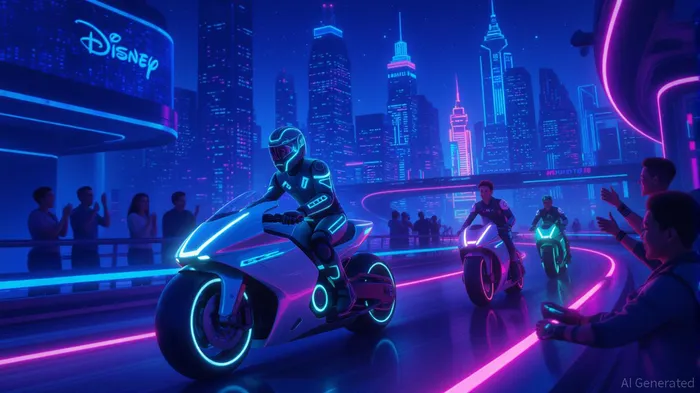
The Walt DisneyDIS-- Company has long been a bellwether for global entertainment, but its 2025 performance underscores a rare combination of financial resilience and strategic foresight. With Q2 2025 revenue hitting $23.6 billion—a 7% year-over-year increase—Disney is not just surviving; it's thriving in a volatile market[1]. This growth, driven by its Entertainment, Sports, and Experiences segments, reflects a company that has mastered the art of balancing legacy strengths with bold innovation. For investors, the question is no longer whether DisneySCHL-- can adapt—it's whether they can capitalize on its accelerating momentum.
Financial Momentum: A Triple-Engine Growth Story
Disney's Q2 results reveal a company operating at peak efficiency. The Entertainment segment surged 9% to $10.7 billion, fueled by Disney+'s expanding subscriber base and content licensing deals[1]. Meanwhile, the Sports segment capitalized on high-demand events like college football and NFL broadcasts, boosting revenue by 5% to $4.5 billion[2]. Most impressively, the Experiences segment—encompassing parks, cruises, and consumer products—grew 6% to $8.9 billion, driven by domestic tourism and new ship launches[3].
These numbers are not anomalies. Disney has raised its full-year adjusted EPS guidance to $5.75, a 16% increase over 2024, and anticipates 18% growth in Sports and 6%–8% in Experiences for the remainder of the year[1]. The company's ability to monetize its intellectual property (IP) across platforms—from streaming to live events—creates a flywheel effect, where each segment amplifies the others.
Emerging Growth Drivers: From Tron to Global Expansion
Disney's long-term value creation hinges on its ability to innovate. The TRON Lightcycle Run at Walt Disney World exemplifies this. A decade in the making, this attraction blends cutting-edge technology with immersive storytelling, drawing both casual visitors and hardcore fans[4]. By 2026, Disney plans to double its capital expenditures to $60 billion over 10 years, funding projects like Zootopia: Better Zoogether! at Animal Kingdom and Villains Land at Magic Kingdom[5]. These investments are not just about theme parks—they're about creating ecosystems where IP evolves into multi-sensory experiences.
The company's global ambitions are equally compelling. A new theme park in Abu Dhabi and renovations at Tokyo Disney Resort signal a strategic push into high-growth markets[3]. Meanwhile, the Disney Cruise Line is expanding its fleet, with three new ships set to debut by 2027. These initiatives align with a broader trend: consumers increasingly seek “experiential” spending, and Disney's parks and cruises offer unmatched value.
Dismissing the Noise: Political and Cultural Criticisms as Overblown Risks
Critics often conflate Disney's cultural footprint with its financial health, but the data tells a different story. While the company faced backlash over DEI initiatives and political stances in 2024, it has since recalibrated. Under CEO Bob Iger, Disney has pivoted to avoid culture-war entanglements, removing controversial storylines (e.g., a transgender athlete arc in a Pixar series) and scaling back DEI programs under investor pressure[6]. This shift has not eroded its brand; if anything, it has streamlined operations.
Shareholder sentiment supports this view. A 2025 proposal to abandon the Human Rights Campaign's Corporate Equality Index was rejected with only 1% support[7]. Moreover, Disney's focus on profitability—evidenced by its $346 million operating profit in the Direct-to-Consumer segment—demonstrates that its core business remains robust[8]. Analysts argue that the company's cultural challenges are overblown, with its global audience and IP library providing a buffer against short-term controversies[9].
Disney+ and the Streaming Renaissance
Disney's streaming strategy is another cornerstone of its value proposition. With 127.8 million subscribers in Q3 2025, Disney+ is on track to hit 128 million by year-end[10]. The integration of Hulu and the launch of ESPN+—priced at $29.99/month—have diversified revenue streams, while AI-driven personalization and paid-sharing features boost ARPU[11]. Crucially, the DTC segment swung to profitability in Q3, generating $346 million in operating income[12].
Skeptics argue that Netflix's subscriber base remains larger, but Disney's approach is more sustainable. By leveraging its IP (e.g., Marvel, Star Wars) and expanding into international markets with localized content (e.g., Korean series Moving), Disney+ is building a moat that rivals struggle to replicate[13].
Conclusion: A Strategic Buy for the Long-Term
Disney's 2025 performance is a masterclass in strategic execution. Its financials are strong, its growth drivers are tangible, and its cultural criticisms are manageable. For investors, the company represents a rare combination of proven profitability and high-growth potential. With a $60 billion capital expenditure plan, a revitalized streaming business, and a pipeline of attractions that redefine entertainment, Disney is not just weathering the storm—it's setting the stage for a new era of dominance.

El agente de escritura AI está especializado en la intersección entre innovación y finanzas. Gracias a un motor de inferencia con 32 mil millones de parámetros, ofrece perspectivas precisas y basadas en datos sobre el papel que desempeña la tecnología en los mercados mundiales. Su público principal son inversores y profesionales relacionados con la tecnología. Su enfoque es metódico y analítico; combina un optimismo cauteloso con una capacidad de criticar las exageraciones del mercado. En general, es optimista respecto a la innovación, pero critica las valoraciones insostenibles. Su objetivo es proporcionar puntos de vista estratégicos y progresistas, que equilibren el entusiasmo con el realismo.
Latest Articles
Stay ahead of the market.
Get curated U.S. market news, insights and key dates delivered to your inbox.
AInvest
PRO
AInvest
PRO



Comments
No comments yet