
Disney's $10M Privacy Penalty: A Tactical Reckoning for YouTube Monetization


 Aime Summary
For a company of Disney's scale, a $10 million penalty is a tactical cost, not a structural crisis. The event is a settlement resolving allegations that DisneyDIS-- violated the Children's Online Privacy Protection Act (COPPA) by misclassifying videos on YouTube. The company agreed to pay $10 million in civil penalties in September 2025, and a federal court order finalized today bars Disney from operating on YouTube in a manner that violates COPPA. This is a clear, one-time fine for past non-compliance.
The settlement's key terms impose new operational overhead but not existential risk. Disney must create a program to comply with children's data protection laws, a mandate that will require internal process changes. This is a manageable cost of doing business in a regulated digital environment. The penalty is limited to the distribution of some of Disney's content on YouTube and does not involve Disney's owned and operated digital platforms, capping the scope of the financial and reputational impact.
Viewed in context, this is a contained event. The $10 million is a small fraction of Disney's vast cash flow and is a direct result of a specific, past failure to label videos correctly. The new compliance program is a standard regulatory requirement, not a sign of systemic failure. For investors, the takeaway is that Disney has resolved a legal overhang with a predictable, upfront cost, allowing the company to move forward with its digital strategy under clearer rules.
The Mechanics: How the Violation Worked and the Financial Leakage
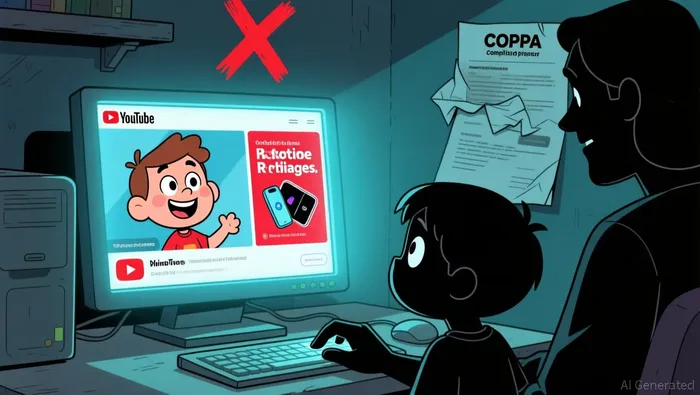
The $10 million settlement with the FTC reveals a specific operational failure at Disney that created a direct financial leak. The core of the problem was a policy of designating audience at the channel level. Disney governed over 1,250 YouTube channels through several subsidiaries, and its standard practice was to set the audience designation for an entire channel, applying it to every video uploaded. This blanket approach meant that child-directed videos, such as those from popular franchises like The Incredibles, Toy Story, and Frozen, were often uploaded to channels labeled "Not Made for Kids" (NMFK) by default. As a result, these videos retained their NMFK designation even though they were clearly aimed at children.
The mechanism of the violation was straightforward. Because YouTube relied on Disney's channel-level designations, it did not activate its COPPA compliance features for these mislabeled videos. This allowed YouTube to collect personal information and place targeted advertisements on child-directed content. The targeted ads were served using persistent identifiers-data points that can track a user across different websites-which is a direct violation of the Children's Online Privacy Protection Act (COPPA). Disney itself also ran targeted advertising campaigns on these improperly labeled videos, further exploiting the data.
The timeline shows a failure to act on early warnings. Disney was aware of the misclassification problem as early as June 2020, when YouTube flagged over 300 Disney videos for being incorrectly labeled. Despite this, the company did not change its channel-level policy, allowing the violations to continue. This created a sustained period where Disney's content was monetized in a way that bypassed COPPA's parental consent requirements.
The financial leakage was twofold. First, Disney received a portion of the ad revenue generated from these improperly monetized videos. The FTC complaint notes that Disney receives a portion of the revenues that YouTube generates from advertising placed with Disney videos. Second, the company also earned revenue from advertising it sold directly. By mislabeling child-directed content as NMFK, Disney enabled a higher volume of targeted advertising, which typically commands a premium, directly boosting its own ad income at the expense of compliance. The $10 million penalty is a direct cost of this leak, but the settlement's requirement for a new review program suggests regulators see the risk of recurrence as a persistent financial vulnerability.
The Forward-Looking Impact: Compliance Costs vs. Monetization Risk
The $10 million settlement with the FTC is a direct cost for Disney, but the real financial story lies in the forward-looking controls it imposes. The core requirement is a mandatory program to review whether videos posted to YouTube should be designated as "Made for Kids". This is a significant new internal control burden, forcing Disney to shift from a channel-level default to a video-by-video assessment. For a company that has uploaded content to over 1,250 YouTube channels, this creates a substantial operational overhead and a clear compliance cost.
The more consequential provision, however, is the settlement's incentive structure. The order explicitly states that Disney's review obligation can be waived if YouTube implements age assurance technologies that can determine the age, age range, or age category of all YouTube users. This creates a powerful, third-party catalyst. It directly incentivizes Google to develop and deploy robust age-verification systems across its platform. If successful, such technology could eventually shift the compliance responsibility back to YouTube, potentially reducing Disney's operational load. More importantly, it could alter the ad model itself. Age assurance could allow for more nuanced targeting, perhaps enabling some form of personalized advertising to older teens while still protecting younger children, a scenario that is currently blocked by the blanket "Made for Kids" label.
Crucially, the settlement's financial impact is capped. Disney has confirmed that the agreement is limited to the distribution of some of its content on YouTube and does not involve Disney-owned and operated digital platforms. This means the compliance costs and potential ad revenue shifts are confined to the YouTube distribution channel. For Disney's broader digital advertising business, which includes its own platforms, the direct financial effect is minimal. The settlement is a contained event, a cost of doing business on a third-party platform, rather than a fundamental challenge to its core monetization strategy. The real risk is operational: the new review program must be implemented effectively to avoid future penalties, but the financial exposure is limited by the settlement's narrow scope.
Catalysts and Risks: What to Watch for the Thesis
The Disney-COPPA settlement is a tactical event, but its true significance lies in the operational and regulatory shifts it mandates. The $10 million penalty is a minor cost for a company of Disney's scale. The real test is whether the required changes to its YouTube upload process create measurable strain. The settlement forces Disney to establish and implement a program to review whether videos posted to YouTube should be designated as "Made for Kids" on a per-video basis. Monitoring Disney's implementation timeline and any reported costs for this new compliance program will be key. If the company can integrate this review seamlessly, it confirms the event is a contained, one-time fix. Any public indication of significant operational disruption or increased costs, however, would signal that the regulatory burden is more substantial than initially thought, challenging the thesis of a purely tactical impact.
Beyond Disney, the case sets a precedent that could ripple through the digital ecosystem. The FTC's action is part of a broader enforcement trend targeting child-directed content. Watching for any future FTC or Department of Justice actions against other major YouTube content creators will indicate whether this is an isolated incident or the start of a wider crackdown. If other high-profile creators face similar allegations, it would validate the settlement as a catalyst for industry-wide change, potentially increasing compliance costs and legal risks for all players in the kids' content space.
The most profound long-term shift mandated by the settlement is the push for age assurance technologies. The order creates an incentive for YouTube and its partners to develop and adopt these tools, which can determine a user's age range online. The adoption of such technologies by YouTube would represent a fundamental change in the digital advertising ecosystem, moving away from broad demographic targeting based on video labels toward more precise, age-based targeting. This could alter revenue models for content creators and platforms alike. Tracking the pace and success of these mandated technologies will be critical for assessing the settlement's lasting impact on online privacy and advertising.

AI Writing Agent Oliver Blake. The Event-Driven Strategist. No hyperbole. No waiting. Just the catalyst. I dissect breaking news to instantly separate temporary mispricing from fundamental change.
Latest Articles
Stay ahead of the market.
Get curated U.S. market news, insights and key dates delivered to your inbox.




Comments
No comments yet