
The Discontinuation of the U.S. Penny and Its Impact on Precious Metals and Collectibles Markets


 Aime Summary
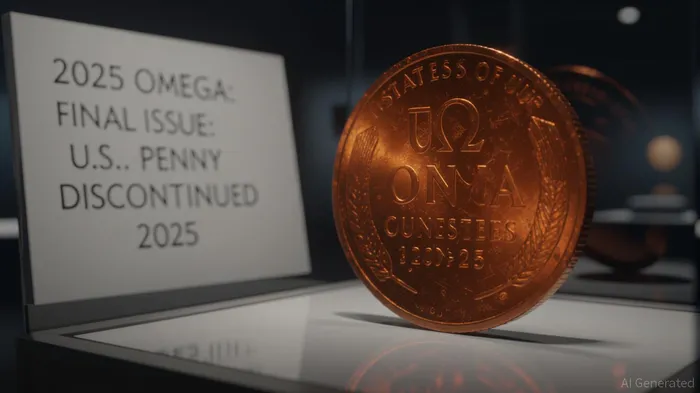
The U.S. Mint's decision to discontinue the penny-announced on November 12, 2025-marks the end of a 232-year-old tradition. U.S. Treasurer Brandon Beach struck the final five circulating one-cent coins at the Philadelphia Mint, each marked with a special "Omega" symbol for auction. This move, driven by rising production costs (3.69 cents per penny) and political pressure from President Donald Trump, has sparked a ripple effect across the numismatic and precious metals markets. For investors, the discontinuation presents both challenges and opportunities, particularly in the realm of rare coins and alternative assets.
The Numismatic Value of the Omega Penny
The Omega-marked pennies, produced in a limited batch for auction, have already become symbols of historical significance. While the U.S. Treasury has not disclosed specific auction prices, the broader market for rare pennies has seen renewed interest. Numismatic experts note that while most pennies are worthless beyond their face value, rare examples-such as those with minting errors, unique dates, or low mintage numbers-can command thousands of dollars according to market analysis. The Omega pennies, being the last of their kind, may follow a similar trajectory. However, experts caution that their immediate value is unlikely to skyrocket. Martin Fulayter, a coin shop owner in St. Cloud, argues that the sheer quantity of pennies in circulation (over 3.2 billion in 2024) dilutes their collectible appeal according to local reporting. Over time, though, as these coins age and become scarcer, their numismatic value could appreciate significantly.
Market Trends in Precious Metals and Collectibles
The discontinuation of the penny has not directly impacted the value of current pennies, but it has amplified broader trends in the collectibles and precious metals markets. The global collectible coin industry, driven by both historical enthusiasts and investors, has seen robust growth. Limited-edition commemorative coins, gold and silver bullion, and high-grade numismatic pieces are increasingly viewed as hedges against inflation and economic uncertainty according to market analysis.
Steven Roach, a numismatic educator, highlights that the end of penny production could encourage more people to start collecting, fostering financial literacy and diversification according to local reporting. This aligns with the rise of "blended" investment portfolios, where collectors combine bullion with rare coins. For instance, high-grade Saint-Gaudens gold coins and key date Morgan Dollars have appreciated by 15–30% over the past 18 months, while ultra-high-grade Proof Gold Eagles are now staples in institutional portfolios according to market trends.

Delivering real-time insights and analysis on emerging financial trends and market movements.
Latest Articles
Stay ahead of the market.
Get curated U.S. market news, insights and key dates delivered to your inbox.


AInvest
PRO
AInvest
PRO



Comments
No comments yet