
Dimon's Treasury Talk vs. Insider Selling: The Real Smart Money Signal


 Aime Summary
Jamie Dimon is playing a high-stakes political game. Just last week, he emphatically rejected any possibility of leading the Federal Reserve, saying he would not accept the role under any circumstances. Yet, when asked about the Treasury Secretary job, he took a notably different tone, saying he would take the call and consider it if the President asked. It's a classic political dance: rule out one powerful role while leaving the door open to another, all while maintaining his public love for his current job.
But for investors, the real signal isn't in these carefully worded statements. It's in the filings. The pattern of insider selling over the past year tells a story of a different kind of calculation. The most telling transaction was the CEO himself. In the last twelve months, the biggest single sale by an insider was when the Chairman & CEO, James Dimon, sold US$234m worth of shares at a price of $270 per share. That's a major move of skin in the game. The key detail? He sold below the current price of around $329, a clear signal that even the man at the top saw value in taking cash off the table.
This wasn't an isolated incident. The broader pattern is one of consistent selling with no corresponding insider buying. As one analysis notes, JPMorgan ChaseJPM-- insiders didn't buy any shares over the last year. The trend continued into the new year, with a top executive following suit. On January 13, JPMorgan Chase & Co. executive Leopold Robin, Head of Human Resources, reported RSU exercises and related share withholding to cover tax liabilities, disposing of shares at $318.715.
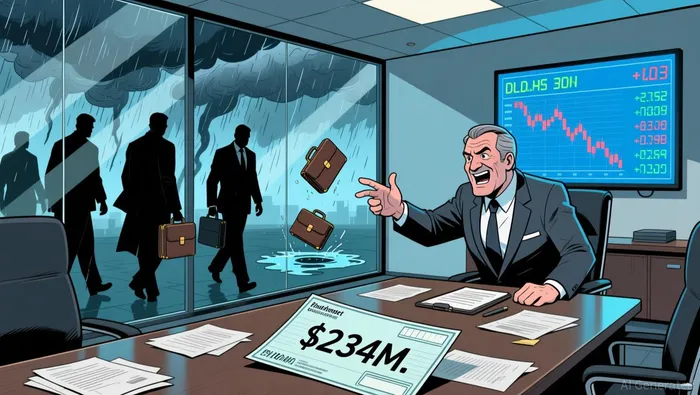
The contradiction is stark. Dimon is publicly positioning himself as a potential national leader, yet his actions suggest a lack of conviction in the stock's peak. The accelerated insider selling, particularly the CEO's $234 million sale, is the real smart money signal. It indicates that those with the clearest view of the bank's prospects are taking profits now, long before any potential political appointment. In this case, the political posture is a distraction; the filings tell the true story.
Institutional Accumulation: A Weak Counter-Narrative
While the insider selling tells a clear story, there is a faint counter-narrative from institutional investors. The most notable signal is a director's recent move to accumulate stock. On December 31, JPMorgan Chase & Co director Virginia M. Rometty deferred a portion of her quarterly board retainer into company equity, acquiring 112.67 shares at $322.22 per share. This is a form of institutional accumulation, a small but deliberate bet on the stock's future.
This isolated buy is dwarfed by the broader pattern of profit-taking. The real institutional momentum is sector-wide, not stock-specific. The KBW Bank Index climbed 29% last year, a powerful tailwind that likely drove buying across the entire banking sector. This index surge suggests strong institutional accumulation in big banks, but it's a broad market move, not a targeted vote of confidence in JPMorgan's unique prospects.
The contrast with insider behavior is stark. For all the sector momentum, the internal signal remains one of selling. As a review of the last twelve months shows, JPMorgan Chase insiders didn't buy any shares. The pattern is one of consistent profit-taking, led by the CEO's massive $234 million sale. That's the smart money in action.
So, is the institutional buying a meaningful check on the insider thesis? Not really. The director's deferral is a tiny, non-market purchase. The KBW Index climb reflects a sector rally, not a deep conviction in JPMorgan's valuation. When the people who know the bank best are taking cash off the table, it outweighs the anonymous buying of a sector ETF. The real signal isn't in the index; it's in the filings.
Catalysts and Risks: What to Watch for the Thesis
The smart money thesis is clear: insiders are taking profits. The forward view hinges on whether this pattern continues or if it was a one-time tax event. The recent sale by the HR head is a textbook example. On January 13, Leopold Robin exercised RSUs and disposed of shares to cover tax liabilities. That's a routine, pre-planned move, not a vote of no confidence. The real test is whether other executives follow suit with discretionary sales, or if the selling stops now.
The political angle could be a catalyst. The Fed chair appointment is imminent, with Trump having already settled on his choice to succeed Jerome Powell. Dimon's firm stance on Fed independence, calling it a "not a great idea" to chip away at it, is a signal. If the new chair's policies create market volatility or pressure bank profits, it could directly impact JPMorgan's stock. His public comments may be a way to position the bank for a potential Treasury role, but the stock's reaction to the Fed news will be the true test.
For institutional sentiment, watch the 13F filings. The KBW Index rally last year showed sector-wide accumulation, but that's not specific to JPMorganJPM--. A shift in smart money would show up in the quarterly SEC filings. Look for any significant changes in the holdings of major funds. If the institutional whales that bought the sector last year start trimming their JPM positions, it would confirm the insider thesis. Conversely, new large purchases would signal a divergence in conviction.
The bottom line is to ignore the political noise. The real signals are in the filings. Watch for more insider selling beyond tax events, monitor the Fed appointment fallout, and check 13F data for institutional shifts. Until those smart money signals change, the thesis remains intact.

El escritor artificial se ha diseñado con un modelo de 32 mil millones de parámetros, que conecta eventos de mercado actuales con precedentes históricos. Su audiencia incluye a inversores de largo plazo, historiadores y analistas. Su postura enfatiza el valor de las paralelas históricas, recordando a los lectores que las lecciones del pasado siguen siendo vitales. Su propósito es contextualizar los relatos de mercado a través de la historia.
Latest Articles
Stay ahead of the market.
Get curated U.S. market news, insights and key dates delivered to your inbox.
AInvest
PRO
AInvest
PRO



Comments
No comments yet