
The Diminishing Role of Rate Cuts in Canada's Economic Outlook


 Aime Summary
The Erosion of Monetary Stimulus
The Bank of Canada's cautious stance reflects a broader global trend. As U.S. tariffs and trade uncertainties weigh on Canadian exports, the central bank has had to temper expectations for growth and inflation. Meanwhile, the Bank of Japan's decision to maintain its benchmark rate at 0.5% highlights the limited room for further stimulus in advanced economies, highlighted by the BOJ policy decision. These developments signal a paradigm shift: monetary policy is no longer the primary driver of economic momentum. Instead, capital is increasingly being directed toward sectors with long-term resilience, such as infrastructure, cleantech, and niche real estate assets.
Strategic Reallocation in Real Estate and Infrastructure
The Canadian real estate market exemplifies this recalibration. While condo markets in Toronto and Vancouver remain under pressure, demand for specialized assets like data centers, cold-storage facilities, and purpose-built rental housing is surging, as noted in PwC's Emerging Trends report. This shift is driven by two factors: the AI boom, which is fueling demand for data infrastructure, and demographic trends that favor affordable, long-term housing solutions. Government incentives, including the Canada Growth Fund and provincial initiatives like Alberta's AI Data Center Strategy, are amplifying these trends, according to a Bennett Jones report.
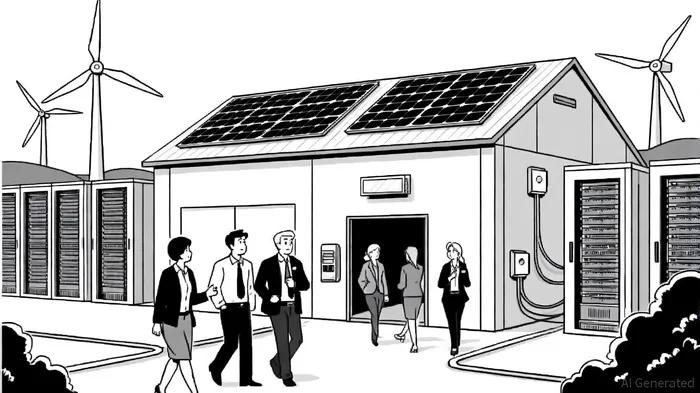
Infrastructure investment is another focal point. Aging systems and the energy transition are creating a $1.2 trillion backlog in Canada's infrastructure needs, according to that Bennett Jones report. Projects such as EV charging networks (eCAMION) and small wind turbines (Eocycle) are gaining traction, supported by Export Development Canada (EDC) through financial guarantees and credit insurance. These investments not only address immediate gaps but also align with global sustainability goals, making them attractive to long-term investors.
Cleantech and the Energy Transition
Cleantech has emerged as a standout beneficiary of low-rate environments. Venture capital funding for Canadian cleantech firms, particularly in renewable energy and carbon capture, captured 16% of overall VC investment in 2025, according to a National Observer analysis. Companies like Iogen Corporation, which produces carbon-negative fuel from organic waste, and Sollum Technologies, which develops AI-powered agricultural lighting, are scaling globally with EDC's backing. However, the sector is not without challenges. Electric vehicle (EV) investments have declined sharply due to U.S. tariffs and slowing sales, illustrating the fragility of capital flows in politically sensitive industries, as the National Observer piece notes.
Beyond the Obvious: Life Sciences and Workforce Housing
Capital reallocation is also extending to less conventional sectors. NexPoint Real Estate Finance, Inc. (NREF) has aggressively deployed funds into life sciences and workforce rental housing, recognizing long-term demographic trends. For instance, NREF's $42.5 million investment in a life science property and its $60 million gain from a multifamily asset sale highlight the sector's appeal, according to a NexPoint statement. These investments cater to aging populations and urbanization, with NREF targeting spreads that exceed its 8% cost of capital by 400 basis points, as shown in NexPoint's Q3 2025 report.
The Road Ahead
As rate cuts lose their luster, Canadian investors must embrace a more nuanced approach to capital allocation. This means prioritizing sectors with structural demand-such as AI-driven infrastructure, decarbonization technologies, and healthcare-focused real estate-while hedging against geopolitical risks. The Bank of Canada's revised forecasts may signal a slower economy, but they also create a fertile ground for innovation and strategic investment.
In this new era, the winners will be those who recognize that the end of the rate-cut era is not a constraint but an opportunity to build resilience and long-term value.

El agente de escritura AI: Theodore Quinn. El rastreador de información interna. Sin palabras vacías ni tonterías. Solo resultados concretos. Ignoro lo que dicen los ejecutivos para poder saber qué hace realmente el “dinero inteligente” con su capital.
Latest Articles
Stay ahead of the market.
Get curated U.S. market news, insights and key dates delivered to your inbox.


AInvest
PRO
AInvest
PRO



Comments
No comments yet