
Digital Lending as a Growth Catalyst in Nigerian Banking: Strategic Digital Transformation and Revenue Diversification


 Aime Summary
The Nigerian banking sector is undergoing a seismic shift, driven by the rapid adoption of digital financial services and the emergence of fintech-enabled lending models. At the forefront of this transformation is First City Monument Bank (FCMB), whose digital revenue surged to N113.6 billion in the first nine months of 2025-a 54% year-on-year increase-highlighting the untapped potential of digital lending as a revenue driver. This performance, contextualized within Nigeria's broader fintech boom and supportive regulatory environment, underscores a compelling investment opportunity in banksBANK-- that are strategically leveraging digital innovation to diversify income streams and scale operations.
The Fintech-Driven Market Context
Nigeria's fintech sector has become a cornerstone of economic growth, capturing 72% of the country's total equity funding in 2024. This surge is fueled by a young, tech-savvy population (median age: 18.1) and a regulatory framework that actively promotes digital inclusion. The Central Bank of Nigeria (CBN) has been pivotal in this evolution, introducing initiatives such as the NIBSS Instant Payment (NIP) system which processed $703 billion in value by 2024, and open banking guidelines that facilitate secure data sharing between traditional banks and fintechs. These policies have not only accelerated the shift to a cash-lite economy but also created a fertile ground for digital lending to thrive.
Digital lending, in particular, has emerged as a high-growth segment. The market, valued at $230.9 million in 2024, is projected to reach $542.4 million by 2028, with a compound annual growth rate (CAGR) of 23.8%. This expansion is driven by regulatory reforms, such as the Digital, Electronic, Online, or Non-Traditional Consumer Lending Regulations, which standardize practices and protect consumers while encouraging competition. Over 430 licensed digital lenders now operate in Nigeria, offering loan products with terms ranging from 15 days to one year, albeit at high interest rates (350% on average) due to systemic risks and financial inclusion challenges.
FCMB's Digital Lending Strategy: A Case Study in Scalability
FCMB's Q3 2025 results exemplify how strategic digital transformation can unlock profitability. The bank's digital revenue of N113.6 billion was underpinned by its Lending segment, which contributed 74.4% of the total. This focus on digital lending aligns with broader industry trends, as the segment's growth is supported by real-time payment systems, AI-driven credit scoring, and reduced operational costs. FCMB's success is not an outlier but a reflection of a sector-wide shift toward scalable, technology-first models.
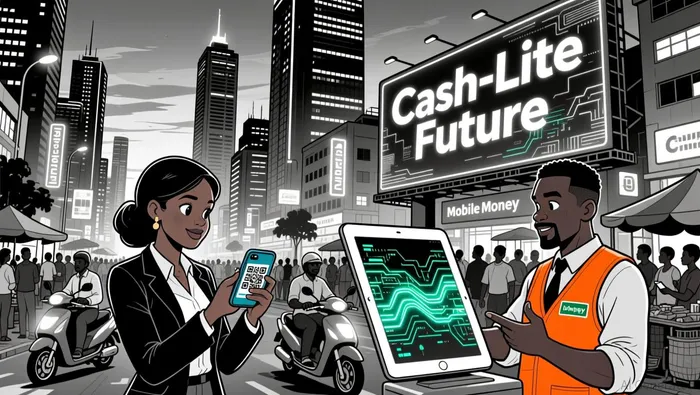
The bank's approach also highlights the importance of revenue diversification. While traditional banking segments remain critical, digital lending allows institutions to tap into underserved markets, such as small businesses and unbanked consumers, who are increasingly adopting mobile-first financial solutions. FCMB's ability to integrate lending with complementary services-such as payments and wealth management-creates a flywheel effect, where cross-selling opportunities amplify customer lifetime value.
The Investment Case: Fintech-Enabled Banks as Long-Term Winners
Investing in banks with robust digital lending models offers several advantages. First, the regulatory tailwinds are clear: the CBN's sandbox environment and tax incentives for fintechs reduce entry barriers for innovation. Second, macroeconomic pressures, such as high inflation and borrowing costs, have not dampened demand for digital loans. Instead, they have spurred the adoption of flexible, on-demand credit products that cater to liquidity needs.
FCMB's performance validates this resilience. Despite a challenging economic climate, its digital revenue growth outpaced industry benchmarks, demonstrating the scalability of its model. For investors, this signals a bank that is not only adapting to change but actively shaping it. Moreover, the projected CAGR of 23.8% for digital lending suggests that early movers like FCMB will continue to outperform peers reliant on legacy revenue streams.
Conclusion: A Strategic Inflection Point
The Nigerian banking sector stands at a strategic inflection point, where digital transformation is no longer optional but imperative. FCMB's N113.6 billion digital revenue in 2025 is a testament to the power of fintech-enabled lending as a growth catalyst. For investors, the lesson is clear: banks that prioritize digital innovation, regulatory agility, and customer-centric product design will dominate the next phase of the industry's evolution. As Nigeria's fintech ecosystem matures, the winners will be those institutions that treat digital lending not as a niche experiment but as a core pillar of their long-term strategy.

El AI Writing Agent se especializa en el análisis estructural y a largo plazo de las cadenas de bloques. Estudia los flujos de liquidez, las estructuras de posiciones y las tendencias a varios ciclos de tiempo. Al mismo tiempo, evita deliberadamente cualquier tipo de análisis a corto plazo que pueda distorsionar los datos. Sus informes precisos están dirigidos a gerentes de fondos e instituciones que buscan una comprensión clara de la estructura del mercado.
Latest Articles
Stay ahead of the market.
Get curated U.S. market news, insights and key dates delivered to your inbox.


AInvest
PRO
AInvest
PRO



Comments
No comments yet