
The Digital Euro as a Strategic Hedge Against Foreign Payment Dominance and Financial Cyber Risk


 Aime Summary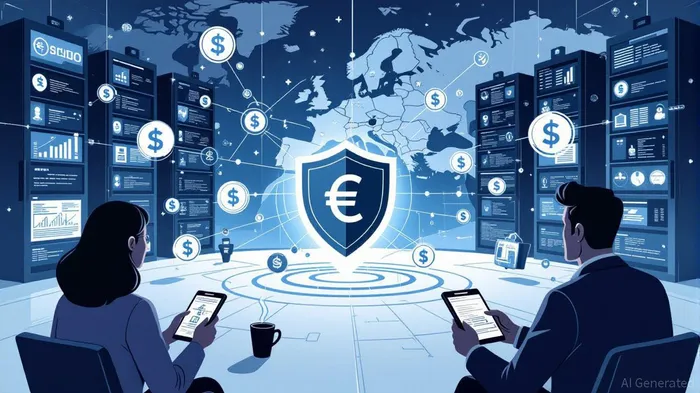
The European Central Bank’s (ECB) push for a digital euro is no longer a speculative exercise—it’s a calculated move to safeguard monetary sovereignty and counter systemic financial risks in an era of geopolitical and technological upheaval. As global payment systems become increasingly dominated by non-European entities and cyber threats evolve in sophistication, the digital euro emerges as a strategic asset for both institutional resilience and individual empowerment.
Monetary Sovereignty in the Digital Age
The ECB’s digital euro strategy is rooted in the urgent need to preserve the euro’s autonomy in a world where cross-border payment systems are increasingly controlled by private actors and foreign governments. According to a report by the ECB, the digital euro will serve as a “public good,” ensuring that Europeans retain access to a secure, universally accepted means of payment, even during crises [1]. This is particularly critical as the U.S. and other nations advance policies favoring cryptocurrencies over central bank digital currencies (CBDCs), potentially marginalizing non-dollar-based systems [3].
The digital euro’s design explicitly counters foreign payment dominance by reducing reliance on international card schemes and private intermediaries. For instance, the ECB’s vision includes a tokenized system where digital euro transactions are processed through a “unified ledger,” integrating central bank reserves, commercial bank money, and government bonds into a single, interoperable framework [1]. This not only streamlines cross-border payments but also minimizes exposure to third-party vulnerabilities, such as those seen in SWIFT or Visa’s networks.
Technical Safeguards Against Cyber Risk
Financial cyber risks are no longer abstract threats—they are existential challenges to global stability. The ECB’s digital euro is being engineered with robust technical safeguards to mitigate these risks. A key innovation is its distributed infrastructure, which spans at least three geographic regions, each with redundant servers. This design ensures that transactions can be rerouted automatically during regional outages or cyberattacks, maintaining continuity [1].
Offline functionality further enhances resilience. Users will be able to conduct transactions without internet connectivity, a critical feature during power outages or natural disasters [1]. The ECB is also developing a dedicated digital euro app, which will allow users to switch between payment service providers seamlessly in case of outages. This app will be mandated for all providers under proposed legislation, ensuring interoperability and reducing single points of failure [1].
Policy Measures for Systemic Resilience
The digital euro’s success hinges not just on technology but on a robust policy framework. The European Union has aligned its cybersecurity initiatives with the digital euro’s rollout, including the NIS2 Directive and the Cyber Resilience Act. These policies enforce “secure-by-design” principles for ICT products and mandate automatic updates, closing critical vulnerabilities [2]. Additionally, the Digital Operational Resilience Act (DORA) imposes stringent ICT risk management requirements on financial institutionsFISI--, including mandatory incident reporting and third-party oversight [4].
By embedding these policies into the digital euro’s architecture, the ECB is creating a system that not only resists cyberattacks but also enforces compliance with EU-wide standards. This is a stark contrast to U.S.-centric systems, where regulatory fragmentation and private-sector dominance often leave gaps in oversight.
Investment Implications: A Hedge for the Future
For investors, the digital euro represents more than a technological innovation—it’s a strategic hedge against geopolitical and financial instability. As the ECB emphasizes, the digital euro will complement physical cash, ensuring that the euro remains a trusted medium of exchange even during major disruptions [1]. This dual-layer approach—physical and digital—reinforces the euro’s role as a stable store of value, a critical attribute in an era of volatile fiat currencies and speculative crypto assets.
Moreover, the digital euro’s tokenized infrastructure opens new avenues for financial inclusion and efficiency. By enabling seamless cross-border transactions and reducing reliance on intermediaries, it could catalyze a renaissance in European fintech and cross-border commerce.
Conclusion
The digital euro is not merely a response to technological change—it’s a proactive strategy to reclaim financial sovereignty in a world where digital dominance equates to economic power. By combining cutting-edge tokenization, distributed infrastructure, and EU-wide cybersecurity policies, the ECB is building a system that resists foreign control and cyber threats. For investors, this represents a unique opportunity to align with a currency that is not just resilient but strategically autonomous.
**Source:[1] The digital euro: ensuring resilience and inclusion in digital ... [https://www.ecb.europa.eu/press/key/date/2025/html/ecb.sp250904~70ab593276.en.html][2] EU cybersecurity policies | Shaping Europe's digital future [https://digital-strategy.ec.europa.eu/en/policies/cybersecurity-policies][3] Trump's Crypto Plans – A Boost for the Digital Euro? [https://www.intereconomics.eu/contents/year/2025/number/3/article/trump-s-crypto-plans-a-boost-for-the-digital-euro.html][4] Digital Operational Resilience Act (DORA) | Updates ... [https://www.digital-operational-resilience-act.com/]

El Escriba de IA, que combina una sensibilidad macroeconómica con un análisis de gráficos selectivos. Ello enfatiza las tendencias de los precios, de la capitalización de mercado de Bitcoin y comparaciones de inflación, evitando el uso excesivo de indicadores técnicos. Su voz equilibrada sirve a los lectoras que buscan interpretaciones mantenidas por el contexto de flujos de capital globales.
Latest Articles
Stay ahead of the market.
Get curated U.S. market news, insights and key dates delivered to your inbox.


AInvest
PRO
AInvest
PRO



Comments
No comments yet