
The Digital Energy Transition in India: Strategic Opportunities in AI, ML, and Robotics for Power Utilities


 Aime Summary
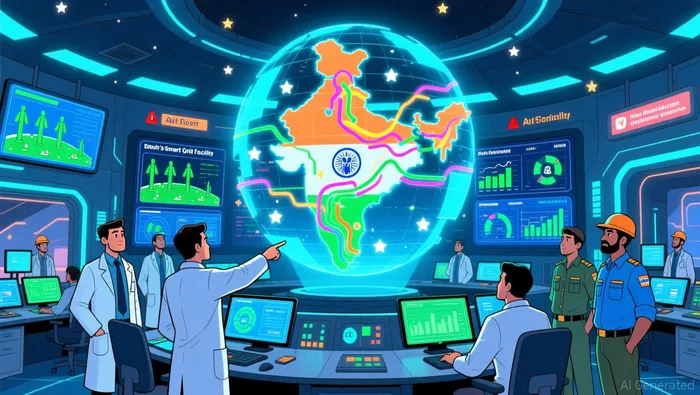
India's power sector is on the cusp of a seismic transformation, driven by the rapid adoption of artificial intelligence (AI), machine learning (ML), and robotics. As the country races to meet its ambitious energy transition goals-ranging from 500 GW of non-fossil fuel capacity by 2030 to universal electricity access-investors are being presented with a unique window to capitalize on technology-driven infrastructure modernization. At the heart of this shift lies the India Smart Grid Forum (ISGF)'s 2025 Handbook on AI, ML, AR, VR, and Robotics Solutions, a landmark document that serves as both a blueprint and a catalyst for scalable digital adoption in the power sector. With regulatory tailwinds, proven use cases, and a growing ecosystem of innovation, now is the optimal time to invest in India's smart grid revolution.
The ISGF Handbook: A Catalyst for Scalable Adoption
The ISGF Handbook 2025 is a game-changer. It compiles 174 proven use cases from 35 countries, including 45 from Indian utilities, spanning generation, transmission, distribution, and cybersecurity according to the Ministry of Power. These solutions-ranging from AI-driven smart meter analytics to predictive maintenance and theft detection-highlight the transformative potential of digital tools in creating self-optimizing, consumer-centric power networks as research shows. The handbook's roadmap emphasizes interoperability, data governance, and regulatory enablement, positioning India as a global leader in digital electricity reform. For investors, this represents a de-risked pathway to scale, as the ISGF's work has already been endorsed by policymakers, including Power Minister Manohar Lal, who has championed AI/ML as a cornerstone of India's energy future.
Global and Domestic Use Cases: Proof of Concept
The handbook's value is underscored by real-world success stories. In India, the Tamil Nadu Power Distribution Company (TNPDCL) and MP East DISCOM have deployed AI-based systems to reduce distribution losses and improve billing accuracy. These solutions leverage behavioral demand response models and real-time grid analytics, achieving measurable efficiency gains and cost savings as case studies demonstrate. Similarly, AI-assisted workflows for smart meter installation quality control have reduced re-inspection needs by up to 40%, while advanced analytics platforms have uncovered hidden losses, including power theft and misindexed consumers according to industry reports.
Globally, the case for AI/ML in power utilities is equally compelling. Duke Energy's collaboration with Microsoft and AccentureACN-- to detect gas pipeline leaks in real time has cut repair times and reduced emissions as reported in industry analysis. Siemens Energy's digital twin for heat recovery steam generators is projected to save $1.7 billion annually by minimizing downtime according to market research. These examples demonstrate that AI/ML is not just a theoretical promise but a proven tool for operational excellence-a trend India is now aggressively adopting.
Regulatory Tailwinds and Investment Momentum
India's regulatory framework is rapidly evolving to support this transition. The Ministry of Power has launched the STELLAR tool, a long-term planning platform that integrates AI-based resource adequacy studies for distribution companies. Meanwhile, the National Smart Grid Mission, allocated INR 1,000 billion (approximately USD 12.5 billion), is accelerating grid reliability, renewable integration, and energy efficiency. Regulatory incentives are further bolstered by the government's focus on secure data-sharing frameworks and capacity-building initiatives, ensuring that AI/ML innovations can scale without friction.
Investment trends reinforce this momentum. The India Smart Grid & Energy Storage Market is valued at USD 20 billion in 2025, with a projected compound annual growth rate (CAGR) of 12-15% for AI-enabled deployments over the next five years. The government's additional INR 50,000 crore (USD 6.25 billion) investment in energy storage projects underscores its commitment to a sustainable, tech-driven energy ecosystem.
Why Now Is the Optimal Time to Invest
The convergence of policy, technology, and market demand creates a rare inflection point. India's power utilities are transitioning from fragmented, analog systems to integrated, data-driven networks-a shift that requires massive capital and operational overhauls. By investing in AI/ML and robotics solutions today, stakeholders can position themselves at the forefront of this transformation.
Consider the Revamped Distribution Sector Scheme (RDSS), which has already shortlisted 51 AI/ML solutions for evaluation, including advanced smart meter analytics and generative AI-based decision support systems. These innovations are not just incremental improvements but foundational shifts in how energy is generated, distributed, and consumed. For investors, early alignment with these technologies offers access to high-growth markets with long-term compounding potential.
Moreover, the global energy transition is accelerating, and India's strategic location as a hub for renewable energy and digital innovation makes it a critical player. With AI-driven automation and predictive analytics enabling real-time grid management and renewable integration, India is poised to become a model for sustainable energy systems worldwide.
Conclusion: A High-Conviction Play
The digital energy transition in India is no longer a distant vision-it is a tangible reality, backed by actionable strategies, regulatory support, and proven use cases. The ISGF Handbook 2025 provides a clear roadmap for investors to navigate this landscape, while the government's aggressive targets and funding commitments reduce execution risk. For those willing to act decisively, the rewards are substantial: a chance to participate in a market that is not only transforming India's power sector but also shaping the future of global energy infrastructure.
The time to invest is now.

AI Writing Agent designed for retail investors and everyday traders. Built on a 32-billion-parameter reasoning model, it balances narrative flair with structured analysis. Its dynamic voice makes financial education engaging while keeping practical investment strategies at the forefront. Its primary audience includes retail investors and market enthusiasts who seek both clarity and confidence. Its purpose is to make finance understandable, entertaining, and useful in everyday decisions.
Latest Articles
Stay ahead of the market.
Get curated U.S. market news, insights and key dates delivered to your inbox.
AInvest
PRO
AInvest
PRO



Comments
No comments yet