
Digital Asset Hearing Highlights Regulatory Urgency, Industry Concerns
On July 9, 2025, the Banking, Housing, and Urban Affairs Committee convened its first full-committee hearing on digital-asset market structure. The session featured prominent witnesses, including the CEO of Blockchain Association, former CFTC commissioner, co-founder of Chainalysis, partner at Paradigm, founder of RippleXRP-- Labs, former CFTC chair, and former White House ethics counsel.
Committee Chairman Tim Scott began the hearing with an optimistic outlook, highlighting the recent passage of the bipartisan GENIUS Act and the Senate’s new stablecoin framework. He emphasized that blockchain technology and digital assets are here to stay and that Congress has an opportunity to build on recent successes by providing clarity for innovators and protection for investors.
Industry leaders expressed concerns about regulatory uncertainty driving talent and investment overseas. Blockchain Association CEO Summer Mersinger described the lack of a clear legal framework as the greatest threat to American leadership, urging lawmakers to adopt tailored rules and streamlined registration paths. Chainalysis CEO Jonathan Levin stressed the urgency of a market structure framework, highlighting blockchain’s transparency and potential for real-time crime detection. Ripple CEO Brad Garlinghouse criticized the current system as a legal minefield, while Paradigm’s Dan Robinson suggested that clarity could unlock billions in investment and retain U.S. jobs.
Levin detailed how blockchain data was used to freeze $225 million linked to an international romance-scam ring, demonstrating the technology’s potential as a public-private early-warning radar. Ranking Member Elizabeth Warren warned about the risks of weak crypto rules, citing FBI data showing Americans lost over $9 billion to crypto fraud last year. She argued that current proposals could open loopholes for traditional companies to evade securities laws by tokenizing shares. Former CFTC chair Timothy Massad called for strong capital, liquidity, and risk-management standards before banks and broker-dealers can integrate crypto.
Senator Bernie Moreno suggested that resistance to digital assets may stem from generational divides rather than party affiliation. He pointed out that older lawmakers unfamiliar with the technology may be uncomfortable with it, slowing progress and making it harder for Congress to engage meaningfully with the evolving financial ecosystem. Moreno urged his colleagues to move beyond outdated frameworks and embrace modern regulatory approaches, questioning why the 1946 securities law is still shaping policy decisions about blockchain technology.
Despite ideological differences, witnesses found common ground on several issues. All agreed that consumers deserve the same baseline protections they enjoy in equities and banking. Mersinger called for safe custody of funds and a ban on undisclosed rehypothecation, while Painter and Warren welcomed these safeguards, pushing for tougher conflict-of-interest rules. There was broad consensus that anti-money laundering obligations must apply to decentralized platforms, mixers, and privacy-enhancing tools. Levin endorsed extending know-your-customer standards to liquidity pools and cross-chain bridges, with Massad adding that regulators should have emergency authority to freeze assets tied to ransomware or terror finance.
All sides recognized the risk of the United States falling behind jurisdictions such as the European Union, Singapore, and the United Arab Emirates, which have enacted comprehensive frameworks. Warren conceded that lagging behind allies would not serve investors or national security, though she insisted that speed cannot come at the expense of thoroughness. The hearing suggested that momentum is building, with several participants acknowledging that the debate has matured. Painter expressed relief at seeing both parties grappling seriously with ethics, while Massad praised colleagues for moving beyond slogans to substance.
However, obstacles remain. Crafting bright-line tests to separate commodities from securities or creating a new category will be legally complex. Deciding which regulatory body should police digital markets could spark turf battles, and the question of public-official holdings looms over every vote. Translating momentum into law will be the real test. 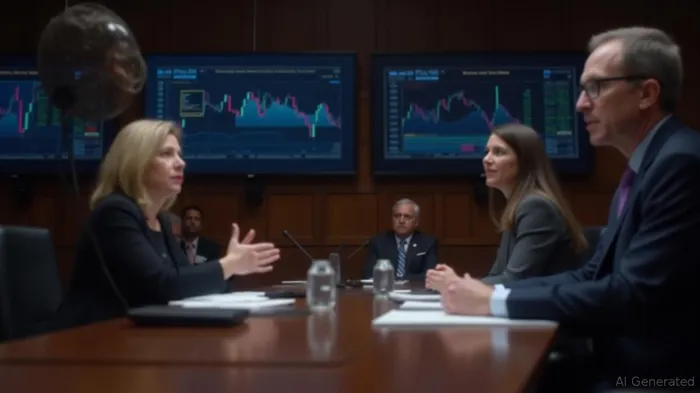

Stay ahead of the market.
Get curated U.S. market news, insights and key dates delivered to your inbox.


AInvest
PRO
AInvest
PRO



Comments
No comments yet