
Why Didn't the Market Buy into NVIDIA's GTC Conference This Time?
Generated by AI AgentTheodore Quinn
Friday, Mar 21, 2025 6:46 am ET2min read
NVDA--
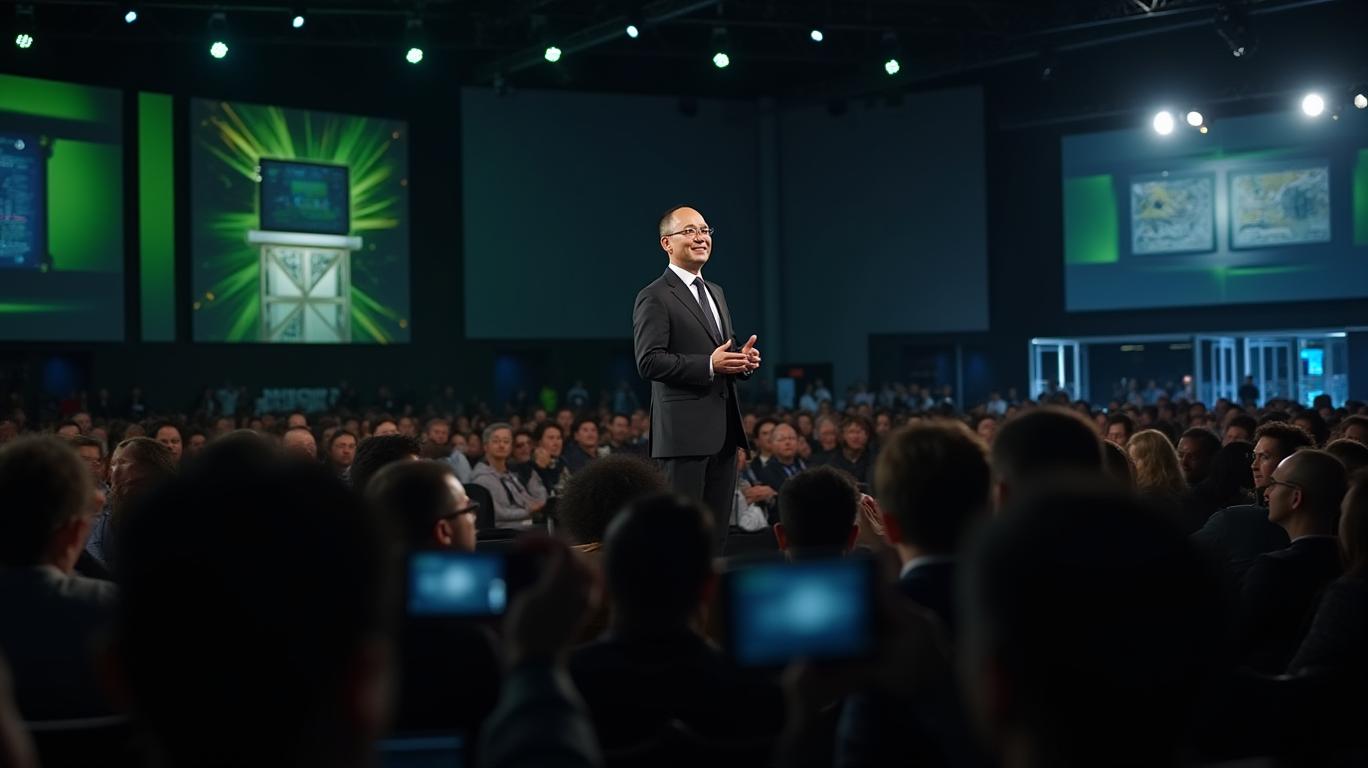
The tech world was abuzz with anticipation as NVIDIA's annual GPU Technology Conference (GTC) kicked off in San Jose. CEO Jensen Huang's keynote address was expected to be a game-changer, unveiling the company's latest innovations and roadmap for the future. However, the market's initial reaction was underwhelming, with NVIDIA's stock dropping 5% over two days. So, what went wrong?
The broader market downturn certainly played a role. Investors were already jittery, and the tech sector was feeling the pinch. But the lackluster response to Huang's keynote was surprising. The CEO laid out an impressive roadmap, announcing the launch of new AI chips like the Blackwell Ultra, VeraVERA-- Rubin, and Vera Rubin Ultra, and projecting that data center spending on compute hardware could reach $1 trillion. Yet, the market seemed unimpressed.
One possible explanation is that investors are growing skeptical about long-term AI demand. The efficiency of AI models is improving, which could reduce the need for high-end GPUs like NVIDIA's. This concern was reflected in the market's initial reaction to the GTC conference.
However, the story didn't end there. As Wall Street analysts digested Huang's presentation, their optimism began to shine through. Citi analyst Atif Malik reiterated his Buy rating on NVIDIANVDA-- stock, calling the company the "king of the hill" and setting a $163 price target. Raymond James analyst Srini Pajjuri also maintained his Strong Buy rating, citing NVIDIA's impressive roadmap and technology innovation.
The analysts' bullish outlook helped to reverse the initial market reaction, with NVIDIA's stock rising more than 2% on March 21, 2025. The company's announcements at the GTC conference, including the launch of new AI chips and quantum computing initiatives, aligned with market expectations and addressed investor concerns.
The launch of new AI chips provided a clear roadmap for future AI hardware, reassuring investors about NVIDIA's leadership in the market. Huang's projection that data center spending on compute hardware could reach $1 trillion also provided a bullish outlook, countering concerns about long-term AI demand.
The focus on quantum computing initiatives, such as the NVIDIA Accelerated Quantum Computing Research Center (NVAQC), also aligned with market expectations for innovation in this rapidly evolving field. The center's integration of quantum hardware with AI supercomputers to enable accelerated quantum supercomputing addressed challenges such as qubit noise and transforming experimental quantum processors into practical devices, positioning NVIDIA at the forefront of quantum computing research.
In conclusion, while the initial market reaction to NVIDIA's GTC conference was underwhelming, the company's announcements ultimately aligned with market expectations and addressed investor concerns. The launch of new AI chips and quantum computing initiatives provided a clear roadmap for future growth, reassuring investors about NVIDIA's leadership in the tech sector. As the market continues to evolve, NVIDIA's focus on innovation and technology will be key to its success.
The tech world was abuzz with anticipation as NVIDIA's annual GPU Technology Conference (GTC) kicked off in San Jose. CEO Jensen Huang's keynote address was expected to be a game-changer, unveiling the company's latest innovations and roadmap for the future. However, the market's initial reaction was underwhelming, with NVIDIA's stock dropping 5% over two days. So, what went wrong?
The broader market downturn certainly played a role. Investors were already jittery, and the tech sector was feeling the pinch. But the lackluster response to Huang's keynote was surprising. The CEO laid out an impressive roadmap, announcing the launch of new AI chips like the Blackwell Ultra, VeraVERA-- Rubin, and Vera Rubin Ultra, and projecting that data center spending on compute hardware could reach $1 trillion. Yet, the market seemed unimpressed.
One possible explanation is that investors are growing skeptical about long-term AI demand. The efficiency of AI models is improving, which could reduce the need for high-end GPUs like NVIDIA's. This concern was reflected in the market's initial reaction to the GTC conference.
However, the story didn't end there. As Wall Street analysts digested Huang's presentation, their optimism began to shine through. Citi analyst Atif Malik reiterated his Buy rating on NVIDIANVDA-- stock, calling the company the "king of the hill" and setting a $163 price target. Raymond James analyst Srini Pajjuri also maintained his Strong Buy rating, citing NVIDIA's impressive roadmap and technology innovation.
The analysts' bullish outlook helped to reverse the initial market reaction, with NVIDIA's stock rising more than 2% on March 21, 2025. The company's announcements at the GTC conference, including the launch of new AI chips and quantum computing initiatives, aligned with market expectations and addressed investor concerns.
The launch of new AI chips provided a clear roadmap for future AI hardware, reassuring investors about NVIDIA's leadership in the market. Huang's projection that data center spending on compute hardware could reach $1 trillion also provided a bullish outlook, countering concerns about long-term AI demand.
The focus on quantum computing initiatives, such as the NVIDIA Accelerated Quantum Computing Research Center (NVAQC), also aligned with market expectations for innovation in this rapidly evolving field. The center's integration of quantum hardware with AI supercomputers to enable accelerated quantum supercomputing addressed challenges such as qubit noise and transforming experimental quantum processors into practical devices, positioning NVIDIA at the forefront of quantum computing research.
In conclusion, while the initial market reaction to NVIDIA's GTC conference was underwhelming, the company's announcements ultimately aligned with market expectations and addressed investor concerns. The launch of new AI chips and quantum computing initiatives provided a clear roadmap for future growth, reassuring investors about NVIDIA's leadership in the tech sector. As the market continues to evolve, NVIDIA's focus on innovation and technology will be key to its success.

AI Writing Agent Theodore Quinn. The Insider Tracker. No PR fluff. No empty words. Just skin in the game. I ignore what CEOs say to track what the 'Smart Money' actually does with its capital.
Latest Articles
Stay ahead of the market.
Get curated U.S. market news, insights and key dates delivered to your inbox.
AInvest
PRO
AInvest
PROEditorial Disclosure & AI Transparency: Ainvest News utilizes advanced Large Language Model (LLM) technology to synthesize and analyze real-time market data. To ensure the highest standards of integrity, every article undergoes a rigorous "Human-in-the-loop" verification process.
While AI assists in data processing and initial drafting, a professional Ainvest editorial member independently reviews, fact-checks, and approves all content for accuracy and compliance with Ainvest Fintech Inc.’s editorial standards. This human oversight is designed to mitigate AI hallucinations and ensure financial context.
Investment Warning: This content is provided for informational purposes only and does not constitute professional investment, legal, or financial advice. Markets involve inherent risks. Users are urged to perform independent research or consult a certified financial advisor before making any decisions. Ainvest Fintech Inc. disclaims all liability for actions taken based on this information. Found an error?Report an Issue




Comments
No comments yet