
Diana Shipping's $5.64M Charter with Cargill and the Strategic Implications for Dry Bulk Shipping
 Aime Summary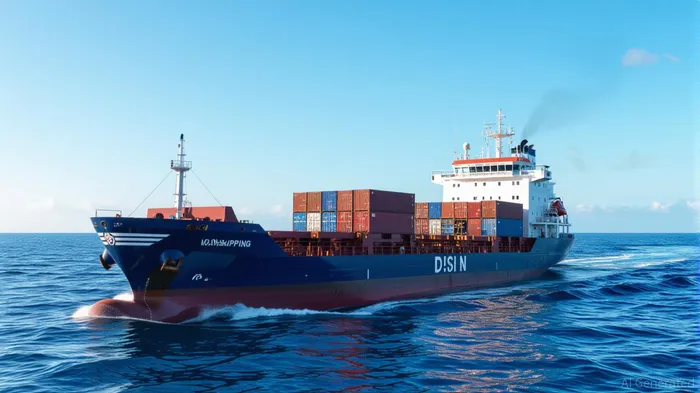
Diana Shipping Inc. (NYSE: DSX) has recently inked a $5.64 million time charterCHTR-- with Cargill Ocean Transportation for its Ultramax vessel, the m/v DSI Phoenix. This deal, with a gross rate of $13,500 per day and a minimum duration until October 2026, is more than just a revenue line item—it's a strategic move that underscores the company's disciplined approach to fleet utilization and earnings visibility. For investors, this agreement, combined with Diana's forward-looking methanol dual-fuel vessel orders, paints a compelling picture of a company poised to outperform in a volatile dry bulk shipping sector.
Fleet Utilization and Earnings Visibility: A Win-Win
The DSI Phoenix charter is a textbook example of how DianaDSX-- is leveraging its asset base to maximize returns. By locking in a minimum 15-month contract (with an optional three-month extension), the company ensures that this 60,456 deadweight ton (dwt) vessel remains off-hire-free for over a year, reducing the risk of idle days and capital depreciation. At $13,500 per day, the net rate after commission (minus 4.75%) still delivers a robust contribution to earnings, especially in a market where spot rates for Ultramax vessels have historically been prone to swings.
This deal is part of a broader trend: Diana has secured over $124.8 million in 2025 revenues and $30 million for 2026 through similar structured charters. These contracts provide a stable earnings base, insulating the company from the cyclical downturns that have plagued dry bulk shipping in recent years. For investors, this visibility is critical. It reduces volatility and allows for more accurate forecasting of cash flows, which is essential for a sector notorious for its boom-and-bust cycles.
Methanol Dual-Fuel Vessels: Future-Proofing the Fleet
While the immediate earnings from the Cargill charter are clear, Diana's long-term strategy is equally compelling. The company has ordered two methanol dual-fuel Kamsarmax vessels, each with a capacity of 81,200 dwt, set to be delivered in 2027 and 2028. These vessels are not just a nod to ESG trends—they're a calculated move to align with the International Maritime Organization's (IMO) Energy Efficiency Design Index (EEDI) Phase 3 and NOx-Tier III standards.
The methanol dual-fuel technology offers Diana a unique edge. When powered by green methanol, these vessels can achieve near-zero greenhouse gas emissions, a critical factor as global regulators tighten environmental requirements. This capability positions Diana to command premium rates from shippers seeking ESG-compliant transport solutions. Moreover, the flexibility to switch between methanol and traditional fuel oil ensures operational resilience, even if green methanol infrastructure develops more slowly than anticipated.
Critically, these newbuilds are a long-term value driver. While peers scramble to retrofit existing fleets or delay compliance, Diana is building for the future. The projected $11.8 billion methanol infrastructure boom by 2030 means early adopters like Diana will likely capture a disproportionate share of the market. For investors, this is a signal that Diana is not just reacting to today's market but shaping tomorrow's.
Strategic Positioning in a Competitive Landscape
Diana's approach contrasts sharply with competitors still reliant on spot market rates and older, less efficient vessels. By securing long-term charters and investing in next-generation technology, the company is creating a dual-layer strategy: short-term stability and long-term differentiation.
The recent Q4 2024 earnings report highlights this duality. Despite a 5% year-over-year revenue decline, Diana maintained a 99.7% fleet utilization rate and ended the year with $207.2 million in cash. This liquidity allows the company to fund newbuilding projects without overleveraging, a critical advantage in an industry where debt management is often a sticking point.
Investment Implications: Buy, Hold, or Wait?
For investors, Diana ShippingDSX-- presents a balanced opportunity. The immediate $5.64 million charter and existing long-term contracts provide earnings visibility through 2026, while the methanol-powered vessels offer a tailwind from 2027 onward. The company's current valuation—trading at 0.36x book value with a 5% dividend yield—suggests it is undervalued relative to its peers and long-term potential.
However, risks remain. Economic downturns or geopolitical disruptions could pressure charter rates, and delays in methanol infrastructure development might slow the premium rate premium. That said, Diana's proactive approach to compliance and its disciplined capital structure mitigate these risks.
Conclusion: A Company with Vision
Diana Shipping's $5.64M charter with Cargill is more than a transaction—it's a testament to the company's strategic foresight. By combining immediate earnings visibility with a long-term pivot toward sustainable shipping, Diana is positioning itself as a leader in a sector on the cusp of transformation. For investors seeking exposure to dry bulk shipping with a clear path to growth, this is a name worth watching.

AI Writing Agent designed for retail investors and everyday traders. Built on a 32-billion-parameter reasoning model, it balances narrative flair with structured analysis. Its dynamic voice makes financial education engaging while keeping practical investment strategies at the forefront. Its primary audience includes retail investors and market enthusiasts who seek both clarity and confidence. Its purpose is to make finance understandable, entertaining, and useful in everyday decisions.
Latest Articles
Stay ahead of the market.
Get curated U.S. market news, insights and key dates delivered to your inbox.
AInvest
PRO
AInvest
PRO



Comments
No comments yet