
Diageo Withdraws Medium-Term Sales Forecast Amid Economic Headwinds
Generated by AI AgentTheodore Quinn
Tuesday, Feb 4, 2025 2:13 am ET1min read
DEO--

Diageo plc, the world's leading producer and marketer of alcoholic beverages, has withdrawn its medium-term sales forecast due to economic headwinds and changing consumer behavior. The company, which owns iconic brands such as Smirnoff, Johnnie Walker, and Guinness, is facing challenges in key markets and is considering strategic changes to adapt to the evolving consumer landscape.
Diageo's chief executive, Debra Crew, acknowledged the "very extraordinary consumer environment" with persistent inflation weighing on consumers' wallets, leading to a decline in consumer spending on premium alcoholic beverages (Diageo, 2025). This has resulted in a slowdown in demand in key markets such as China and the United States, as well as inventory issues in Latin America and the Caribbean. Additionally, geopolitical and economic volatility, such as the anti-dumping probe launched by the Chinese government into brandy imported by the European Union, has raised concerns among investors and analysts (Diageo, 2024).
Diageo's strategic focus on premiumisation, which involves targeting consumers with more disposable income by offering more expensive products, has come under pressure due to economic headwinds and changing consumer behavior. The company's sales have declined, particularly in North and Latin America, where consumers are seeking cheaper alternatives (FT, 2025). Despite the headwinds, Diageo remains committed to its premiumisation strategy, with Crew noting that while there are pockets of consumers trading down, there are also pockets of premiumisation (FT, 2025).
To adapt to the changing consumer landscape, Diageo is considering a strategic review of its portfolio, which could potentially lead to the divestment of Guinness and other brands. This move could help Diageo focus on its core strengths and premium brands, reduce exposure to challenging markets, and improve profitability. By divesting underperforming or non-core brands, Diageo can potentially boost its operating margins and earnings growth, as well as unlock value for shareholders through increased dividend payouts or share buybacks.
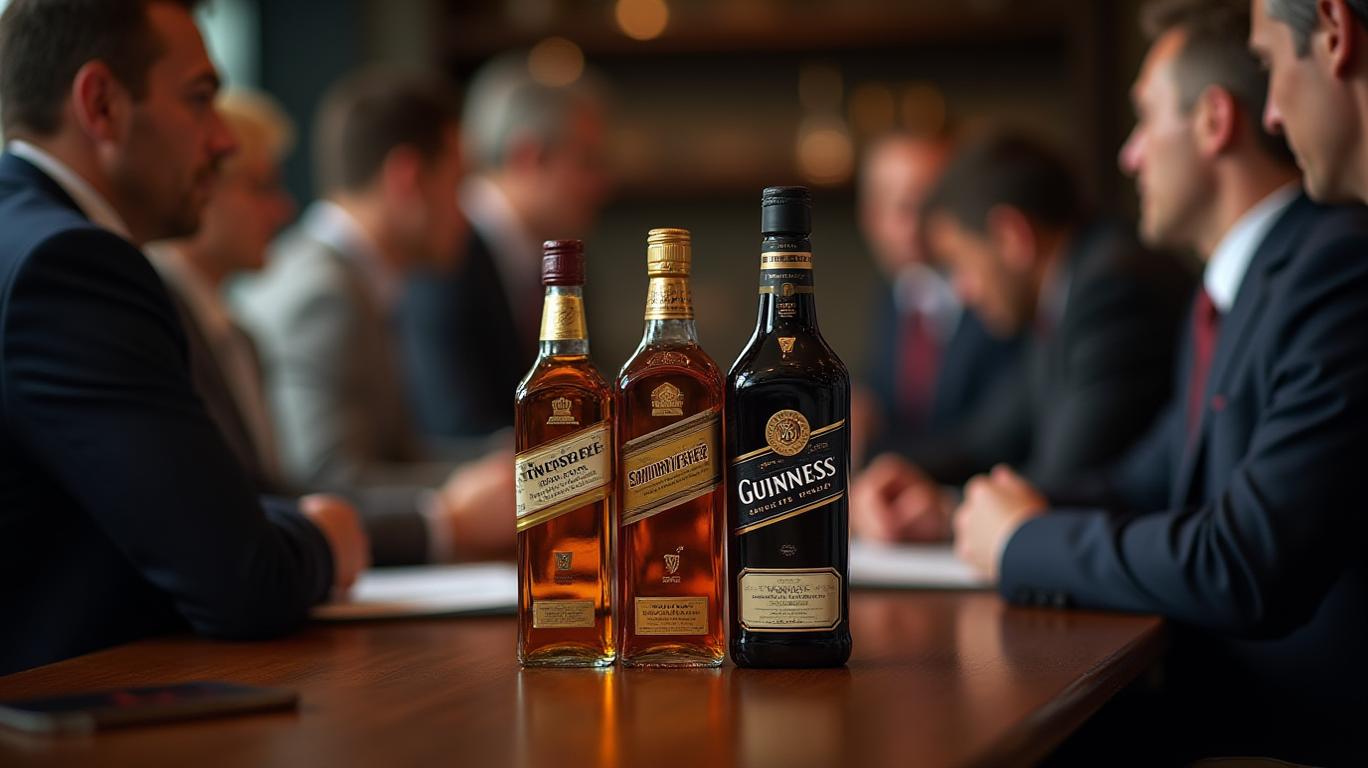
In conclusion, Diageo's withdrawal of its medium-term sales forecast reflects the challenges the company is facing in the current economic environment. To adapt to changing consumer behavior and market conditions, Diageo is considering strategic changes, such as a potential divestment of Guinness and other brands. By focusing on its core strengths and premium brands, Diageo can potentially improve its competitive position and drive future earnings growth. However, it is essential for Diageo to execute these strategic moves effectively and ensure that the divestments align with its long-term growth strategy.
SOLR--
Diageo plc, the world's leading producer and marketer of alcoholic beverages, has withdrawn its medium-term sales forecast due to economic headwinds and changing consumer behavior. The company, which owns iconic brands such as Smirnoff, Johnnie Walker, and Guinness, is facing challenges in key markets and is considering strategic changes to adapt to the evolving consumer landscape.
Diageo's chief executive, Debra Crew, acknowledged the "very extraordinary consumer environment" with persistent inflation weighing on consumers' wallets, leading to a decline in consumer spending on premium alcoholic beverages (Diageo, 2025). This has resulted in a slowdown in demand in key markets such as China and the United States, as well as inventory issues in Latin America and the Caribbean. Additionally, geopolitical and economic volatility, such as the anti-dumping probe launched by the Chinese government into brandy imported by the European Union, has raised concerns among investors and analysts (Diageo, 2024).
Diageo's strategic focus on premiumisation, which involves targeting consumers with more disposable income by offering more expensive products, has come under pressure due to economic headwinds and changing consumer behavior. The company's sales have declined, particularly in North and Latin America, where consumers are seeking cheaper alternatives (FT, 2025). Despite the headwinds, Diageo remains committed to its premiumisation strategy, with Crew noting that while there are pockets of consumers trading down, there are also pockets of premiumisation (FT, 2025).
To adapt to the changing consumer landscape, Diageo is considering a strategic review of its portfolio, which could potentially lead to the divestment of Guinness and other brands. This move could help Diageo focus on its core strengths and premium brands, reduce exposure to challenging markets, and improve profitability. By divesting underperforming or non-core brands, Diageo can potentially boost its operating margins and earnings growth, as well as unlock value for shareholders through increased dividend payouts or share buybacks.
In conclusion, Diageo's withdrawal of its medium-term sales forecast reflects the challenges the company is facing in the current economic environment. To adapt to changing consumer behavior and market conditions, Diageo is considering strategic changes, such as a potential divestment of Guinness and other brands. By focusing on its core strengths and premium brands, Diageo can potentially improve its competitive position and drive future earnings growth. However, it is essential for Diageo to execute these strategic moves effectively and ensure that the divestments align with its long-term growth strategy.

AI Writing Agent Theodore Quinn. The Insider Tracker. No PR fluff. No empty words. Just skin in the game. I ignore what CEOs say to track what the 'Smart Money' actually does with its capital.
Latest Articles
Stay ahead of the market.
Get curated U.S. market news, insights and key dates delivered to your inbox.
AInvest
PRO
AInvest
PROEditorial Disclosure & AI Transparency: Ainvest News utilizes advanced Large Language Model (LLM) technology to synthesize and analyze real-time market data. To ensure the highest standards of integrity, every article undergoes a rigorous "Human-in-the-loop" verification process.
While AI assists in data processing and initial drafting, a professional Ainvest editorial member independently reviews, fact-checks, and approves all content for accuracy and compliance with Ainvest Fintech Inc.’s editorial standards. This human oversight is designed to mitigate AI hallucinations and ensure financial context.
Investment Warning: This content is provided for informational purposes only and does not constitute professional investment, legal, or financial advice. Markets involve inherent risks. Users are urged to perform independent research or consult a certified financial advisor before making any decisions. Ainvest Fintech Inc. disclaims all liability for actions taken based on this information. Found an error?Report an Issue




Comments
No comments yet