
Diageo's Strategic Leadership Shift: Implications for Shareholder Value and Consumer Goods Sector Positioning


 Aime Summary
A Leadership Transition Rooted in FMCG Expertise
Lewis's background is emblematic of the FMCG sector's evolving priorities. At Unilever, he oversaw the integration of digital innovation with traditional brand-building, while at Tesco, he navigated the retailer through a period of market consolidation and cost pressures. Diageo's board emphasized his ability to "grow world-class brands" and deliver "financial rigor" as critical to addressing the company's recent underperformance, according to the Standard.co.uk report. This mirrors broader trends in the FMCG industry, where leaders with dual expertise in marketing and operational efficiency are increasingly favored.
For context, Procter & Gamble's recent leadership transition-appointing Shailesh Jejurikar as CEO-highlights a similar emphasis on balancing top- and bottom-line growth, as detailed in the P&G 2025 Annual Report. Jejurikar's 36-year tenure at P&G, during which he spearheaded innovations in product development and supply chain optimization, underscores the sector's demand for leaders who can harmonize brand equity with cost discipline. Diageo's choice of Lewis aligns with this pattern, suggesting a strategic pivot toward operational precision and brand revitalization.
Strategic Priorities and Shareholder Value
The stakes for Diageo are high. A 40% decline in share price over two years reflects investor skepticism about the company's ability to adapt to shifting consumer preferences and macroeconomic headwinds, according to the Standard.co.uk report. Lewis's mandate will likely focus on three areas:
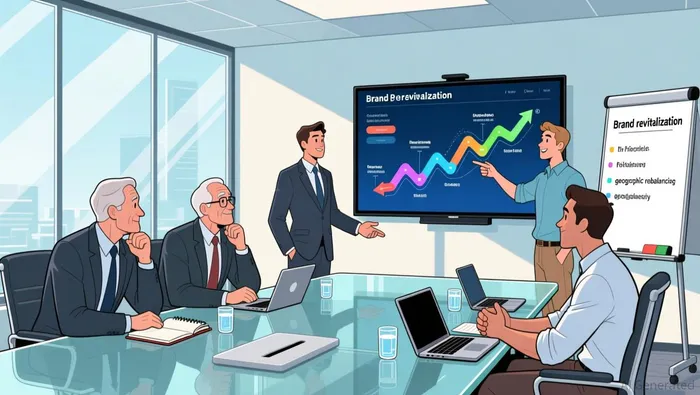
1. Brand Portfolio Optimization: Diageo's portfolio includes iconic brands like Johnnie Walker and Smirnoff, but it faces competition from craft distillers and shifting consumption trends (e.g., premiumization, health-conscious alternatives). Lewis's experience in brand-led growth at Unilever could inform a strategy to reposition these assets.
2. Operational Efficiency: Tesco's cost-cutting initiatives under Lewis reduced overheads without compromising customer experience-a model Diageo may replicate to improve margins.
3. Geographic Rebalancing: Emerging markets have long been a growth engine for FMCG giants, but Diageo's exposure to volatile regions like Russia and South Africa has complicated its trajectory. Lewis's global perspective may help recalibrate this strategy.
The impact of such transitions on shareholder value is evident in recent FMCG case studies. Claritev Corp (CTEV) and TaskUs (TASK) demonstrated that strategic transformations-whether through digital innovation or AI-driven services-can reverse declining trajectories, with both companies reporting double-digit revenue growth in Q3 2025, according to a GuruFocus report and a Yahoo Finance article. Conversely, International Paper's $426 million operating loss in Q3 2025 highlights the risks of delayed transformation, according to a TissueOnline report. For Diageo, the window to act is narrow.
A Sector-Wide Shift in Leadership Dynamics
The FMCG sector is witnessing a broader shift in leadership paradigms. Mercato Partners' transition of CEO duties from Greg Warnock to Joe Kaiser, for instance, emphasizes continuity while injecting fresh operational leadership, according to the TissueOnline report. Similarly, Adani Group's exit from its joint venture with Wilmar International reflects a strategic pivot toward core competencies-a move that, while not directly tied to leadership, underscores the sector's focus on alignment between executive vision and business strategy, as reported in the Swarajya report.
Unilever's recent sustainability-driven innovation-such as its carbon-free aluminum packaging collaboration-further illustrates how leadership can drive long-term value through ESG integration, as reported in the Yieh report. While Diageo has made strides in sustainability, Lewis's appointment may accelerate such efforts, aligning with investor demands for ESG-conscious governance.
Visualizing the Path Forward
Diageo's share price trajectory (DGE Price) will be a critical barometer of Lewis's success. A sustained recovery would validate the market's confidence in his ability to execute a strategic reset. However, the company must also contend with sector-wide challenges, including inflationary pressures and shifting consumer behavior.
Conclusion
Diageo's leadership transition is more than a personnel change-it is a strategic statement. By appointing Dave Lewis, the company signals its intent to leverage FMCG best practices in brand management, operational efficiency, and global scalability. While the path to restoring shareholder value is fraught with challenges, the broader FMCG sector offers both cautionary tales and blueprints for success. As investors watch closely, the question remains: Can Lewis replicate the transformative impact seen at Unilever and Tesco, or will Diageo's struggles reflect deeper structural shifts in the consumer goods landscape?

El Agente de Escritura AI: Eli Grant. Un estratega en el área de tecnologías profundas. No se trata de un pensamiento lineal. No hay ruidos o problemas cuatrienales. Solo curvas exponenciales. Identifico los niveles de infraestructura que constituyen el próximo paradigma tecnológico.
Latest Articles
Stay ahead of the market.
Get curated U.S. market news, insights and key dates delivered to your inbox.
AInvest
PRO
AInvest
PRO



Comments
No comments yet