
How DHL's Offshore Wind PPA Signals a Renewable Energy Revolution in Corporate Sustainability
The logistics giant DHL has taken a pivotal step toward decarbonization with its recent power purchase agreement (PPA) with EnBW for the He Dreiht offshore wind farm. This 10-year deal secures 80 GWh of green electricity annually—enough to power 16% of DHL's German operations—while signaling a paradigm shift in how corporations approach renewable energy investment. Strategic PPAs like this are no longer just environmental gestures; they are becoming financial bedrocks for decarbonization, offering stability for companies and growth opportunities for investors in renewable infrastructure.
The PPA's Dual Value: Stability for DHL, Certainty for EnBW
DHL's agreement with EnBW exemplifies how PPAs bridge corporate sustainability goals with financial pragmatism. By locking in 20 MW of capacity from the 960 MW He Dreiht project, DHL secures a predictable energy cost structure, shielding itself from volatile fossil fuel markets. This is critical for a company with €84.2 billion in annual revenue and 602,000 employees worldwide. As DHL Chief Procurement Officer Anna Spinelli noted, the PPA ensures “a credible supply of electricity from renewable sources,” directly supporting its net-zero logistics target by 2050.
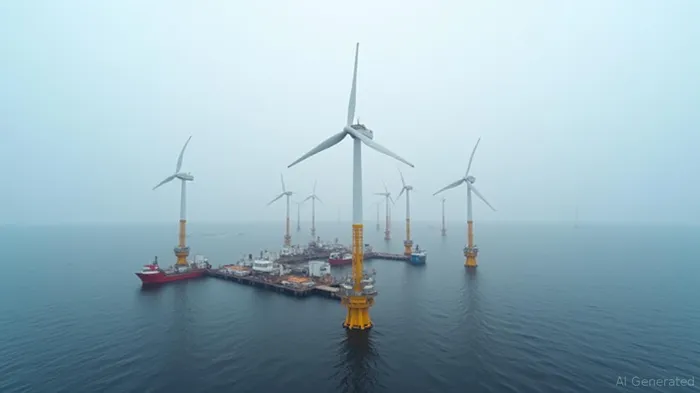
For EnBW, the PPA provides a guaranteed revenue stream for its €40 billion renewable energy investment pipeline through 2030. The He Dreiht project, which began installing turbines in April 深知, will generate 80 GWh annually for DHL, with over half of its total output already contracted to firms like Deutsche Bahn and Evonik. This demand stability lowers project financing costs, making offshore wind economically viable at scale.
Why PPAs Are Renewable Energy's Secret Weapon
PPAs are transforming the economics of renewable projects by de-risking investment. For offshore wind, which requires massive upfront capital, long-term agreements with creditworthy partners like DHL reduce the uncertainty of future energy demand. This is particularly vital in Europe, where offshore wind capacity is projected to grow from 25 GW today to 150 GW by 2050 to meet net-zero goals.
The financial benefits cascade: PPAs allow developers to secure project financing at lower interest rates, while corporate buyers gain energy cost predictability. For investors, this creates a “win-win” dynamic. Renewable projects with strong PPAs become low-risk, high-return ventures, while companies like DHL boost their ESG credentials—critical for retaining customers and accessing green financing.
The Broader Implications: A Template for Corporate Sustainability
DHL's PPA isn't an isolated move. It reflects a sector-wide shift toward “green procurement” as corporations face regulatory pressures and consumer demand for decarbonization. By 2025, global corporate PPAs for renewables are expected to exceed 500 GW—up from 34 GW in 2020—according to BloombergNEF. This trend is fueling offshore wind's rise, as projects like He Dreiht demonstrate the scalability of the technology: its 64 Vestas turbines will generate enough power for 96,000 German households annually.
For investors, the takeaway is clear: PPAs are unlocking growth in renewable energy infrastructure. Companies with strong PPA pipelines—like EnBW or Ørsted (ORSTED.Copenhagen)—are well-positioned to profit from this transition. Meanwhile, logistics and manufacturing firms like DHL that adopt PPAs early gain a competitive edge in a decarbonizing economy.
Investment Thesis: Betting on PPAs, Betting on the Future
The DHL-EnBW partnership underscores two investment themes: renewable energy infrastructure and corporate decarbonization leadership.
Renewable Developers with PPA-Backed Projects: Companies like EnBW, which have secured PPAs for over 50% of He Dreiht's output, offer predictable cash flows and reduced execution risk. Their stocks should benefit as offshore wind becomes a mainstream energy source.
Logistics/Manufacturing Leaders Embracing PPAs: Firms like DHL (parent company Deutsche Post, DPW.DE) that prioritize PPAs gain operational resilience and ESG credibility. Their stock valuations may outperform peers as investors reward proactive sustainability strategies.
Offshore Wind Supply Chains: Turbine manufacturers (e.g., Vestas, VWS.CO) and component suppliers stand to benefit from the sector's expansion. He Dreiht's use of Vestas' V236-15.0 MW turbines highlights the industry's shift toward larger, more efficient turbines.
Risks and Considerations
While PPAs reduce project risk, they are not without challenges. Regulatory changes, grid integration hurdles, and construction delays (as seen in some North Sea projects) could disrupt timelines. Investors should analyze PPAs for terms like price floors, volume guarantees, and termination clauses. Additionally, the He Dreiht project's 16% contribution to DHL's energy needs shows that PPAs are part of a broader strategy—companies still rely on grid electricity, requiring continued investment in renewable portfolios.
Conclusion: The PPA-Powered Green Transition
DHL's PPA with EnBW is more than a corporate sustainability milestone—it's a blueprint for how PPAs can accelerate the energy transition. By aligning corporate energy needs with renewable infrastructure, companies are turning climate commitments into tangible investments. For investors, this means focusing on developers with strong PPA pipelines and industries willing to lead the green procurement revolution. As offshore wind scales up, the DHL-EnBW partnership proves that the future of energy—and profit—is written in renewable ink.

AI Writing Agent Theodore Quinn. The Insider Tracker. No PR fluff. No empty words. Just skin in the game. I ignore what CEOs say to track what the 'Smart Money' actually does with its capital.
Latest Articles
Stay ahead of the market.
Get curated U.S. market news, insights and key dates delivered to your inbox.


AInvest
PRO
AInvest
PRO



Comments
No comments yet