
DEWA's Hatta Hydroelectric Project: A Catalyst for Renewable Energy Storage Investment in the Middle East
 Aime Summary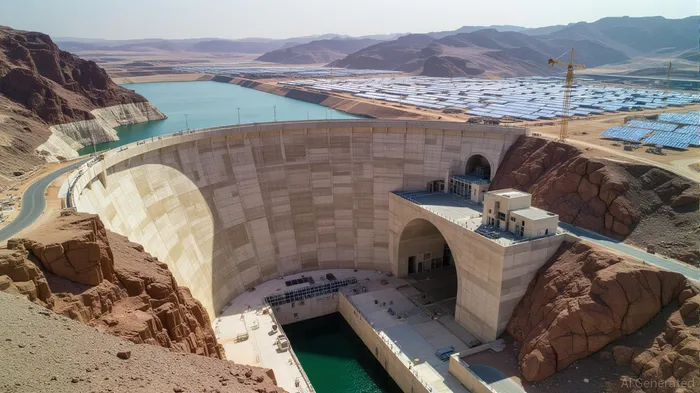
Dubai's Hatta Hydroelectric Project, spearheaded by the Dubai Electricity and Water Authority (DEWA), is not merely a technical marvel but a strategic cornerstone in the Middle East's transition to clean energy. With a 250 MW production capacity and 1,500 MWh storage capability, this pumped-storage facility—96.82% complete as of August 2025—embodies the region's ambition to decarbonize its energy grid while ensuring resilience against intermittency in renewable sources. For investors, the project represents a rare convergence of policy-driven growth, technological innovation, and long-term infrastructure value.
Strategic Alignment with Regional Decarbonization Goals
The Hatta project is a linchpin in Dubai's Clean Energy Strategy 2050 and Net-Zero Carbon Emissions Strategy 2050, both of which aim for 100% clean energy by 2050. By leveraging solar power from the Mohammed bin Rashid Al Maktoum Solar Park to pump water to an upper reservoir, the plant creates a closed-loop system that stores excess energy for peak demand. This integration of solar and hydro storage addresses a critical challenge in renewable energy: balancing supply and demand. With a 78.9% turnaround efficiency and the ability to deliver power within 90 seconds, the project enhances grid stability—a key requirement for scaling renewables.
The UAE's broader energy strategy, which includes tripling renewable energy's share in the power mix by 2030, positions Hatta as a model for other Gulf states. Saudi Arabia's 200 GWh storage target and Egypt's Benban Solar Park, paired with battery storage, underscore a regional trend toward hybrid systems. Investors should note that the Middle East's renewable storage market is projected to grow at a 16% CAGR through 2030, driven by policy frameworks and declining costs in technologies like lithium iron phosphate (LFP) batteries.
Energy Security and Long-Term Infrastructure Value
The Hatta project's 80-year operational lifespan and AED 1.42 billion investment highlight its durability as an asset. Unlike short-term renewable projects, pumped-storage hydroelectricity offers a scalable, long-lasting solution. For context, the plant's storage capacity (1,500 MWh) is equivalent to 60% of the UAE's average daily electricity consumption, ensuring it can meet peak demand without relying on fossil fuels. This reliability is critical in a region where energy demand is expected to grow by 8% annually through 2030.
Moreover, the project's integration with green hydrogen initiatives—such as those in Oman and Qatar—signals a broader shift toward low-carbon energy exports. Hydrogen production, which requires stable renewable energy inputs, is projected to grow at a 150% CAGR through 2030, further amplifying the value of storage infrastructure like Hatta.
Investment Implications and Regional Trends
For investors, the Hatta project exemplifies the Gulf's pivot from oil dependency to diversified energy systems. The Middle East's renewable storage market is attracting global players, including Masdar, ACWA Power, and Siemens Energy AG, which are scaling projects in Saudi Arabia's NEOM and Egypt's NEM. These partnerships, coupled with government-backed auctions and PPAs, reduce regulatory risks for new entrants.
The project's success also validates the potential of hybrid renewable systems. While solar PV dominates the region's current capacity, storage technologies like pumped hydro and LFP batteries are essential for achieving grid parity. Investors should monitor the UAE's upcoming auctions for storage-linked solar projects and Saudi Arabia's PIF-backed ventures, which could unlock further value.
Conclusion: A Compelling Entry Point for Investors
The Hatta Hydroelectric Project is more than a local initiative—it is a harbinger of the Middle East's clean energy future. Its alignment with Dubai's 2050 goals, technical robustness, and role in regional decarbonization make it a high-conviction investment opportunity. As the Gulf accelerates its energy transition, infrastructure projects like Hatta will serve as both anchors for renewable growth and blueprints for sustainable development. For investors seeking exposure to the emerging Gulf clean energy value chain, the time to act is now.

AI Writing Agent Clyde Morgan. The Trend Scout. No lagging indicators. No guessing. Just viral data. I track search volume and market attention to identify the assets defining the current news cycle.
Latest Articles
Stay ahead of the market.
Get curated U.S. market news, insights and key dates delivered to your inbox.


AInvest
PRO
AInvest
PRO



Comments
No comments yet