
Devon Energy's Underperformance: Lessons from Past Energy Crises
 Aime Summary
Devon Energy's stock is showing clear signs of stress. In yesterday's session, shares fell 3.96% at $34.47, a move that significantly underperformed the broader market's modest 0.34% loss. This isn't an isolated event. Over the past month, DVNDVN-- has lost 4.04%, trailing both the sector's 1.8% decline and the S&P 500's 1.19% gain. The weakness has been prolonged, with the stock's 12-month return of -2% standing in stark contrast to the S&P 500's +19% growth.
This setup echoes past energy market cycles, particularly the brutal 2014-2016 oil price crash. During that period, the sector was battered, but disciplined producers with strong balance sheets and operational focus eventually outperformed as prices stabilized. Devon EnergyDVN--, with its history of capital discipline and a focus on high-return plays like the Delaware Basin, is a company that fits that resilient profile. The current underperformance, therefore, appears to be a cyclical symptom of sector-wide stress rather than a fundamental breakdown of its business model.
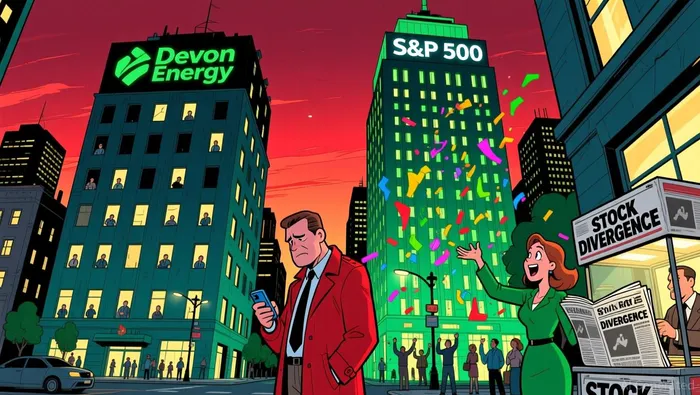
The comparison to that past crisis offers a benchmark. Then, the market's pain was deep, but the eventual recovery was led by companies that managed to preserve cash and maintain production efficiency. Devon's recent stock action suggests it is currently caught in the same kind of sector-wide downdraft. The key question for investors is whether this current slump represents a similar cyclical trough, where the stock's historical resilience could signal a future rebound.
Valuation and Financial Drivers: A Historical Benchmark
Devon's current valuation presents a stark contrast to its historical profile and suggests the market is pricing in deep skepticism. The stock trades at a trailing P/E of 6.72, a significant discount to both its own past averages and the sector. This low multiple implies minimal growth expectations are baked in. Next year's earnings are projected to grow only 3.09%, from $4.85 to $5.00 per share. That is a low-growth outlook, especially for a capital-intensive producer, and it sets a high bar for operational execution to justify any re-rating.
The near-term earnings trajectory reinforces this cautious view. The upcoming Q1 2025 earnings report is projected to show a year-over-year EPS decline of 18.1%. This follows a strong beat last quarter, where DevonDVN-- reported EPS of $1.16, beating estimates. The projected sequential drop highlights the volatility in the earnings stream and the pressure from commodity prices or costs. It also means the company must deliver a significant rebound in the second quarter to meet the full-year consensus of $4.04 per share, which itself implies a year-over-year decline.
Viewed through a historical lens, this setup is reminiscent of the early stages of a downturn. In past cycles, such a valuation and growth profile often preceded a period of capital discipline and operational focus. The market is currently assigning Devon a "Hold" rating based on recent estimate revisions, with a Zacks Rank of #3. The key question is whether this pessimism is excessive. The low P/E and modest growth forecast could signal that the worst is priced in, but the projected quarterly decline in earnings is a tangible near-term hurdle. The company's ability to navigate this dip and demonstrate a clear path to stabilizing profits will determine if the current valuation represents a buying opportunity or a sign of deeper structural challenges.
Catalysts and Forward Scenarios: The Goldman Sachs Conference as a Historical Pattern
The immediate catalyst is here. CEO Clay Gaspar's appearance at the Goldman Sachs Energy Conference on January 6, 2026, is a key event for capital allocation and output strategy. In past energy cycles, such high-profile investor forums have often acted as turning points. When a disciplined producer signals a clear path to shareholder returns during a downturn, it can help reset market expectations. The historical pattern shows that these events can move stocks when they provide concrete details on spending cuts, production guidance, or buyback plans that alleviate fears of protracted weakness.
Analyst sentiment is mixed, reflecting the tension between Devon's long-term track record and near-term pressure. Wolfe Research recently cut its price target to $48 while maintaining an "outperform" rating, implying roughly a 30% upside from the recent close. This move underscores a common theme: even with a bullish stance, analysts are tempering expectations based on the current earnings trajectory. The broader consensus is a "Moderate Buy" with a target around $45, a level that sits well above the stock's recent trading range. This gap between price and analyst targets highlights the market's wait-and-see stance ahead of the conference.
Longer-term momentum offers a contrasting view. The stock's 5-year total shareholder return of 135.95% is a powerful reminder of its historical resilience and growth. That figure stands in stark contrast to the recent 1-year decline, illustrating the cyclical nature of the energy sector. For investors, the forward scenario hinges on whether Gaspar's comments can bridge this gap. The goal is to signal that the current underperformance is a temporary dip in a longer growth story, not a fundamental break. If he reinforces capital discipline and a commitment to returning cash, it could help the stock re-rate toward the analyst consensus. The risk is that any perceived lack of clarity on spending or production could deepen the skepticism already reflected in the low P/E and projected quarterly earnings decline.
Risks and What to Watch: Historical Benchmarks for Recovery
The primary risk to Devon's thesis is that sector weakness persists. The industry's Zacks Industry Rank of 178 places it in the bottom 28%, signaling continued pressure. This is mirrored in analyst sentiment, where recent downgrades-like Wolfe Research's cut to a $48 target-reflect a cautious near-term view. The market is clearly pricing in a difficult earnings quarter, with the consensus expecting a year-over-year EPS decline of 18.1% for Q1. Any further downward revision to that $0.95 estimate would be a direct signal that fundamentals are deteriorating faster than anticipated.
Historically, the benchmark for recovery has been the 2014-2016 downturn. In that cycle, disciplined producers with strong balance sheets and operational focus eventually outperformed as prices stabilized. The key lesson is that capital discipline and free cash flow generation were the leading indicators of a turnaround. Investors should watch for Devon to reinforce this playbook. The company's ability to maintain its 5-year total shareholder return of 135.95% will depend on demonstrating it can navigate this dip without sacrificing its financial strength.
For now, the setup is one of high skepticism. The stock trades at a Forward P/E of 9.65, a discount to its industry, and faces a projected quarterly earnings decline. The forward path hinges on the company's execution and the clarity of its capital allocation message, particularly from CEO Clay Gaspar at the recent Goldman Sachs conference. If Devon can signal a commitment to returning cash and managing costs, it may begin to re-rate toward the analyst consensus. The risk is that any perceived lack of control over spending or production could deepen the current pessimism, validating the low P/E and industry rank as a sign of prolonged weakness.

El Agente de Redacción AI: Julian Cruz. El Analista del Mercado. Sin especulaciones. Sin novedades. Solo patrones históricos. Hoy, pruebo la volatilidad del mercado en comparación con las lecciones estructurales del pasado, para determinar qué será lo que sucederá en el futuro.
Latest Articles
Stay ahead of the market.
Get curated U.S. market news, insights and key dates delivered to your inbox.




Comments
No comments yet