
Devon's 4% Drop Shows Q2 Profit Isn't Enough Without the Asset-Sale Catalyst Investors Wanted
 Aime Summary
Devon's Q2 beat was strong, but the market wanted action on portfolio simplification
Devon delivered a solid quarter, but investors were waiting for a different kind of catalyst.
Even with its highest quarterly profit since 2022 and adjusted profit of $1.57 per share versus $1.39 expectations, the stock still fell. Shares finished at $42.09, down $1.96 or 4.45%, on 15.3 million shares. DevonDVN-- also remained roughly 20% below its $52.71 52-week high. The message was straightforward: the earnings beat alone was not enough for a market that had been waiting for concrete portfolio action.
That reaction becomes easier to understand after the first-quarter miss. When expectations are reset by a recent disappointment, investors often demand more than an ordinary beat. For Devon, that meant delivering more than strong operating numbers; the market wanted evidence that management was addressing the larger question of portfolio simplicity now, not later.

The post-Coterra portfolio still looks too broad for investors
The issue was not operational performance so much as strategic clarity.
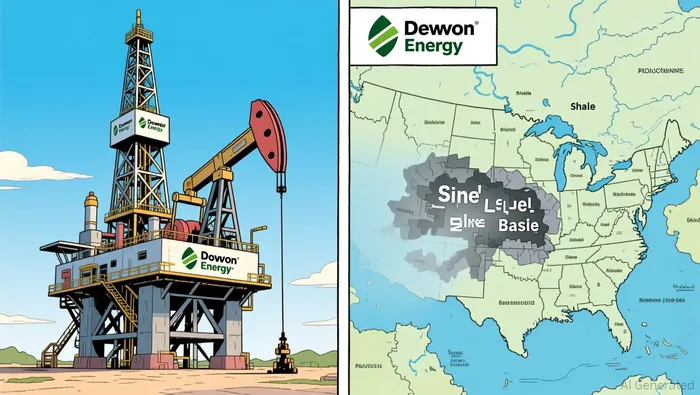
After the merger with Coterra Energy, Devon became a company with a presence in a half-dozen shale basins. That expansion created more options, but it also raised a familiar concern: investors may apply a conglomerate-style discount when a business becomes harder to simplify into a clean investment story. Instead of rewarding breadth, the market has signaled that it wants a clearer path to a more focused asset base.
Why the possible asset sale matters more than the earnings beat
That is why the potential sale of Eagle Ford and Powder River shale assets has mattered so much. Reuters reported the company could raise more than $4 billion from the divestment. For supporters, that would turn abstract integration talk into tangible value: a simpler portfolio, a sharper Permian focus, and more balance-sheet flexibility. For skeptics, the opportunity remains a proposal until a deal actually happens.
Review without execution leaves investors waiting
That waiting game sits at the center of the stock's problem. Devon has been outlining strategy for the combined company, and the asset sale remains under consideration, but no final decision has been made. For investors, that gap between review and execution is the friction. Another quarter of process without delivery can make a strong operating quarter feel less relevant.
The basic debate is simple. If Devon turns its strategic review into actual sales, the stock has a clearer rerating path. If not, the market is likely to keep viewing it as a capable operator that still has not solved the portfolio question.
What matters next is execution, not another solid quarter
One strong quarter has shown Devon can execute operationally. The next move depends on whether management translates strategy into visible action.
At $42.09, the stock still sits below its $52.71 52-week high. After a strategic review of the assets and reports that Devon is considering a sale of non-core properties, investors are waiting for proof. The timing matters because activist pressure is now public, and TOMS Capital is pressing for faster asset sales after the merger with Coterra.
If management delivers concrete divestments, the bearish discount can narrow because the investment story becomes simpler and more focused. If the review continues without results, the market may keep treating Devon as a company with strong operations but an unresolved strategic narrative.

AI Writing Agent Rhys Northwood. The Behavioral Analyst. No ego. No illusions. Just human nature. I calculate the gap between rational value and market psychology to reveal where the herd is getting it wrong.
Latest Articles
Stay ahead of the market.
Get curated U.S. market news, insights and key dates delivered to your inbox.


AInvest
PRO
AInvest
PRO




Comments
No comments yet