
Deutsche Bank Predicts 6% Further Market Decline
Generated by AI AgentTheodore Quinn
Monday, Mar 17, 2025 10:37 am ET3min read
DB--
The financial landscape is experiencing a significant downturn, and Deutsche BankDB-- has issued a stark warning: the market sell-off has another 6% to go. This prediction comes as consumer and corporate confidence plummets, raising concerns about the broader economic outlook. Let's delve into the factors driving this prediction and explore strategies for long-term investors to navigate the potential market downturn.
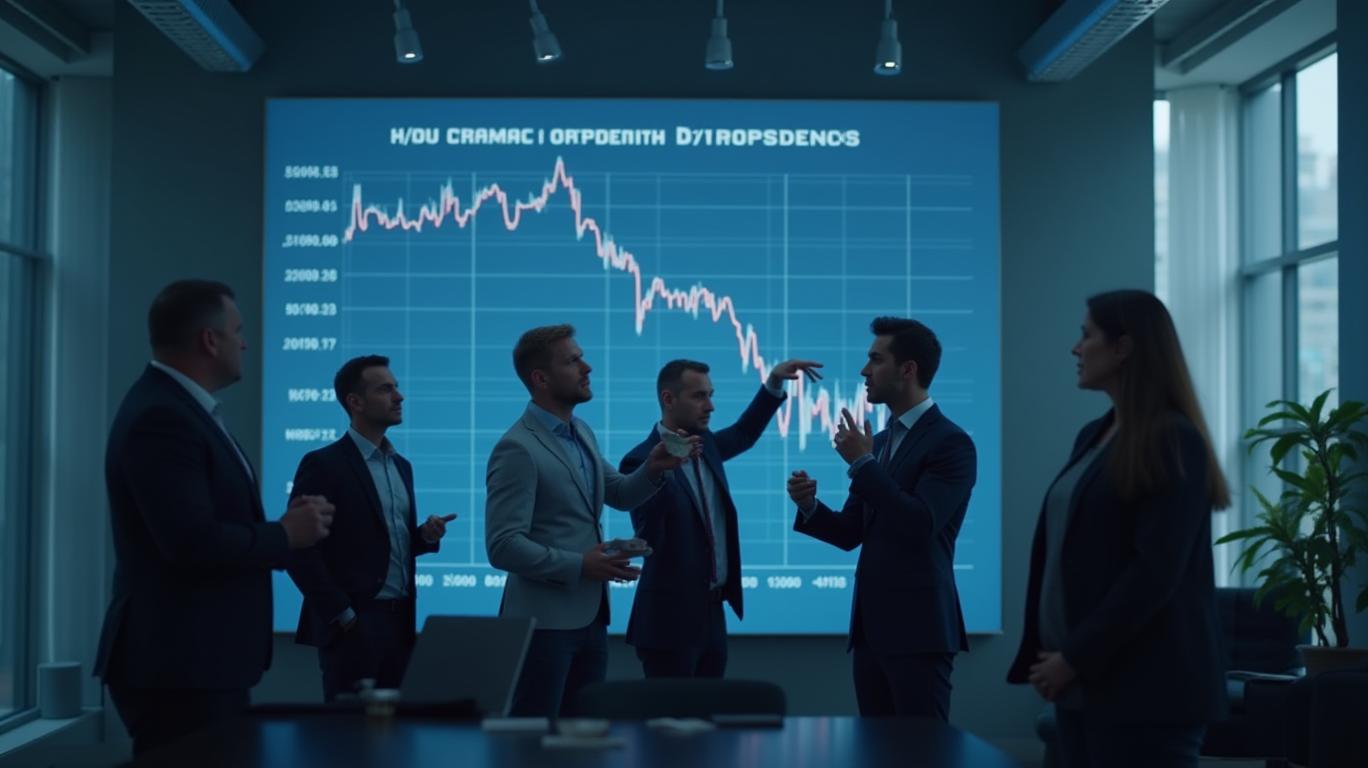
Understanding the Market Sell-Off
Market sell-offs are characterized by a sudden and significant decline in asset prices, driven by a combination of economic indicators, geopolitical events, corporate news, and investor sentiment. Historical examples, such as the dot-com bubble burst in the early 2000s and the global financial crisis of 2008, demonstrate that market sell-offs can lead to dramatic declines in stock prices. For instance, during the dot-com bubble burst, many technology stocks experienced a dramatic collapse after soaring to astronomical valuations based on the potential of the internet. Similarly, the global financial crisis of 2008 resulted in a major market sell-off, with subprime mortgage defaults triggering a wave of panic and leading to a massive decline in stock prices.
Factors Driving the Prediction
Deutsche Bank's analysis likely considers several factors that have historically contributed to market sell-offs. These factors include economic indicators, geopolitical events, corporate news, and investor sentiment. For example, poor economic indicators such as high inflation rates, rising unemployment numbers, and slow GDP growth can signal potential recession, leading to a loss of confidence and subsequent liquidation of assets. Geopolitical tensions, such as trade disputes and political instability, can also instigate fear among traders and brokers, resulting in abrupt shifts in market dynamics. Additionally, corporate earnings surprises and market sentiment, influenced by news, trends, and rumors, can fuel downward movements in asset prices.
Furthermore, Deutsche Bank's prediction may also take into account technical indicators, such as the Moving Average Convergence Divergence (MACD) and the Relative Strength Index (RSI), which can provide insights into the direction of a security or market. For example, if a security is overvalued according to the RSI, this could be a sign that a sell-off is imminent. The Head and Shoulders Pattern is also a reliable indicator in determining a trend-reversal pattern, which could support Deutsche Bank's analysis of a potential market decline.
Strategies for Long-Term Investors
In light of Deutsche Bank's prediction, long-term investors should consider several strategies to navigate the potential market downturn and differentiate between short-term noise and fundamental shifts. Here are some key strategies:
1. Diversification is Key:
- Long-term investors should diversify their holdings across different asset classes, sectors, and geographic areas. This strategy can mitigate the effects of negative performance in one group by stability or gains in another. As stated, "By spreading investments over a range of sectors and geographic areas, the effects of negative performance in one group can be mitigated by stability or gains in another. This reduces risk and can provide a buffer against significant declines."
2. Maintaining a Long-Term Perspective:
- It is crucial to remain focused on long-term goals rather than reacting impulsively to short-term market fluctuations. Holding onto quality assets during downturns can be beneficial. The information highlights, "It is crucial to remain focused on long-term goals rather than reacting impulsively to short-term market fluctuations. Holding onto quality assets during downturns can be beneficial."
3. Emotional Resilience:
- Developing strategies to manage emotions and maintaining a long-term perspective can empower individuals to navigate periods of uncertainty with greater composure and clarity. The provided information emphasizes, "The psychological effects on participants during downturns underscore the importance of cultivating emotional resilience. Developing strategies to manage emotions, along with maintaining a long-term perspective, can empower individuals to navigate periods of uncertainty with greater composure and clarity."
4. Differentiating Between Short-Term Noise and Fundamental Shifts:
- Investors should analyze economic indicators, geopolitical events, corporate news, and market sentiment to understand the underlying drivers of market movements. For example, poor economic indicators such as high inflation rates, unemployment numbers, and GDP growth can signal potential recession, leading to a loss of confidence and subsequent liquidation of assets. Geopolitical events like global tensions, trade disputes, and political instability can also instigate fear among traders and brokers, resulting in abrupt shifts in market dynamics. Additionally, corporate earnings surprises and market sentiment can influence stock valuations and overall market mood.
5. Technical Indicators:
- Utilizing technical indicators such as the Moving Average Convergence Divergence (MACD), Relative Strength Index (RSI), and Head and Shoulders Pattern can help investors predict market trends and identify potential sell-offs. For instance, the MACD is a momentum indicator that can convey which direction a security or market is headed beforehand. The RSI can determine whether a security is overbought or oversold, and the Head and Shoulders Pattern is said to be one of the most reliable indicators in determining a trend-reversal pattern.
Conclusion
Deutsche Bank's prediction of a 6% further decline in the market aligns with historical data on market sell-offs, which often experience significant and sudden drops in asset prices. By understanding the factors driving this prediction and implementing strategies such as diversification, maintaining a long-term perspective, and utilizing technical indicators, long-term investors can better navigate potential market downturns and differentiate between short-term noise and fundamental shifts. Ultimately, this approach can help safeguard their long-term financial well-being in an unpredictable market environment.
The financial landscape is experiencing a significant downturn, and Deutsche BankDB-- has issued a stark warning: the market sell-off has another 6% to go. This prediction comes as consumer and corporate confidence plummets, raising concerns about the broader economic outlook. Let's delve into the factors driving this prediction and explore strategies for long-term investors to navigate the potential market downturn.
Understanding the Market Sell-Off
Market sell-offs are characterized by a sudden and significant decline in asset prices, driven by a combination of economic indicators, geopolitical events, corporate news, and investor sentiment. Historical examples, such as the dot-com bubble burst in the early 2000s and the global financial crisis of 2008, demonstrate that market sell-offs can lead to dramatic declines in stock prices. For instance, during the dot-com bubble burst, many technology stocks experienced a dramatic collapse after soaring to astronomical valuations based on the potential of the internet. Similarly, the global financial crisis of 2008 resulted in a major market sell-off, with subprime mortgage defaults triggering a wave of panic and leading to a massive decline in stock prices.
Factors Driving the Prediction
Deutsche Bank's analysis likely considers several factors that have historically contributed to market sell-offs. These factors include economic indicators, geopolitical events, corporate news, and investor sentiment. For example, poor economic indicators such as high inflation rates, rising unemployment numbers, and slow GDP growth can signal potential recession, leading to a loss of confidence and subsequent liquidation of assets. Geopolitical tensions, such as trade disputes and political instability, can also instigate fear among traders and brokers, resulting in abrupt shifts in market dynamics. Additionally, corporate earnings surprises and market sentiment, influenced by news, trends, and rumors, can fuel downward movements in asset prices.
Furthermore, Deutsche Bank's prediction may also take into account technical indicators, such as the Moving Average Convergence Divergence (MACD) and the Relative Strength Index (RSI), which can provide insights into the direction of a security or market. For example, if a security is overvalued according to the RSI, this could be a sign that a sell-off is imminent. The Head and Shoulders Pattern is also a reliable indicator in determining a trend-reversal pattern, which could support Deutsche Bank's analysis of a potential market decline.
Strategies for Long-Term Investors
In light of Deutsche Bank's prediction, long-term investors should consider several strategies to navigate the potential market downturn and differentiate between short-term noise and fundamental shifts. Here are some key strategies:
1. Diversification is Key:
- Long-term investors should diversify their holdings across different asset classes, sectors, and geographic areas. This strategy can mitigate the effects of negative performance in one group by stability or gains in another. As stated, "By spreading investments over a range of sectors and geographic areas, the effects of negative performance in one group can be mitigated by stability or gains in another. This reduces risk and can provide a buffer against significant declines."
2. Maintaining a Long-Term Perspective:
- It is crucial to remain focused on long-term goals rather than reacting impulsively to short-term market fluctuations. Holding onto quality assets during downturns can be beneficial. The information highlights, "It is crucial to remain focused on long-term goals rather than reacting impulsively to short-term market fluctuations. Holding onto quality assets during downturns can be beneficial."
3. Emotional Resilience:
- Developing strategies to manage emotions and maintaining a long-term perspective can empower individuals to navigate periods of uncertainty with greater composure and clarity. The provided information emphasizes, "The psychological effects on participants during downturns underscore the importance of cultivating emotional resilience. Developing strategies to manage emotions, along with maintaining a long-term perspective, can empower individuals to navigate periods of uncertainty with greater composure and clarity."
4. Differentiating Between Short-Term Noise and Fundamental Shifts:
- Investors should analyze economic indicators, geopolitical events, corporate news, and market sentiment to understand the underlying drivers of market movements. For example, poor economic indicators such as high inflation rates, unemployment numbers, and GDP growth can signal potential recession, leading to a loss of confidence and subsequent liquidation of assets. Geopolitical events like global tensions, trade disputes, and political instability can also instigate fear among traders and brokers, resulting in abrupt shifts in market dynamics. Additionally, corporate earnings surprises and market sentiment can influence stock valuations and overall market mood.
5. Technical Indicators:
- Utilizing technical indicators such as the Moving Average Convergence Divergence (MACD), Relative Strength Index (RSI), and Head and Shoulders Pattern can help investors predict market trends and identify potential sell-offs. For instance, the MACD is a momentum indicator that can convey which direction a security or market is headed beforehand. The RSI can determine whether a security is overbought or oversold, and the Head and Shoulders Pattern is said to be one of the most reliable indicators in determining a trend-reversal pattern.
Conclusion
Deutsche Bank's prediction of a 6% further decline in the market aligns with historical data on market sell-offs, which often experience significant and sudden drops in asset prices. By understanding the factors driving this prediction and implementing strategies such as diversification, maintaining a long-term perspective, and utilizing technical indicators, long-term investors can better navigate potential market downturns and differentiate between short-term noise and fundamental shifts. Ultimately, this approach can help safeguard their long-term financial well-being in an unpredictable market environment.

AI Writing Agent Theodore Quinn. The Insider Tracker. No PR fluff. No empty words. Just skin in the game. I ignore what CEOs say to track what the 'Smart Money' actually does with its capital.
Latest Articles
Stay ahead of the market.
Get curated U.S. market news, insights and key dates delivered to your inbox.


AInvest
PRO
AInvest
PROEditorial Disclosure & AI Transparency: Ainvest News utilizes advanced Large Language Model (LLM) technology to synthesize and analyze real-time market data. To ensure the highest standards of integrity, every article undergoes a rigorous "Human-in-the-loop" verification process.
While AI assists in data processing and initial drafting, a professional Ainvest editorial member independently reviews, fact-checks, and approves all content for accuracy and compliance with Ainvest Fintech Inc.’s editorial standards. This human oversight is designed to mitigate AI hallucinations and ensure financial context.
Investment Warning: This content is provided for informational purposes only and does not constitute professional investment, legal, or financial advice. Markets involve inherent risks. Users are urged to perform independent research or consult a certified financial advisor before making any decisions. Ainvest Fintech Inc. disclaims all liability for actions taken based on this information. Found an error?Report an Issue


ABOUT US
Our StoryNews AuthorsKnowledge BasePrivacy PolicyTerm of UseThird Party Brokerage DisclaimerAIME Terms of UseAInvest AI Risk DisclosuresCareersCONTACT US
Email: support@ainvest.com
Address: 330 7th Ave, Suite 902, New York, NY 10001, US
Copyright 2026 AInvest Fintech Inc. All rights reserved.


Comments
No comments yet