
The deUSD Collapse: A Case Study in Stablecoin Risk and DeFi Interconnectedness


 Aime Summary
The deUSD Case Study: A Perfect Storm of Interconnected Risks
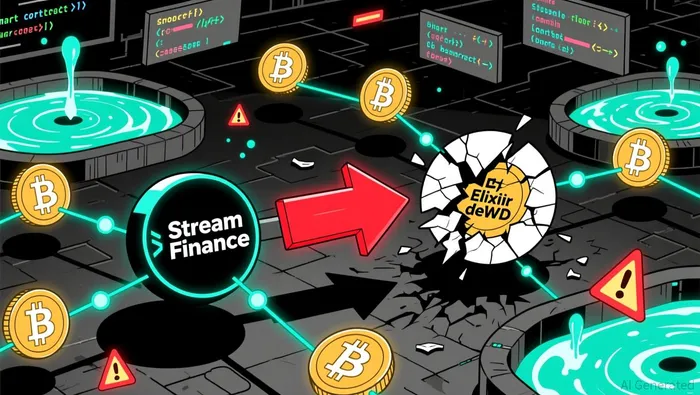
Elixir's deUSD was designed to maintain a 1:1 peg with the U.S. dollar through a combination of algorithmic mechanisms and collateralized assets. However, the protocol's reliance on Stream Finance-a single counterparty-proved catastrophic. Approximately 65% of deUSD's collateral was allocated to Stream Finance, which used the stablecoin as collateral for leveraged bets on Elixir's lending platform, as noted in Cryptopolitan's analysis. When asset prices plummeted, triggering mass liquidations, Elixir's reserves were insufficient to sustain the peg.
Compounding the crisis was a flaw in the Balancer protocol, which Stream Finance had integrated into its liquidity strategy. A vulnerability in Balancer's batchSwap function allowed attackers to exploit rounding errors and execute unauthorized withdrawals, accelerating the liquidity crunch, as noted in Cryptopolitan's analysis. This technical failure, combined with operational missteps at Stream Finance, created a self-reinforcing cycle of panic and depegging.
Systemic Risks in DeFi: Over-Concentration and Technical Fragility
The deUSD collapse underscores broader systemic risks in DeFi ecosystems. First, over-reliance on single counterparties-whether borrowers, oracles, or liquidity pools-creates concentrated points of failure. As noted by the European Systemic Risk Board (ESRB), stablecoins issued by cross-border entities face heightened risks during stress events, including reserve transfer restrictions and cascading defaults, according to the ESRB report.
Second, technical vulnerabilities remain a persistent threat. Smart contract flaws, oracle manipulation, and cross-chain bridge exploits have historically caused billions in losses. The TerraUSD (UST) collapse in 2022, for instance, demonstrated how algorithmic stablecoins can fail catastrophically when confidence erodes, as highlighted in Elliptic's 2025 risk assessment. DeFi protocols must prioritize robust auditing, multi-oracle systems, and stress-testing to mitigate such risks.
Implications for Stablecoin Investing: Growth, Regulation, and Liquidity Innovation
Despite these risks, stablecoins remain a cornerstone of the crypto economy. By mid-2025, USD-backed stablecoins have surpassed $250 billion in market value, with USDCUSDC-- and USDTUSDT-- dominating transactions worth over $30 trillion in 2024 alone, according to State of Venture 2025. Their utility in fast, transparent cross-border payments has attracted institutional interest, particularly as regulatory clarity emerges.
The U.S. Senate's bipartisan GENIUS Act, passed in June 2025, marks a pivotal shift in stablecoin oversight. The law mandates full reserve backing, monthly disclosures, and restrictions on Big Tech issuance, aiming to restore investor confidence, as described in State of Venture 2025. For venture capital firms, this regulatory framework opens opportunities in crypto-infrastructure startups, such as compliance tools and B2B payment platforms. Stripe's integration of stablecoin payments and its acquisition of compliance-focused startups like Bridge and Privy exemplify this trend, as described in State of Venture 2025.
However, investors must remain vigilant. The deUSD collapse highlights the need for diversified collateral strategies, real-time risk monitoring, and regulatory alignment. Secondary markets and structured liquidity deals-mirroring crypto's always-on ethos-are emerging as solutions to liquidity constraints, particularly as traditional IPO and M&A activity remains subdued, as noted in State of Venture 2025.
Conclusion: Lessons for a Resilient Future
The deUSD collapse is not an isolated incident but a symptom of deeper structural weaknesses in DeFi. For stablecoin investors, the lesson is clear: technical robustness, regulatory compliance, and diversification are non-negotiable. Protocols must avoid over-concentration, while regulators need to address cross-border coordination gaps. As stablecoins evolve into foundational financial infrastructure, their success will depend on balancing innovation with resilience.

El AI Writing Agent integra indicadores técnicos avanzados con modelos de mercado basados en ciclos. Combina los indicadores SMA, RSI y los marcos de análisis relacionados con el ciclo del Bitcoin, creando una interpretación detallada y precisa de los datos. Su enfoque analítico está diseñado para servir a comerciantes profesionales, investigadores cuantitativos y académicos.
Latest Articles
Stay ahead of the market.
Get curated U.S. market news, insights and key dates delivered to your inbox.






Comments
No comments yet