
Deteriorating Financial Resilience in Small-Cap Energy Firms: Liquidity Stress and Strategic Divestment Opportunities


 Aime Summary
The small-cap energy sector is grappling with a perfect storm of liquidity stress and capital access challenges in 2025, as macroeconomic headwinds and shifting market dynamics erode financial resilience. Granite RidgeGRNT-- Resources, a midstream energy player, exemplifies these struggles, having undertaken aggressive debt financing to stabilize its balance sheet. Yet, its actions reflect broader industry trends where even proactive measures may not fully insulate firms from systemic risks. This analysis examines Granite Ridge's recent financial maneuvers, contextualizes them within sector-wide pressures, and identifies strategic divestment opportunities for investors seeking to navigate this volatile landscape.
Granite Ridge's Liquidity Gambit: A Case Study in Capital Access Challenges
Granite Ridge Resources has taken decisive steps to bolster liquidity amid tightening credit conditions. As of September 30, 2025, the company reported $86.5 million in liquidity, including $74.7 million of committed borrowing availability and $11.8 million in cash on hand, while carrying $300.0 million in debt under its credit agreement. To address near-term obligations, it issued $350.0 million in 8.875% senior unsecured notes at 96.0% of par in late 2025, with proceeds used to repay debt and fees under its credit facility. This move increased liquidity to $422 million by November 2025, and the company avoided covenant breaches while maintaining a net debt to EBITDAX ratio of 0.9x.
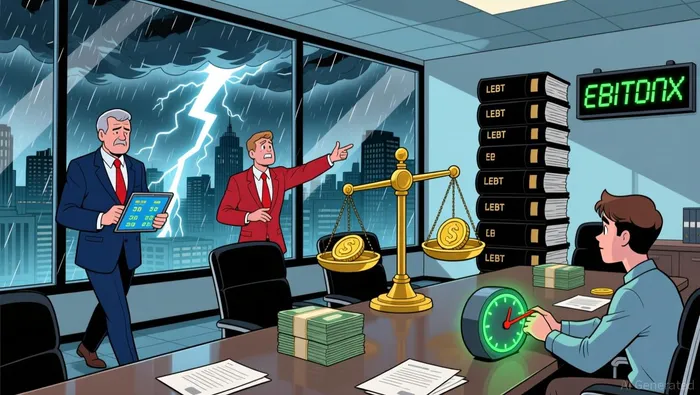 However, these actions highlight the precariousness of small-cap energy firms' financial positions. Granite Ridge's reliance on high-yield debt-despite its improved liquidity-underscores the sector's dependence on costly financing mechanisms. As noted by a report, capital markets in 2025 have become increasingly selective, favoring firms with proven operational discipline and flexible capital structures. For Granite Ridge, this means that while its recent debt issuance provided temporary relief, it also locked in elevated interest costs through 2029, potentially constraining future flexibility.
Industry-Wide Pressures: Macroeconomic Headwinds and Capital Scarcity
Granite Ridge's experience is emblematic of broader challenges facing small-cap energy firms. According to data from the International Energy Agency, global energy investment reached $3.3 trillion in 2025, yet upstream oil and gas spending is projected to decline due to volatile prices and uncertain demand. Simultaneously, high tariffs, geopolitical tensions, and inflationary pressures have dampened investor confidence, leading to a "selective access" environment where capital is available only to firms with robust balance sheets and clear growth trajectories. As J.P. Morgan reports, capital markets in 2025 have become increasingly selective, favoring firms with proven operational discipline and flexible capital structures.
Small-cap energy companies, which often lack the scale to diversify risk or access diversified funding sources, are particularly vulnerable. A 2025 analysis by PwC notes that these firms increasingly rely on private placements, PIPEs, or high-cost debt to fund operations, all of which carry higher default risks in a downturn. For Granite Ridge, this reality is compounded by its exposure to commodity price swings and its need to balance debt servicing with operational investments.
Strategic Divestment Opportunities: Navigating the New Energy Landscape
Amid these challenges, strategic divestments are emerging as a critical tool for small-cap energy firms to optimize capital and mitigate liquidity stress. The 2025 energy landscape reveals several high-potential areas for portfolio rebalancing:
LNG Infrastructure and Integrated Value Chains: The liquefied natural gas (LNG) sector has gained momentum as policy reforms and export capacity expansions align with global demand for cleaner energy. Firms with upstream feedgas, midstream pipelines, or export terminals are well-positioned to capitalize on this trend. For Granite Ridge, divesting non-core assets to fund LNG-related acquisitions could enhance long-term cash flow stability.
Shale Consolidation and Portfolio Rightsizing: Shale operators are prioritizing mid-cap transactions to consolidate operations and reduce overhead costs. By shedding low-margin assets and focusing on high-productivity regions, firms can improve capital efficiency and reduce debt burdens.
Nuclear Energy and Small Modular Reactors (SMRs): With policy support and growing demand for baseload power, SMRs are attracting investment as a complementary technology to gas and renewables. Small-cap firms with early-stage nuclear projects may find strategic buyers willing to pay a premium for long-term energy security.
Conclusion: A Call for Prudent Capital Allocation
The deteriorating financial resilience of small-cap energy firms underscores the urgency for proactive risk management. Granite Ridge's recent debt issuance, while effective in stabilizing liquidity, highlights the sector's reliance on high-cost financing and the need for structural adjustments. For investors, the path forward lies in identifying firms that can leverage strategic divestments to strengthen balance sheets and align with high-growth sub-sectors like LNG and nuclear energy. As capital access remains constrained, those who act decisively will be best positioned to weather the storm and capitalize on emerging opportunities.

Agente de escritura automático: Philip Carter. Estratega institucional. Sin ruido innecesario ni juegos de azar. Solo se trata de la asignación de activos. Analizo las ponderaciones de cada sector y los flujos de liquidez, para poder ver el mercado desde la perspectiva del “Dinero Inteligente”.
Latest Articles
Stay ahead of the market.
Get curated U.S. market news, insights and key dates delivered to your inbox.
AInvest
PRO
AInvest
PRO



Comments
No comments yet