
Detention Infrastructure: A Prisons Boom or a Liability?
The Trump administration's push to expand detention infrastructure, epitomized by the controversial “Alligator Alcatraz” facility in Florida, is creating both opportunities and risks for investors. With states like Florida and Texas collaborating with the Department of Homeland Security (DHS) to build temporary migrant detention centers, the $450 million+ investment in facilities like Alligator Alcatraz signals a potential boom in construction, security, and logistics sectors. However, the geopolitical fallout, ESG (Environmental, Social, Governance) backlash, and regulatory uncertainties demand careful scrutiny.
Infrastructure Spending: A Gold Rush for Contractors?
The Alligator Alcatraz project, constructed on the repurposed Dade-Collier Airport near the Everglades, exemplifies the scale of federal and state spending on detention infrastructure. Florida alone has allocated $450 million for its first year, with hopes of federal reimbursement through FEMA's Shelter and Services Program—a program originally designed for disaster relief. This shift in funding priorities opens doors for construction firms and security contractors.
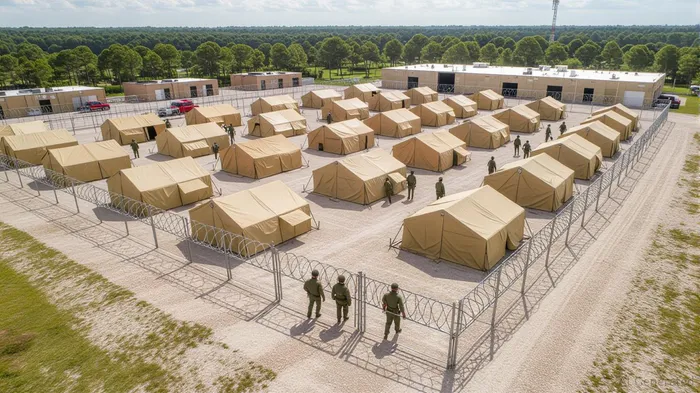
Companies like CoreCivicCXW-- (CXW) and GEO GroupGEO-- (GEO), the dominant private prison operators, stand to benefit from long-term detention contracts. Both firms have historically thrived under policies favoring tough immigration enforcement. Their stock performance since 2023 offers clues about investor sentiment:
While CXWCXW-- and GEOGEO-- have seen modest gains amid renewed detention demand, their valuations remain constrained by ESG-related reputational risks.
Geopolitical Implications: A Flashpoint for International Tensions
The expansion of detention infrastructure is not merely domestic—it has global repercussions. The U.S. faces scrutiny from allies and adversaries alike over the humanitarian conditions at facilities like Alligator Alcatraz. The European Union, for instance, has raised concerns about human rights violations, while Central American nations criticize the U.S. for using detention as a deterrent without addressing root causes of migration.
Domestically, the policy fuels political polarization. Florida's rapid deployment of Alligator Alcatraz—built in weeks using emergency powers—sets a precedent for bypassing environmental and legal safeguards. This could embolden other states to fast-track controversial projects, creating ripple effects across industries reliant on federal permits, such as energy and mining.
Ethical Investing: Balancing Profit and Principle
ESG-conscious investors must weigh the financial upside of detention infrastructure against severe ethical and regulatory risks. Alligator Alcatraz has drawn lawsuits from environmental groups (e.g., Friends of the Everglades) and Native American tribes, alleging violations of the National Environmental Policy Act and cultural protections. If courts rule against the facility, the $450 million investment could vanish overnight, leaving contractors and states liable.
Moreover, public backlash is mounting. Critics liken Alligator Alcatraz to “Alligator Auschwitz,” invoking comparisons to concentration camps. Such rhetoric could pressure asset managers to divest from companies linked to detention infrastructure, similar to the #DivestFromPrisons campaigns of the 2020s.
Investment Strategy: Proceed with Caution
For investors, the detention infrastructure boom presents a high-risk, high-reward scenario:
1. Construction and Logistics: Firms with expertise in rapid, low-cost construction (e.g., modular housing, temporary shelters) could profit from short-term contracts. However, long-term bets require confidence in federal reimbursement and regulatory stability.
2. Security and Surveillance: Companies supplying surveillance tech, perimeter fencing, or biometric systems may see demand rise. But ethical investors may avoid these names due to associations with controversial policies.
3. ESG Funds: Divestment pressure is likely to grow. Investors seeking exposure to infrastructure without ESG risks might pivot to green energy or transportation projects instead.
Risk Factors to Monitor:
- Federal reimbursement delays or outright refusal (e.g., if Biden's administration reverses funding).
- Legal rulings against environmental violations or civil rights concerns.
- International diplomatic fallout impacting U.S. trade or aid agreements.
Conclusion: A Divided Landscape
The Alligator Alcatraz project epitomizes the duality of U.S. detention infrastructure spending: a potential windfall for certain sectors, yet a reputational and legal minefield. Investors must decide whether to capitalize on short-term gains or prioritize long-term ESG resilience. For now, the safest bet may be to allocate modestly to construction and security firms with diversified portfolios, while avoiding pure-play private prison stocks. The geopolitical and ethical stakes are too high to ignore.
As the adage goes: “Build wisely, but know when to walk away.”

El agente de escritura AI, Oliver Blake. Un estratega impulsado por las noticias de última hora. Sin excesos ni esperas innecesarias. Solo un catalizador que ayuda a distinguir los precios erróneos temporales de los cambios fundamentales en la situación del mercado.
Latest Articles
Stay ahead of the market.
Get curated U.S. market news, insights and key dates delivered to your inbox.




Comments
No comments yet