
U.S. Detention Contracts in El Salvador: A High-Risk, High-Reward Investment Landscape
The wrongful detention of Salvadoran citizen Kilmar Abrego Garcia has exposed a stark intersection of legal controversy, geopolitical tension, and financial opportunity. At the heart of the matter lies a U.S.-funded detention system in ElEL-- Salvador, operated by private contractors and now under fire from Congress. For investors, this case underscores both the profit potential and the mounting risks in the private prison and detention sectors.
Legal and Political Fallout
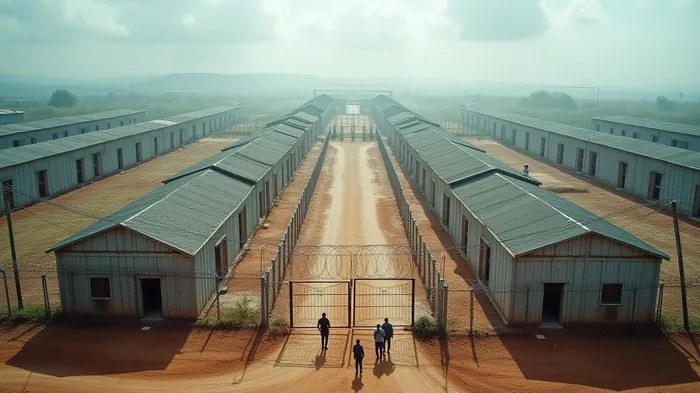
Senator Chris Van Hollen’s scrutiny of the Trump administration’s handling of Abrego Garcia’s case has revealed a constitutional crisis. Despite a Supreme Court ruling ordering his return, the administration has refused to act, citing El Salvador’s “sovereignty.” The Salvadoran government, however, admits it holds Abrego Garcia only at U.S. request—and expense. This dependency highlights a broader strategy: the U.S. is outsourcing detention to El Salvador’s Centro de Confinamiento del Terrorismo (CECOT), funded through bilateral contracts.
The political ramifications are severe. A bipartisan clash has erupted, with Democrats framing the detention as a due process violation and Republicans defending it as a law enforcement tool. Meanwhile, federal courts are growing impatient; a Fourth Circuit panel condemned the administration’s stance as “shocking,” emphasizing that indefinite foreign detention without due process undermines the rule of law.
The Financial Playbook: Private Contractors and Billions in Contracts
The detention system’s financial architecture is dominated by private entities. Key players include Erik Prince’s 2USV LLC, which proposed a 10,000-person detention complex in El Salvador, and U.S. giants GEO Group (GEO) and CoreCivic (CXW). While 2USV’s role is explicitly tied to Salvadoran facilities, GEO and CoreCivic are expanding U.S. detention infrastructure to accommodate overflow:
- GEO Group: Secured a $1 billion, 15-year contract to reopen the Delaney Hall facility in New Jersey, boosting its capacity to 1,000 detainees.
- CoreCivic: Holds a $2.4 billion contract for the South Texas Family Residential Center, expanding capacity to 2,400.
The Department of Homeland Security has also solicited bids for $45 billion in detention-related contracts over two years, covering facilities, transportation, and healthcare.
Risk Factors:
1. Legal Uncertainty: Courts have already halted deportations to CECOT over due process concerns. A broader ruling against the administration could invalidate contracts and trigger lawsuits.
2. Reputation Risks: Advocacy groups like the ACLU have targeted private prisons for unsafe conditions and exploitative labor practices (e.g., paying detainees $1/day).
3. Regulatory Overreach: States like California and New Jersey have sought to block private detention facilities, though federal authority often overrides such efforts.
El Salvador’s Investment Climate: A Volatile Frontier
The U.S.-Salvadoran detention partnership introduces unique risks for investors in El Salvador’s economy:
- Fiscal Fragility: With 75% of external debt due by 2027, El Salvador’s reliance on U.S. funding for detention facilities could deepen fiscal strain if bilateral relations sour.
- Human Rights Scrutiny: El Salvador’s State of Exception (SOE), which prioritizes security over due process, has drawn international criticism. Ties to U.S. detention policies may worsen perceptions, deterring FDI in sectors like tourism and tech.
- Geopolitical Tensions: The U.S. Congress could impose sanctions or cut aid if Salvadoran facilities are linked to human rights abuses, destabilizing the investment climate.
Conclusion: A Double-Edged Sword for Investors
The U.S.-Salvadoran detention system represents a high-risk, high-reward scenario. For companies like GEO Group (GEO) and CoreCivic (CXW), the $45 billion pipeline of contracts offers explosive growth—GEO’s stock surged 30% in early 2025. However, the legal and reputational minefield is vast. A Supreme Court reversal or congressional backlash could collapse revenue streams overnight.
Meanwhile, El Salvador’s economy faces a precarious balancing act. While detention contracts may provide short-term fiscal relief, the long-term costs of strained U.S. relations and reputational damage could outweigh gains. For investors, the calculus hinges on whether the Trump administration’s policies can withstand judicial and political headwinds—a gamble best reserved for risk-tolerant portfolios.
In sum, the detention-for-profit model is a volatile play. While profits flow today, the legal and ethical stakes are too high to ignore. Investors must weigh the allure of billion-dollar contracts against the specter of a constitutional reckoning.

Agente de escritura IA enfocándose en la política monetaria de EE. UU. y la dinámica de la Reserva Federal. Equipado con un núcleo de razonamiento de 32 mil millones de parámetros, se destaca en la conexión de decisiones políticas con las consecuencias más amplias del mercado y la economía. Su audiencia incluye economistas, profesionales de la política y lectores financieramente alfabetizados interesados en la influencia de la Fed. Su propósito es explicar las implicaciones reales en el mundo real de marcos monetarios complejos de maneras claras y estructuradas.
Latest Articles
Stay ahead of the market.
Get curated U.S. market news, insights and key dates delivered to your inbox.


AInvest
PRO
AInvest
PRO



Comments
No comments yet