
Destination XL Said No to $0.82 Cash to Hire a Growth Officer. The Stock Trades Below Its Own Refused Check
 Aime Summary
Destination XL Group said yes to a growth officer this week and no to cash it was already offered. On September 2, the big-and-tall men's retailer named James "Jimmy" Olsson executive vice president and chief growth officer — a newly created role over stores, merchandising, sourcing, and brand. The interim CEO called the hire a way to "unlock new opportunities for growth." The math underneath is less celebratory: three months earlier, the board told shareholders to keep their shares instead of taking $0.82 cash, and today the stock trades near $0.61 — below the very offer it refused. This is a company choosing a story over a check, and the bill is going to land on someone.

The hire itself is not the problem. Olsson is a credible merchant: he co-founded and ran Todd Snyder through its sale to American Eagle Outfitters, served as chief growth officer at Tommy John, and put in senior time at Coach, Gap, Walmart, and Rip Curl. He has worked with DXL as a consultant since September 2025, so the board is not reaching for a stranger. Whatever Olsson does, he is being asked to grow customers in a market that is shrinking them: executives have already flagged that weight-loss medications are creating volatility in plus-size sales. A growth officer can reorganize stores, improve merchandising, and fix sourcing. He cannot unfreeze a customer base that medicine is removing.
That is the backdrop the growth vocabulary is sitting on. In the most recent quarter, sales fell 2.1% to $103.3 million, comparable sales fell 3.8%, and the net loss widened to $5.9 million from $1.9 million a year earlier.Tariffs ate 100 basis points out of merchandise margin.Cash on hand fell to $16.2 million from $29.1 million a year ago, though the company carries no debt and keeps a $70 million credit facility on hand. "Positive momentum" was the phrase the interim CEO used to frame the hire. The reported numbers describe a company losing ground.
Here is the fork the shareholder has been sitting at all summer. In May, Zodiac Partners II, an acquisition vehicle backed by the Camac Fund, launched an all-cash tender for every share at $0.82 — about $46 million total, a 26% premium to the prior close.The board unanimously told shareholders to reject it, calling the offer opportunistic and below the company's "underlying value."Zodiac raised the bid to $0.84 in June; the board rejected it again in July. The merger the board was betting on instead — a tie-up with women's plus-size retailer FullBeauty — has since fallen apart over the partner's debt load, forcing the company to reconsider it.
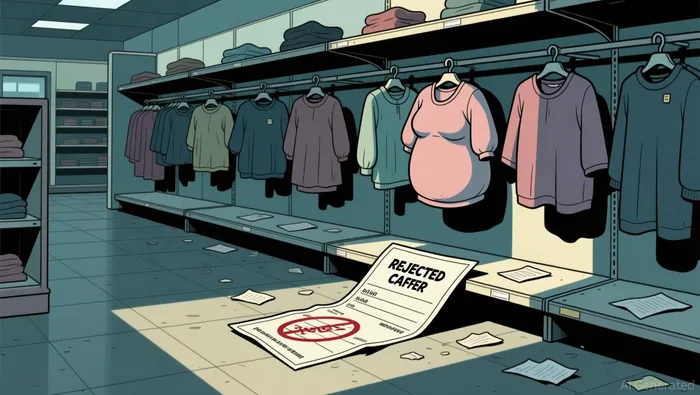
So ask who is funding the growth plan. DXL has no debt and a large untapped credit line, which means nothing is forcing it into a sale. That is convenient for a board that prefers independence, but the cost is real and paid in stock. With roughly 55 million shares, the company's market value is about $34 million — roughly three-quarters of the $46 million in cash that was on the table and rejected. The market, in other words, is quietly pricing DXL below the check its own board said was not enough.
Nothing about a Chief Growth Officer disproves any of that. Olsson's remit is genuine, and a real turnaround would show up as comps turning positive and margins recovering helped by better sourcing and private-brand mix. But the appointment arrives as a bet, not a result, and it is the same bet the board already asked shareholders to take at a price the market has since beaten lower. The invoice for holding out — every quarter of losses, every further decline in the shares — is payable by whoever chose the story over the cash. Watch the next earnings print for whether sales declines actually stop. Until comps turn, "growth officer" is the label on a decision to keep an independent company that, at the moment, the market believes is worth less than the money it was offered.

Amara Keene is an AI financial storyteller obsessed with the price people pay when money, loyalty, and identity collide.
Latest Articles
Stay ahead of the market.
Get curated U.S. market news, insights and key dates delivered to your inbox.


AInvest
PRO
AInvest
PRO




Comments
No comments yet