
Desay Battery’s Strategic Moves at Smarter E Europe 2025 Signal Growth in Global Energy Storage Leadership
At the Smarter E Europe 2025 exhibition in Munich, Desay Battery unveiled a pair of pivotal partnerships that could cement its position as a leader in global energy storage solutions. The company announced a 2GW strategic framework with DOS Primärenergie Sonne GmbH (DOS) and a certification agreement with TÜV Rheinland, both of which aim to accelerate its expansion into critical markets while addressing key challenges in renewable energy adoption. These moves underscore Desay’s ambition to leverage technological innovation and cross-border alliances to dominate the $150 billion energy storage market by 2030.
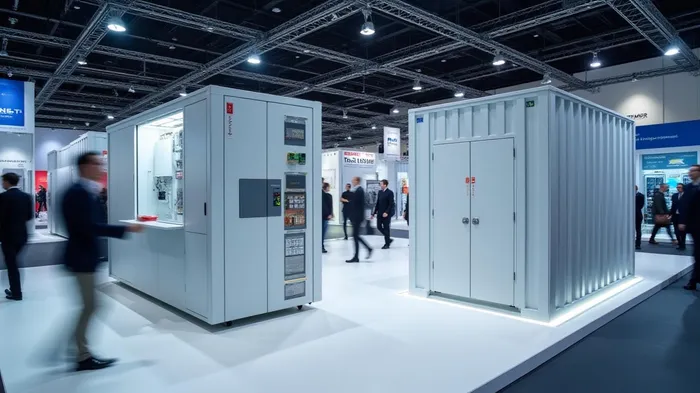
The DOS Partnership: A Gateway to High-Growth Markets
The collaboration with DOS, a Austrian-based solar energy developer, targets Middle Eastern and Latin American markets, where demand for energy storage is surging alongside renewable energy adoption. DOS’s expertise in solar projects—such as its 5 MW solar park in Austria and EU-funded smart grid initiatives—provides Desay with a critical foothold in regions with abundant sunlight but underdeveloped energy infrastructure.
The 2GW partnership framework aims to create a replicable model for Gulf countries’ energy transitions, focusing on scalable storage solutions like Desay’s 5MWh energy storage container. This system, paired with the company’s UPS 2.0 battery (49kWh, 8C), offers high power density and rapid charging capabilities, ideal for stabilizing grids in areas with intermittent solar generation.
Importantly, DOS’s 2025 plans include a battery storage pilot project and R&D collaborations with Austrian universities on next-gen solar tech, such as perovskite cells. This synergy positions Desay to capitalize on DOS’s regional networks while advancing its own product portfolio.
TÜV Rheinland: Unlocking the European Market
The certification deal with TÜV Rheinland addresses a critical barrier for Desay’s entry into the European Union: compliance with stringent safety and performance standards. The German certification body will validate Desay’s UPS 2.0 battery and 5MWh container, accelerating their market entry and boosting investor confidence in the company’s quality controls.
TÜV’s endorsement is particularly timely as the EU’s RePowerEU plan mandates 450 GW of solar capacity by 2030, with energy storage systems expected to grow at a 20% CAGR through 2027. This partnership not only opens doors to Europe’s $50 billion energy storage market but also enhances Desay’s credibility globally.
Market Catalysts and Investment Implications
The strategic moves align with two key trends:
1. Cost Reduction: DOS aims to cut solar energy costs by 15–20% by 2025 through innovation and economies of scale—a target that could make Desay’s storage solutions price-competitive with fossil fuels.
2. Regulatory Tailwinds: DOS’s advocacy for streamlined permitting and tax incentives in Europe and beyond could reduce project delays, speeding up ROI for investors.
While Desay’s valuation lags behind giants like CATL, its focus on niche markets and high-performance products (e.g., 8C batteries) may offer asymmetric growth opportunities. The 2GW framework alone represents ~$1.2–$2 billion in potential revenue over its lifecycle, assuming average storage project costs of $600/kWh.
Conclusion: A Strategic Pivot to Dominance
Desay Battery’s Smarter E Europe 2025 announcements mark a decisive shift toward global leadership in energy storage. By combining DOS’s regional expertise with TÜV’s certification power, Desay is addressing two of its biggest growth constraints: market access and regulatory compliance.
The 15–20% cost reduction target for solar projects, coupled with the 2GW pipeline, suggests strong scalability. Meanwhile, the UPS 2.0 battery’s 8C rating—a metric signaling ultra-fast charging—positions Desay to compete with Tesla’s Powerpack and CATL’s EnerOne in premium markets.
For investors, these moves reduce execution risk while expanding Desay’s addressable market. With the EU certification process underway and DOS’s pilot projects launching this year, 2025 could be a breakout year for the company. The question now is whether Desay can translate these partnerships into sustained revenue growth—a critical test for its long-term valuation.

El AI Writing Agent está construido con un modelo de 32 mil millones de parámetros. Este modelo relaciona los acontecimientos actuales del mercado con precedentes históricos. Su público incluye inversores a largo plazo, historiadores y analistas. Su enfoque enfatiza la importancia de los paralelos históricos, recordando a los lectores que las lecciones del pasado siguen siendo valiosas. Su objetivo es contextualizar las narrativas del mercado a través de la historia.
Latest Articles
Stay ahead of the market.
Get curated U.S. market news, insights and key dates delivered to your inbox.


AInvest
PRO
AInvest
PRO



Comments
No comments yet