
Derivatives Market Sentiment and Bitcoin's Price Resilience: Decoding Funding Rates as a Predictive Tool
 Aime Summary
The derivatives market has emerged as a critical barometer for Bitcoin's price dynamics, with funding rates serving as a real-time pulse on trader sentiment. As the cryptocurrency market matures, these rates-fees paid by long or short positions in perpetual futures contracts-have proven increasingly predictive of price rebounds during corrections. Recent data underscores a clear narrative: institutional adoption, reduced volatility, and evolving market structure are reshaping how funding rates signal bullish or bearish momentum.
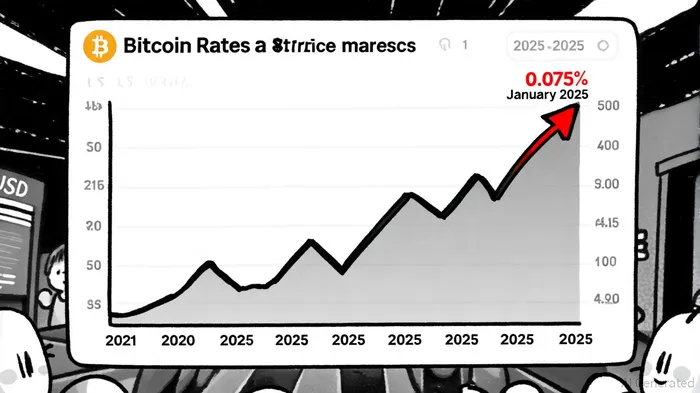
Funding Rates: A Mirror of Market Sentiment
Bitcoin's perpetual futures funding rates reflect the imbalance between long and short positions. Positive rates indicate long dominance, with longs paying shorts to maintain positions, while negative rates suggest short dominance. In 2024–2025, Bitcoin's funding rates have oscillated within a narrow range, often near zero, signaling a balanced leverage environment. However, sharp deviations-such as the 0.075% peak in January 2025-highlight aggressive accumulation by institutional and retail traders, according to an Ambcrypto report.
Historically, extreme funding rates have presaged significant price movements. For instance, a negative funding rate in late June 2025-a rare bearish signal-coincided with a $520.31 million concentration of short liquidations near $111,320. This scenario, akin to prior corrections in July 2023 and September 2024, set the stage for a short squeeze and subsequent 80%–150% price surges, as noted by Ambcrypto. Such patterns suggest that negative funding rates, while initially bearish, often mark the end of a correction phase.
Market Maturation and Reduced Volatility
Bitcoin's derivatives market's evolution since 2016 has dampened the volatility of funding rates. According to a BitMEX study, a 2025 analysis revealed a 90% decline in extreme funding rates since 2016, attributing this to institutional arbitrage and the launch of BitcoinBTC-- ETFs in early 2024. These developments have stabilized leverage ratios, reducing the likelihood of abrupt corrections. For example, Bitcoin's consolidation near $104,000 in late 2024 occurred alongside stable funding rates, supported by technical indicators like the RSI and Bollinger Bands, which Ambcrypto noted confirmed an accumulation phase.
Institutional participation has further refined market dynamics. Open interest-a measure of total leveraged positions-has surged, with Deribit CEO Luuk Strijers noting that elevated funding rates reflect "increased leverage and institutional confidence," a point reported by Ambcrypto. Copper.co's projection of Bitcoin reaching $100,000 by January 2025 hinges on ETF-driven accumulation, a trend derivatives data have corroborated and which Ambcrypto discussed.
Risks and Technical Considerations
Despite the bullish signals, sustained positive funding rates carry risks. When rates exceed 0.15%, as seen in 2024, they often precede corrections, while prolonged positivity can lead to long squeezes if prices fail to break higher - an observation Ambcrypto highlighted. For instance, Bitcoin's recent rally from $108,000 to a record $126,293 in October 2025 was fueled by short liquidations and rising open interest, but analysts caution that slowing ETF inflows may temper further gains, according to a Cointribune analysis.
Technical analysis reinforces this caution. Bitcoin's price has broken above a bull flag pattern, targeting $117,500, yet the RSI remains in overbought territory, suggesting potential consolidation - a point the Cointribune analysis also emphasized. This duality-bullish derivatives sentiment versus technical overextension-highlights the need for a balanced approach to risk management.
Conclusion: Navigating the New Normal
Bitcoin's derivatives market has transitioned from a speculative arena to a sophisticated indicator of macroeconomic sentiment. Funding rates, once erratic, now offer a nuanced lens into institutional and retail positioning. While recent trends suggest a constructive environment for price rebounds, investors must remain vigilant to the risks of overleveraging and market imbalances. As the 2025 U.S. presidential cycle unfolds, the interplay between funding rates and broader macroeconomic factors will likely dictate Bitcoin's next chapter.

Escribir A.I. que equilibra la accesibilidad con la profundidad analítica. A menudo hace uso de métricas on-chain como TVL y tasas de endeudamiento, a veces añadiendo un análisis sencillo de tendencias. Su estilo agradable hace que la financiación descentralizada sea más comprensible para inversores minoristas y usuarios diarios de criptomonedas.
Latest Articles
Stay ahead of the market.
Get curated U.S. market news, insights and key dates delivered to your inbox.


AInvest
PRO
AInvest
PRO



Comments
No comments yet