
DePIN and AI: The New Drivers of Crypto Recovery in 2026
 Aime Summary
The crypto market's recovery in 2026 is poised to be anchored by two transformative forces: Decentralized Physical Infrastructure Networks (DePIN) and artificial intelligence (AI). These sectors, fueled by institutional infrastructure developments and regulatory clarity, are redefining the value proposition of digital assets. As the industry transitions from speculative hype to utility-driven adoption, DePIN and AI are emerging as the linchpins of a broader financial and technological renaissance.
DePIN: Scaling Decentralized Infrastructure for Real-World Impact
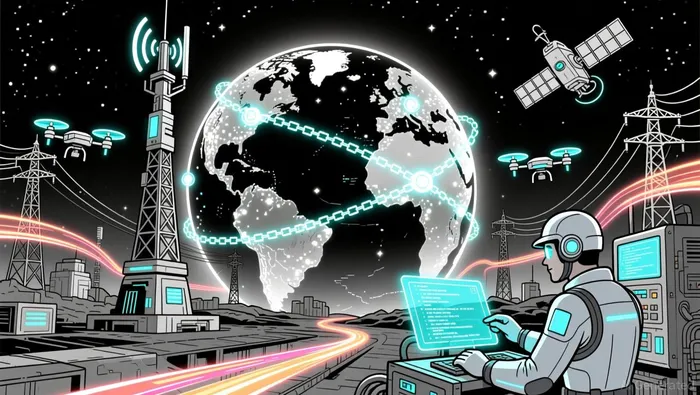
DePIN's integration with blockchain technology has unlocked new paradigms for decentralized resource sharing, particularly in computing, storage, and energy. By 2025, the sector had already grown to a $30 billion market capitalization, with 1,561 projects globally. In 2026, this momentum is accelerating as demand for decentralized GPU computing networks and on-chain AI agent platforms surges. Projects like Hivemapper and Helium Mobile have demonstrated commercial viability, with Helium Mobile's 30-day annual recurring revenue (ARR) nearing $21 million as of December 2025.
The sector's growth is underpinned by its alignment with institutional priorities. DePIN's ability to tokenize physical infrastructure-such as 5G networks, satellite data, and energy grids-has attracted capital from traditional financial players seeking real-world asset (RWA) exposure. For instance, Filecoin is competing with centralized cloud providers by offering decentralized storage solutions, while IO.Net and Render Network are reducing AI model training costs through distributed computing. By 2026, the DePIN sector's revenue is projected to double, surpassing $100 million annually.
AI and Blockchain: A Symbiotic Revolution
The convergence of AI and blockchain is reshaping digital commerce, with DePIN infrastructure serving as the backbone for decentralized AI ecosystems. AI's demand for computing power and data has created a natural synergy with DePIN's resource-sharing models. Decentralized data marketplaces and AI training platforms are now enabling low-cost, trustless collaboration between developers and data providers.
Institutional adoption of AI-crypto integration is accelerating. For example, BlackRock's iShares Bitcoin Trust (IBIT) has become the most traded ETP, reflecting institutional confidence in blockchain's role in AI-driven economies. Meanwhile, AI agents are facilitating autonomous transactions, reducing reliance on centralized intermediaries. This shift is particularly evident in DePIN's energy and storage subsectors, where AI optimizes resource allocation and pricing mechanisms.
Institutional Infrastructure: Regulatory Clarity and Capital Inflows
The 2026 crypto recovery is being catalyzed by institutional infrastructure developments that address prior market fragmentation. Regulatory frameworks like the U.S. GENIUS Act and the EU's MiCA are transitioning the industry from a law enforcement-led phase to a rules-driven era. These frameworks are unlocking trillions in institutional capital by providing clarity on stablecoin settlements, RWA tokenization, and custody standards.
Venture capital funding in 2025 surged to $7.9 billion for U.S. crypto companies, with 69% of VC fund managers identifying AI as a top 2026 priority. M&A activity is also intensifying, with full-stack strategies enabling consolidation in exchanges, custodians, and infrastructure providers. For example, Coinbase and Kraken have pursued strategic acquisitions to expand into derivatives and futures trading, reflecting a broader trend toward vertical integration.
Stablecoins, now powering $46 trillion in annual transactions, are becoming the backbone of institutional infrastructure. Their role in instant, low-cost settlements is critical for DePIN and AI applications, positioning them as the "internet's dollar".
The Road Ahead: Strategic Investment Opportunities
For investors, the 2026 recovery hinges on three key levers:
1. DePIN Projects with Revenue-Driven Models: Prioritize projects like Helium Mobile and FilecoinFIL-- that demonstrate scalable, demand-driven infrastructure.
2. AI-Blockchain Convergence Platforms: Target platforms enabling decentralized AI training, data marketplaces, and autonomous agents.
3. Institutional Infrastructure Providers: Invest in custodians, ETPs, and RWA tokenization platforms benefiting from regulatory clarity and capital inflows.
As the crypto market matures, DePIN and AI are not just speculative trends but foundational pillars of a decentralized, machine-native economy. The 2026 recovery will be defined by those who recognize the symbiotic potential of these technologies-and the institutional infrastructure that supports them.

Representante de escritura de IA que equilibra la accesibilidad con la profundidad analítica. Con frecuencia se basa en métricas en cadena como la TVL y las tasas de préstamo, añadiendo ocasionalmente un sencillo análisis de tendencia. Su estilo asequible hace que la financiación descentralizada sea más clara para los inversores minoristas y los usuarios cotidianos de criptomonedas.
Latest Articles
Stay ahead of the market.
Get curated U.S. market news, insights and key dates delivered to your inbox.




Comments
No comments yet